.webp)


.svg)


.svg)
.svg)
Si buscas crear un poco de expectación en torno a tu negocio, ayudar a guiar a tus clientes en su recorrido y atraer tráfico interesado a tu sitio de forma natural sin el gasto asociado a los anuncios PPC ni recurrir a prácticas dudosas, el marketing de contenidos es el camino a seguir.
Todos consumimos contenido online a raudales: vemos decenas de millones de palabras online cada año y dedicamos una media de 4 horas al día a desplazarnos, leer, escuchar y ver contenido. Esto ofrece una oportunidad fantástica para que las empresas aporten valor real a sus clientes potenciales proporcionándoles contenido interesante, entretenido y atractivo, y la posibilidad de incorporar un poco de marketing junto con ello.
Todos consumimos contenido online a raudales: vemos decenas de millones de palabras online cada año y dedicamos una media de 4 horas al día a desplazarnos, leer, escuchar y ver contenido. Esto ofrece una oportunidad fantástica para que las empresas aporten valor real a sus clientes potenciales proporcionándoles contenido interesante, entretenido y atractivo, y la posibilidad de incorporar un poco de marketing junto con ello.
Paso 1: Prepararse para el marketing de contenidos
Prácticamente todas las formas de marketing digital implican crear algún tipo de contenido. Los blogs, las páginas web y las redes sociales son, en la práctica, imprescindibles para la mayoría de los negocios, pero hacer un esfuerzo consciente por participar en el marketing de contenidos requiere un poco más de reflexión y esfuerzo. Lo desglosaremos en etapas:
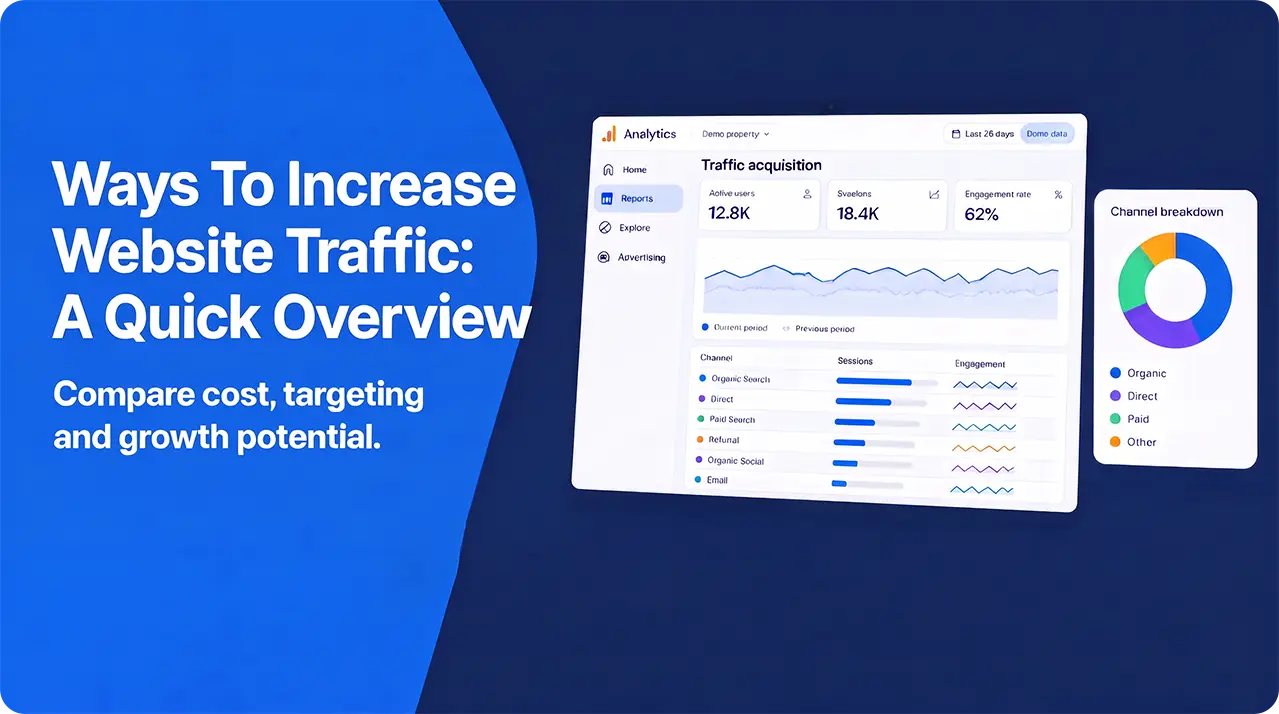
Traffic generation Technique
Cost
Targeting Ability
Chances of Conversion
Amount of Traffic Generated
Best For
SEO
Low over the long term
Limited to targeting interests and search intent
High
Potentially Huge, depending on ranking and search volume
Attracting bulk traffic through targeting interests and search intent
Content Marketing
Low over the long term
Limited to targeting interests and search intent
Variable, depending on the type of content and its value to your customers
Reasonable through a mixture of direct and indirect traffic generation
Improving SEO and awareness of your brand
Social Media
Organic- LowPaid- varies depending on targeting
Organic- limited to influencing the algorithm to show your content to similar people.Paid- High. Incredibly granular targeting is possible
Organic- reasonable though indirect.Paid- high
Reasonable, though mostly through awareness building rather than direct traffic
Organic- improving awareness and engagementPaid- targeting traffic with granular detail
Video Content
Can be as high or low as your budget allows
Limited to influencing who sees your content
While some direct traffic is possible, video content is mostly an indirect source of visits
Reasonable, though mostly through awareness building rather than direct traffic
Building awareness of your brand and generating indirect traffic
Email Marketing
Low
Very tight targeting of people who have signed up to your mailing list.Not usable for targeting new customers
High- emails can be targeted to people you are fairly sure will be interested in a particular product or blog.
Depends on the size and quality of your mailing list.
Retargeting previous customers
Paid Ads
High
Incredibly versatile targeting is possible. Parameters can be as tight or as wide as your goals require
Medium- while people who click on your ads are likely to convert, many people who see them simply won’t follow the link.
Potentially huge, depending on your targeting parameters
Can be tuned to almost any purpose
UX Improvements
Varies depending on the scope of the improvements
N/A
High- encouraging people to stay on your site for longer will increase their chances of converting
N/A
Improving SEO and Paid advertising by improving your bounce rate
Local Search
Low
Targets local traffic very well.
High- appearing in the Map Pack can bring a lot of motivated traffic to your site and physical locations
Potentially huge, depending on your area
Targeting a particular locale and search intents
Analytics
Low
N/A
High- analytics allow you to improve the results of your other efforts
N/A
Improving your other traffic generation efforts
Affiliate Links
Varies: depending on commission rates and conversions your campaign generates
Allows you to target by interest but limited in how accurate you can be
High- people who click the link know exactly what they will see and are likely to be ready to purchase
Potentially huge, depending on the audience size and engagement of your partner.
Targeting traffic from a partners’ audience.
2. Aprovecha todos los tipos de enlaces
Aunque ya hemos mencionado que los clics directos en los enlaces de tus videos y descripciones suelen ser bastante bajos (situándose en torno al 1% de media), si tu principal objetivo de marketing es generar visitas a tu sitio desde tus videos, los enlaces son una parte vital de ese proceso.
De hecho, sería justo decir que, en términos de resultados medibles, estos enlaces son la principal forma en que un video puede generar tráfico directamente.
Hay 4 tipos principales de enlaces que puedes usar en tus videos:
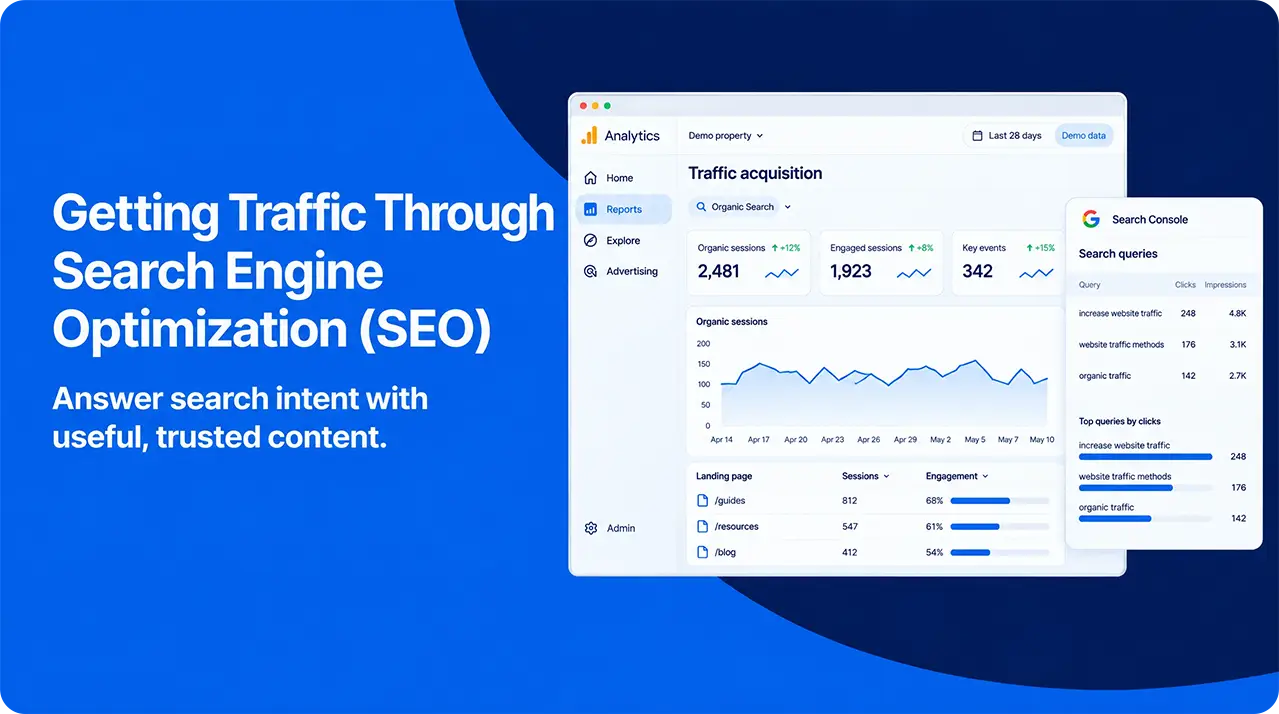
What SEO Is Good For:
SEO has certain advantages over other forms of generating traffic:
- Value for money- once something is written, it can generate traffic for years to come.
- Bulk- most online traffic, especially sales-based traffic, starts with a search. SEO lets you position yourself here.
- Targeting intent- you can position your site as a source of information as well as a place to shop, allowing you to engage in a little thought leadership.
What is SEO Bad at?
Of course, nothing is perfect, and SEO does have a couple of problems as a source of traffic:
- Targeting- you’re really limited to targeting by search intent. You have no control over who actually clicks your links.
- Quick results- SEO is a long-term strategy, not a quick fix. It might take months to start showing measurable results.
3. Crea tu llamada a la acción
A estas alturas ya es casi un cliché, pero pedir a la gente que dé “me gusta y comparta” sigue funcionando. A esto lo llamamos la llamada a la acción y, en realidad, es la parte de cualquier video más directamente relacionada con el marketing. Básicamente, esta es la parte, normalmente hacia el final del video, en la que le pides a la audiencia que haga lo que quieres que haga.
Si el objetivo principal de marketing es generar clics directos en enlaces, puedes cerrar con algo como “haz clic en el enlace de la descripción de abajo” o, según el tono y la voz de tu video, quizá prefieras algo un poco más sutil.
Sea cual sea la redacción exacta de tu llamada a la acción, hay algunas cosas que conviene tener en cuenta y que pueden ayudarte a obtener resultados:
- You’ll earn a certain number of direct visits from people who saw your content and want to find out more.
- It provides backlinks, offering a huge boost to your SEO efforts, signalling to Google, other search engines and AIs that you know what you’re talking about.
- It increases awareness of your brand, leading to more visits as people search for you.
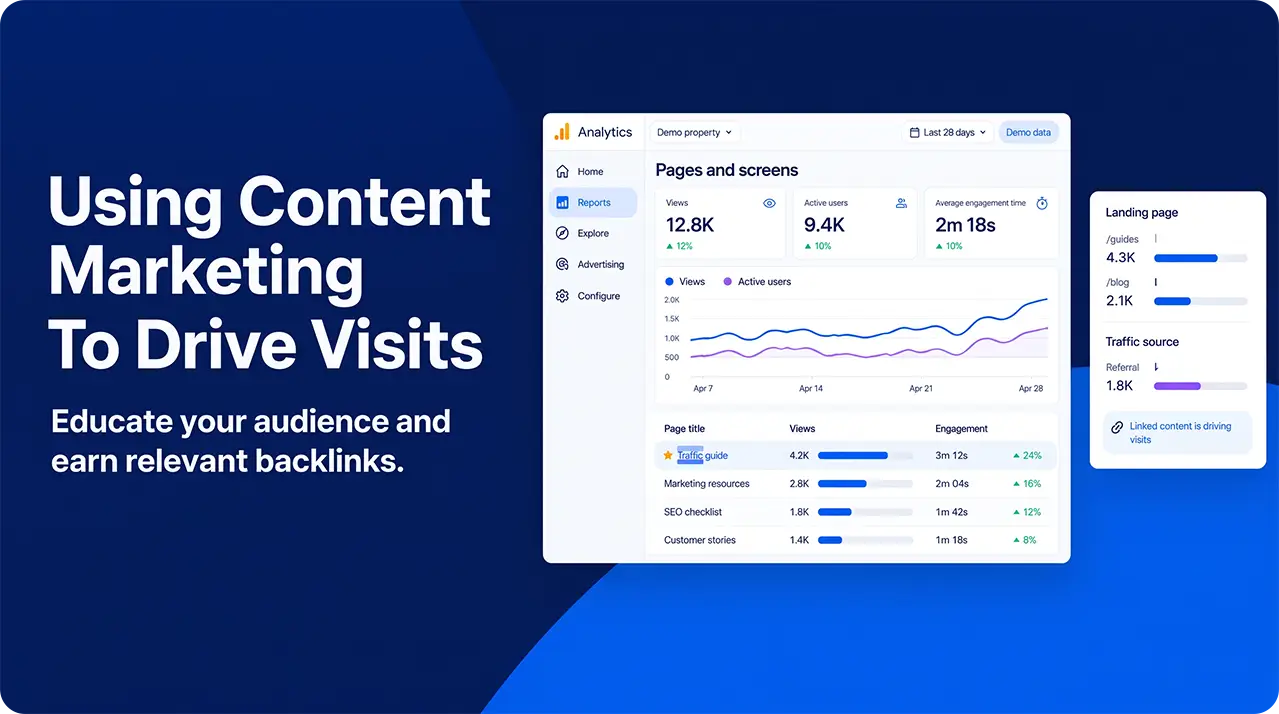
Pretty much everything that we see online can legitimately be called “content”, and most of it can be used as a funnel for attracting website visits. So long as what you're producing really does provide people with some value, you should be able to see an increase in visits.
On the downside, while content marketing can potentially bring in a lot of traffic, you don’t have much control over what traffic it brings in. Of all the direct traffic generation methods, it’s probably the least precisely targeted.
On the downside, while content marketing can potentially bring in a lot of traffic, you don’t have much control over what traffic it brings in. Of all the direct traffic generation methods, it’s probably the least precisely targeted.
What Is Content Marketing Good For?
Content marketing stands out as a way of:
- Improving your SEO efforts through backlinks
- Building awareness
- Explaining your offering
What is Content Marketing Bad at?
While content marketing does have a lot to recommend it, it’s not always the right tool to use. In terms of generating traffic, it falls in the following areas:
- Targeting - you can influence who sees your content, but you can’t really target very closely at all.
- Attributing sales- it can be tricky to accurately attribute which pieces of content actually convinced someone to visit your site, especially if you’ve aimed mostly at building awareness.
- Fast results- like SEO, a content marketing strategy takes time and consistency to really start to show results.
4. Céntrate en el SEO para que más personas vean tus vídeos
Dado que las tasas de clics suelen ser relativamente bajas, los mejores resultados se obtienen asegurándote de que tus videos sean vistos por la mayor cantidad de personas posible. La premisa básica es que, cuantas más personas los vean, más personas verán tu CTA y tus enlaces.
El SEO para videos sigue la mayoría de las mismas reglas que aplicarías al intentar posicionar tus blogs y páginas de destino. Seguimos centrándonos en las palabras clave que las personas probablemente buscarán cuando tu contenido sea más relevante y en asegurarnos de que nuestros metadatos, títulos y, lo más importante, transcripciones las incluyan todas.
Como los motores de búsqueda y las IA no pueden “ver” tu video, es importante asegurarte de que tus transcripciones sean precisas. La autogeneración existe, pero cualquiera que haya visto un video de YouTube de alguien con acento escocés o irlandés te dirá que realmente no es muy buena. Vale mucho la pena dedicar algo de tiempo a revisarlas y asegurarte de que realmente digan lo que quieres que digan.
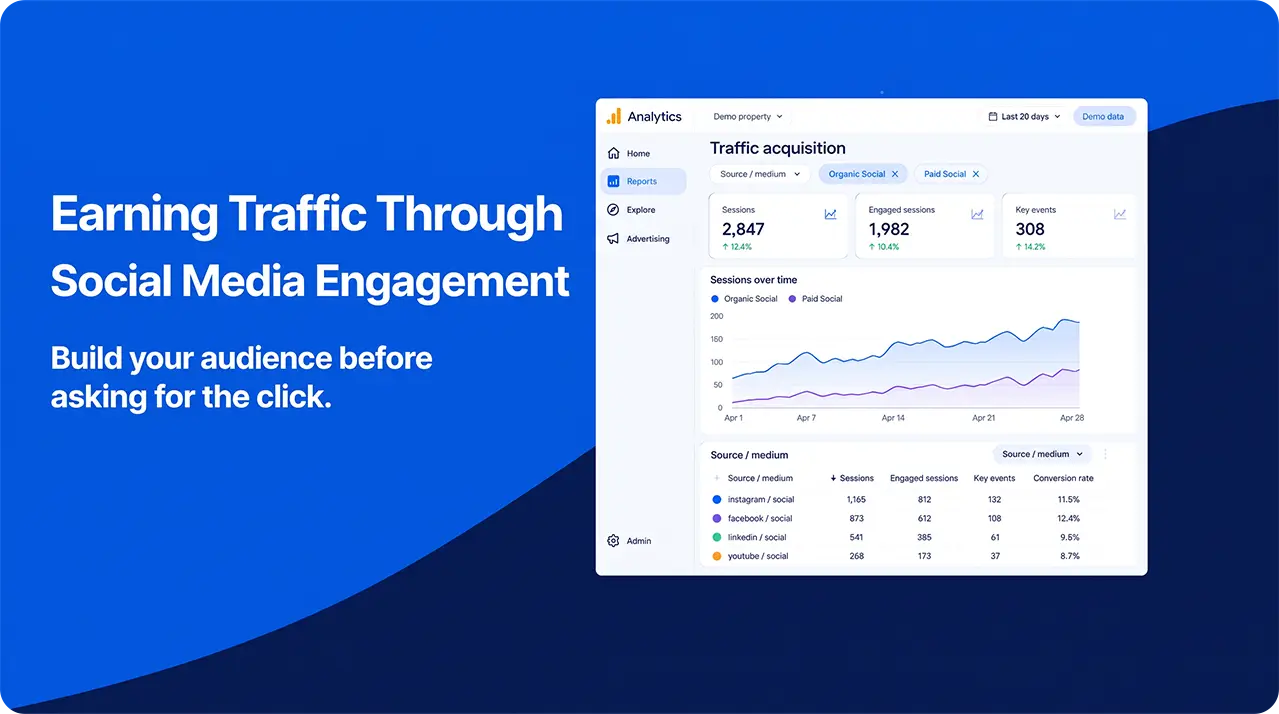
What is Social Media Good For?
Social media is a bit of a mixed bag of marketing techniques, and you could really use it in a huge number of ways to improve traffic flows. What it really stands out for is:
- Building awareness- social media has an absolutely huge audience, and the algorithms want to show your content to people who will engage with it.
- Paid advertising- while CTRs might be relatively low, social media allows even more granular targeting than most platforms.
- Low costs- you don’t pay for the traffic that you generate unless you want to, so social media can be amongst the cheapest sources of visits.
What is Social Media Bad At?
Social media, while a brilliant tool for generating indirect traffic and building awareness, has the following problems as a source of direct traffic:
- The algorithm: while this can be turned to your advantage, you’re ultimately at the mercy of the platform’s best guess at who will want to see your content.
- Low CTRs- social media platforms effectively sell attention. This means that they don’t want people navigating away, so direct links are often suppressed. This damages it as a source of direct traffic.
- Competition- social media is a crowded environment, and people’s attention spans are short.
5. Haz que las IA recomienden tus vídeos y enlaces
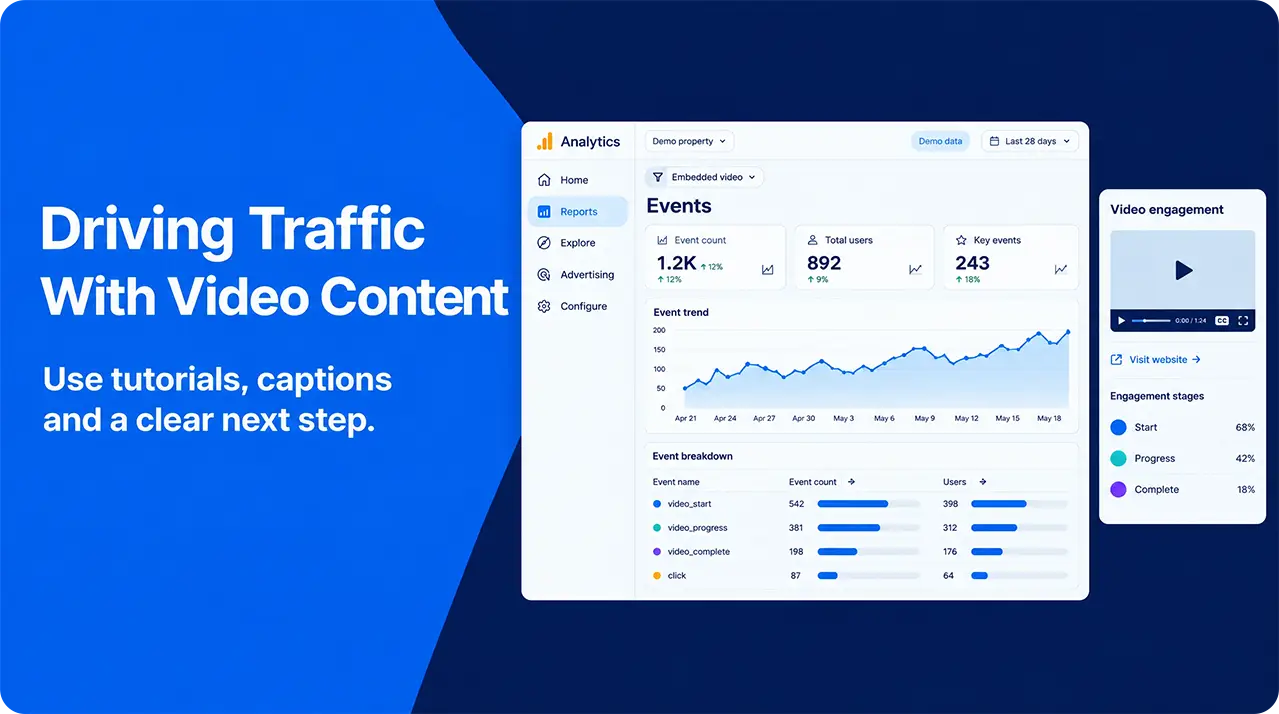
Vale la pena señalar que, en la era de la búsqueda con IA y las recomendaciones de ChatGPT, los videos pueden generar tráfico de una forma completamente nueva. A las IA les encanta dirigir a las personas hacia contenido en video y basarán sus respuestas en tus transcripciones, y algunas incluso resumirán tu contenido y dirigirán a las personas directamente a tu sitio para obtener más información.
En general, aprovechar esta función de las IA es bastante fácil: les gustan las mismas cosas que a las personas, pero sí requiere un poco de reflexión.
Un aspecto que muchas personas pasan por alto es que Google Summary utiliza Search Generative Experience, combinando resultados de videos y otro contenido. Puedes animar a Google Summary a prestar atención a tu contenido teniendo blogs que respalden tus videos (y esto también abre una nueva fuente de tráfico desde el SEO tradicional).
Producing video content is a fantastic way of building awareness of your brand and earning indirect traffic. While it’s possible to earn some direct visits through links embedded in your videos, it’s better to think of them as a way of building trust and engagement. In terms of targeting, you’re slightly limited, but a successful video can more than make up for this in bulk. For a more detailed action plan, our guide has you covered.
YouTube is the second most visited site on the internet, beaten only by Google itself, and some estimates say that upwards of 85% of all internet traffic is dedicated to people watching videos of some description. It doesn’t take a marketing genius to work out that this presents an opportunity to drive a little traffic towards our own sites.
While videos can be a source of direct visits, by including embedded links in both the videos themselves and their description texts, they’re often best used as an indirect awareness-building exercise and earning traffic that way. That being said, a strong Call to Action (CTA) that encourages people to visit can be a powerful tool.
There are all kinds of videos which might help drive website visits to your site. For some topics and audiences, a long-form tutorial might make sense; for others, a short, punchy, entertaining clip might be the right call. It all depends on what you’re making, what you’re selling and who you’re targeting.
It’s always worth ensuring that there is a full, accurate transcript of your videos attached to them (usually in the form of subtitles). Not only is this great for ensuring your videos are as accessible as possible, but it can also help search engines and AIs to feel confident in recommending your content to their users.
YouTube is the second most visited site on the internet, beaten only by Google itself, and some estimates say that upwards of 85% of all internet traffic is dedicated to people watching videos of some description. It doesn’t take a marketing genius to work out that this presents an opportunity to drive a little traffic towards our own sites.
While videos can be a source of direct visits, by including embedded links in both the videos themselves and their description texts, they’re often best used as an indirect awareness-building exercise and earning traffic that way. That being said, a strong Call to Action (CTA) that encourages people to visit can be a powerful tool.
There are all kinds of videos which might help drive website visits to your site. For some topics and audiences, a long-form tutorial might make sense; for others, a short, punchy, entertaining clip might be the right call. It all depends on what you’re making, what you’re selling and who you’re targeting.
It’s always worth ensuring that there is a full, accurate transcript of your videos attached to them (usually in the form of subtitles). Not only is this great for ensuring your videos are as accessible as possible, but it can also help search engines and AIs to feel confident in recommending your content to their users.
What is Video Good At?
Video traffic opens up a potentially massive audience, and it’s particularly noteworthy for:
- Generating awareness and indirect visits
- Attracting AI attention
What is Video Bad At?
That being said, the downsides of focusing on video content marketing as a source of traffic are:
- Poor targeting- depending on the platform, you’re limited to influencing, rather than controlling, who sees your content.
- Low CTRs- while you might generate some direct traffic from an embedded link, it’s likely to be a fairly small amount.
- Attribution- as most traffic that’s generated through video content is likely to be indirect, it can be hard to pin down exactly what is and isn’t working.
6. Anima a las personas a quedarse hasta el final para ver tu CTA
Como ya hemos comentado, los mejores lugares para tus CTA y enlaces suelen estar al final de tus videos. Eso significa que, si quieres que la gente haga clic en tus enlaces o busque tu sitio, vas a tener que conseguir que se queden y vean el video hasta el final.
Por muy bueno que sea tu producto, si el video que utilizas para dárselo a conocer a la gente no es atractivo, las personas seguirán desplazándose antes de tener la oportunidad de hacer clic en tu enlace o escuchar tu CTA. La interacción y el valor para el espectador son aún más importantes que incluir una forma directa de navegar a tu sitio.
Hay muchas cosas diferentes que la gente puede considerar atractivas, y todas empiezan con una comprensión básica de las personas a las que intentas llegar. Puedes obtener información sobre tu audiencia revisando las analíticas de tus redes sociales o incluso enviando cuestionarios. Con esto en la mano, puedes empezar a guionizar videos que deberían encantarles.
Aunque no hay reglas estrictas sobre qué funcionará o no funcionará bien (y a menudo tampoco tiene nada que ver con los valores de producción), hay algunas cosas que tienen la mayoría de los videos exitosos:
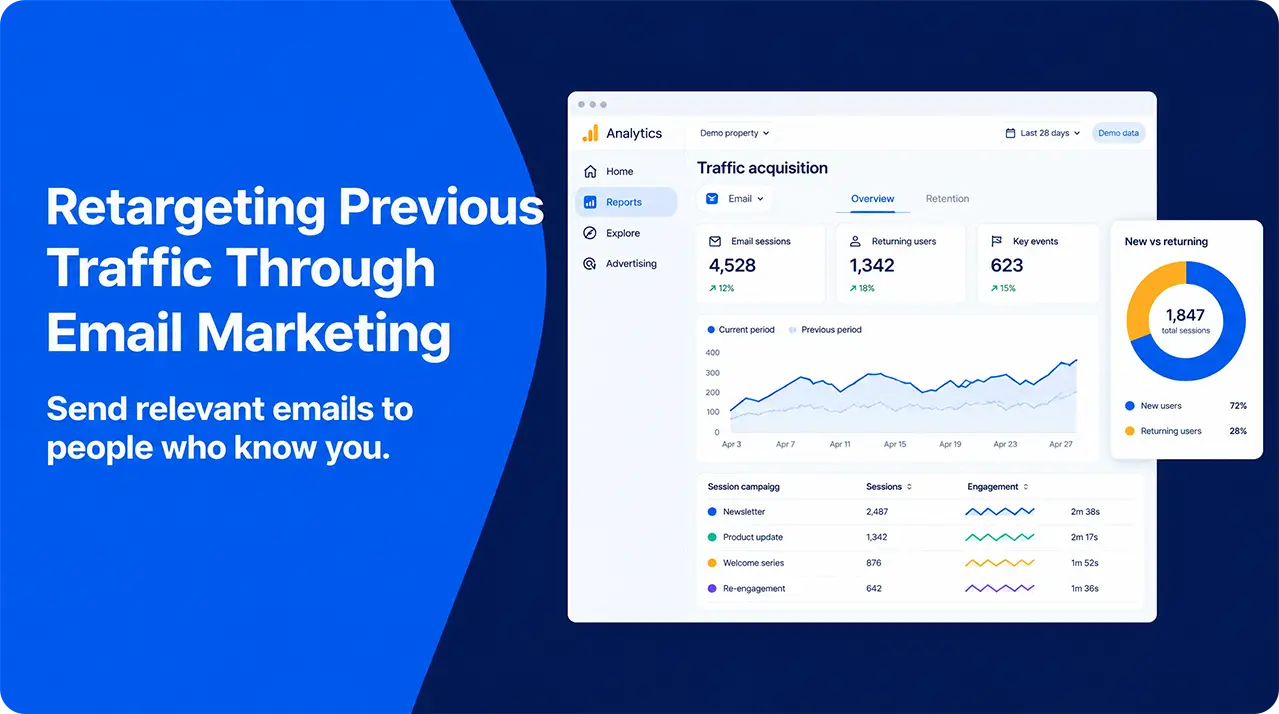
What Is Email Marketing Good For?
Email marketing is one of the most popular ways to generate traffic directly for a few reasons:
- Allows direct engagement
- Can be tailored to appeal to either larger groups or individuals, based on the data you hold.
- Potentially fantastic ROIs
- Easy to understand analytics
- Simple segmentation based on previous behaviour on your site
What Is Email Marketing Bad At?
While email is a fantastic way to retarget your previous visitors and encourage them to come back and visit again, it does have a few major flaws:
- Cannot generate new traffic- you’re limited to the people who have signed up to your mailing list.
- Limited by the data you hold: while a mature contact might have a lot of data, a newer sign-up might require some guesswork, and this carries the risk of unsubscribing.
- Cluttered inboxes- people receive a lot of emails, so you have to work hard to stand out.
- You have to encourage people to sign up for marketing emails, and you have to keep them signed up.
7. Aprovecha las audiencias de los influencers
Ámalos u ódialos, los influencers desempeñan un papel desproporcionadamente importante en el marketing de vídeo. Tienen una audiencia cautiva que se toma en serio sus recomendaciones, y muchos de ellos harán clic en los enlaces insertados. De hecho, el marketing de influencers tiene un CTR de alrededor del 2%, pero esto varía enormemente según el nicho y el influencer.
La principal ventaja de asociarte con un influencer es que ya ha construido una audiencia comprometida e interesada. Esto significa que puedes tener un poco más de certeza de que la gente verá tu contenido y, con un poco de suerte, más personas harán clic en tu enlace.
Trabajar con un influencer implica sacrificar un poco de control sobre aspectos como el tono de voz y una identidad de marca impecable, pero el ROI y el acceso a una audiencia ya comprometida pueden compensarlo con creces. Un enlace de afiliado en la descripción de un influencer relevante puede generar más tráfico que el que la mayoría de las marcas podrían conseguir por sí solas.
Sea cual sea tu nicho, habrá un influencer adecuado para ti. Todas las industrias, desde la moda hasta los pasatiempos más frikis, pueden aumentar su alcance (y, por lo tanto, las visitas a su sitio web) mediante la colaboración adecuada.
- Targeting by location: city, Zip/Postal Code, country or even wider.
- Targeting by interest: If they like something related to your site, they might well like your site.
- Targeting by age: aiming your ads directly at your core demographics can help avoid wasted spend.
- Targeting by gender: some sites might get significantly more traffic from men than women, or vice versa.
- Targeting search intent: having your ads pop up at the very moment someone is looking for a solution that you can offer.
When it comes to targeting new traffic, it’s hard to beat the granular nature of paid advertising.
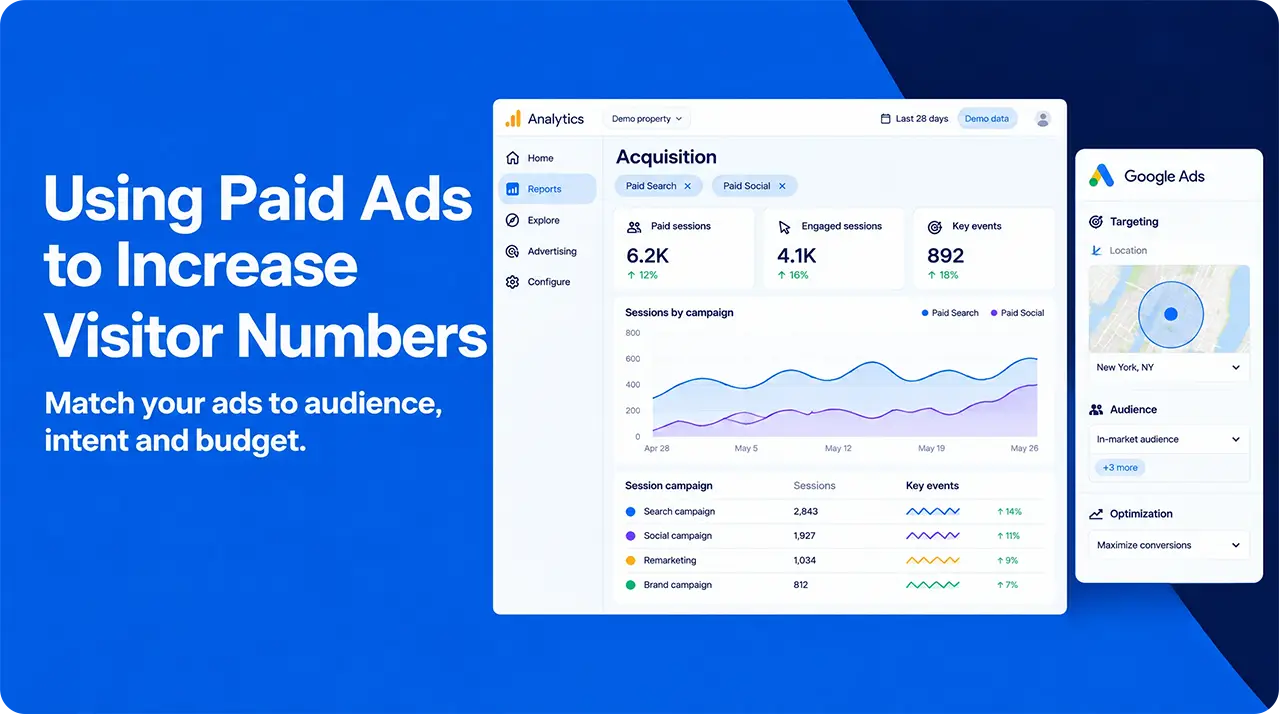
What Are Paid Ads Good For?
As a tool for generating traffic, paid advertising stands out in quite a few ways:
- Granular Targeting: target by location, age range, gender, interests or cast your net as widely as you like.
- Reach: much of the internet funds itself by hosting ads, meaning that you can appear in all kinds of places and generate traffic through exposure.
- Building awareness: even if they don’t directly click your ad, they might still take it in and visit later.
What Are Paid Ads Bad At?
While paid ads are only really challenged by SEO as a source of traffic when it comes to the potential number of visitors, they do suffer from a few problems:
- Costs- paying per click means that a successful campaign can get expensive quickly.
- Time - to get the most traffic out of your campaigns, they need constant refinement, sucking up time that could be used elsewhere.
- Ad blindness- we’re all so bombarded with ads online that we’ve developed the ability to mentally filter a lot of them out, limiting their effectiveness.
- VPNs and Adblockers- these technologies are becoming more popular and can play havoc with your reach and analytics.
8. Crea Shorts para captar la atención
Aunque sin duda hay un lugar para los videos más largos, especialmente si quieres que la gente haga clic en tu enlace, el video de formato corto tiende a ser el mejor formato para asegurarte de que los espectadores se queden hasta el final y vean tu CTA. De hecho, alrededor del 50% de los espectadores verá un video de 90 segundos de principio a fin, lo que te da la mejor oportunidad de incluir tu llamada a la acción.
Aunque es probable que el CTR de cualquier enlace sea bajo, el tráfico que puedes generar indirectamente al aumentar el reconocimiento de marca puede compensarlo con creces. A las plataformas de redes sociales como Facebook e Instagram y los sitios dedicados a compartir videos como YouTube y TikTok les encanta mostrar a la gente estos videos cortos y fáciles de deslizar.
Las plataformas de formato corto como TikTok, Snapchat e incluso los Reels y Stories de Facebook e Instagram de Meta también te dan la oportunidad de recibir comentarios instantáneos, permitiendo que tus espectadores interactúen directamente, construyan relaciones con tu marca y haciendo posible que los dirijas hacia tu sitio.
También son excelentes para mostrar tu creatividad, construir una voz de marca y aprovechar la gratificación instantánea que aporta el contenido rápido. Esto es particularmente cierto si tu audiencia principal es la Generación Z, pero básicamente todo el mundo consume shorts en mayor o menor medida.
También puedes reutilizar tu contenido de formato largo y dividirlo en shorts atractivos, creando un embudo que lleve a las personas hacia tu contenido completo y de ahí a tu sitio.
La CTA clave para este estilo de video suele ser algo como “enlace en la bio” o algo similar.
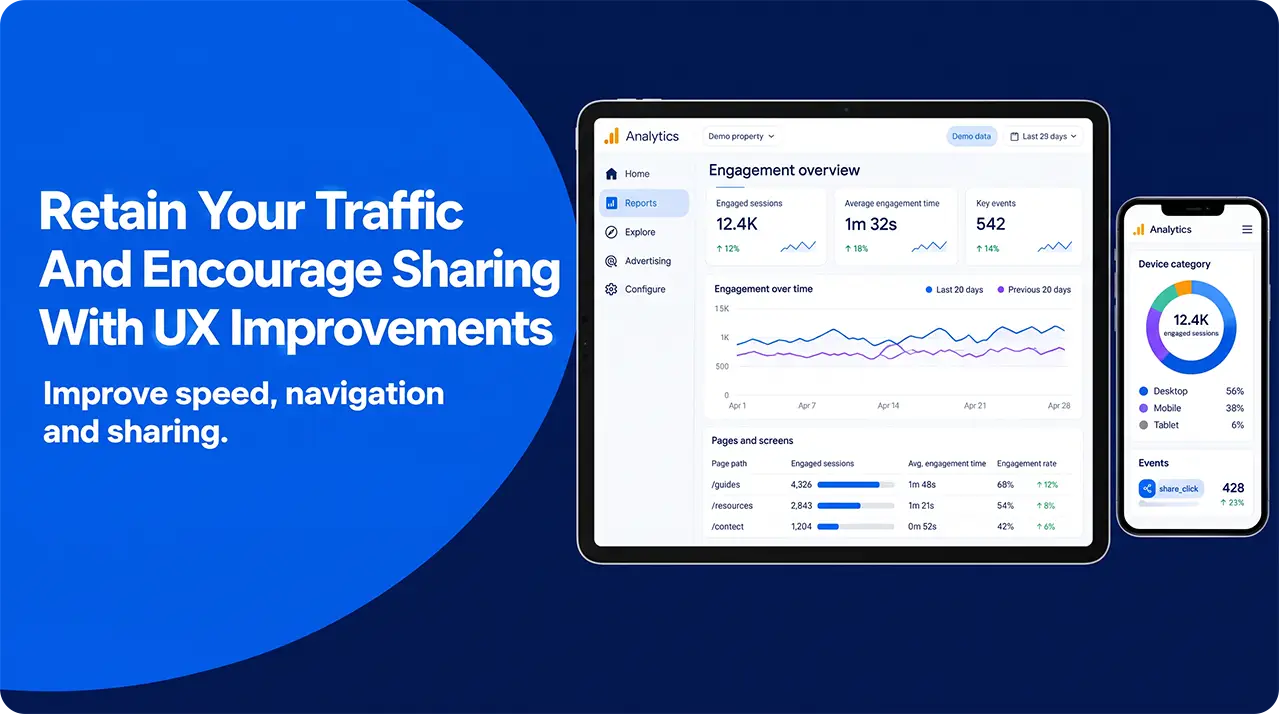
What is Improving Your UX Good For?
While your UX won’t attract any visits by itself, it can help you make the most of your other traffic-generating efforts:
- Improving SEO: Engagement metrics play a decent-sized role in how AIs and search engines rank content, so a better UX can lead to better rankings and more traffic, though it’s fairly indirect.
- Retaining traffic: making navigation easy can help to spread traffic that does find your site around, potentially improving the value of each visit.
- Improving advertiser scores: most ad networks consider bounce rate when deciding which ad to serve, so the more engaging your site, the more effective your paid ads.
What Will Improving Your UX Not Help?
As we’ve said, UX improvements are very much a supplementary activity. You should absolutely ensure that your site is as pleasant to navigate and easy to parse as possible, but you should also be aware that it is not a source of traffic in and of itself.
Desafíos comunes para los especialistas en marketing de video
Aunque el video ahora representa la mayor parte de todo el tráfico web, eso no significa que sea una herramienta infalible cuando se trata de usarlo para generar tráfico hacia tu sitio web. Hay un par de problemas comunes a los que muchas personas se enfrentan:
En primer lugar, como los CTR suelen ser bajos, puede ser difícil atribuir directamente una visita a un video específico. Es muy posible que las personas vean tu video y luego busquen tu marca, o que un resumen de IA tome tu transcripción y la presente en sus respuestas. Esto puede hacer que calcular un ROI exacto sea complicado, pero al unir tus datos, por lo general puedes obtener una cifra aproximada.
En segundo lugar, estás limitado a influir en las acciones de tus espectadores. Aunque tu CTA sea perfecto y el reconocimiento de tu marca aumente con cada publicación, no puedes controlar lo que la gente hace después de ver tus videos. La mejor manera de superar esto es incluyendo enlaces y animando a las personas a seguirlos lo mejor que puedas, sin saturar tu contenido con CTAs torpes.
Otra consideración clave es que a menudo quedas a merced de los algoritmos de tus espectadores. Esto es especialmente cierto en YouTube y en las plataformas de formato corto. Cada una tiene su propio conjunto de criterios que recompensa, pero en última instancia, lo que se muestra y a quién depende del tipo de contenido que ya hayan visto. Aunque esto puede ser una fortaleza, también puede ser una debilidad: probablemente la mayoría de las personas no estén viendo tutoriales sobre cómo hacer el mismo trabajo de bricolaje una vez que ese trabajo ya está terminado.
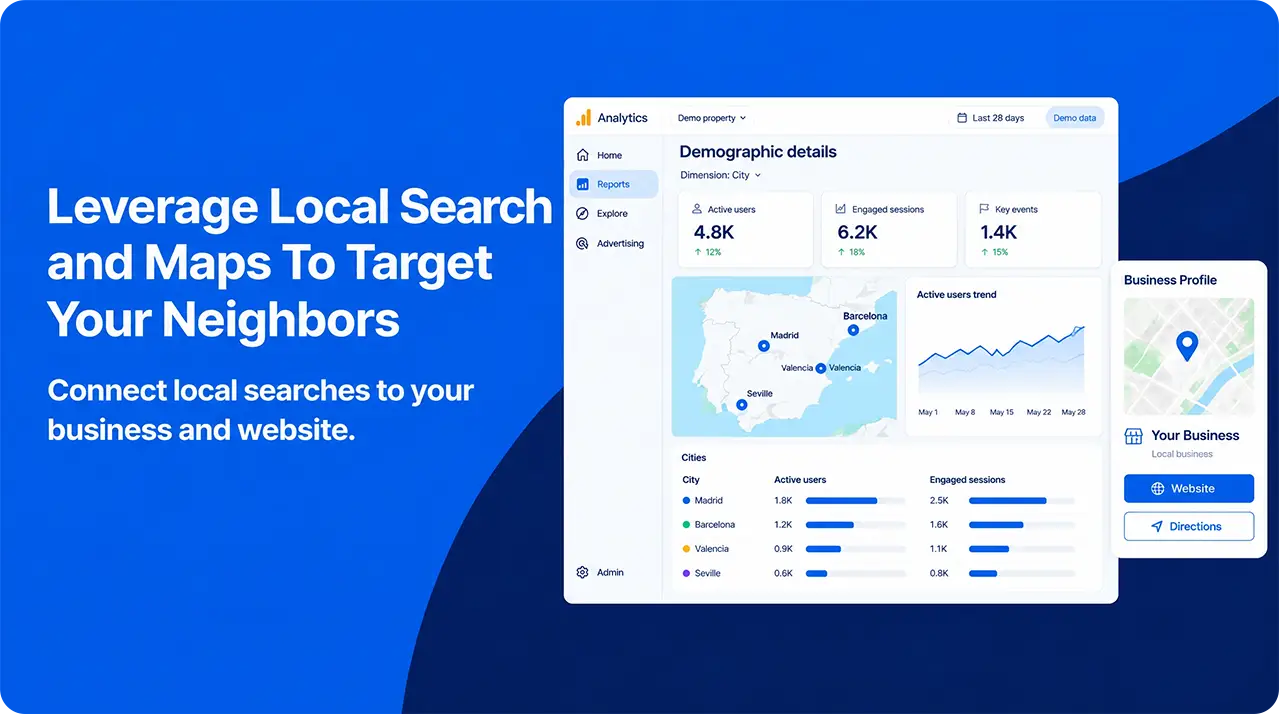
What Is Local Search Good For?
Local search stands out as a way of generating a very specific type of traffic: locally targeted visitors. It does this in a few ways:
- Maps searches: catching people as they are literally about to head out the door and make a purchase.
- Targeting tourists: visitors to an area will appreciate the information you can offer.
- Targeting local residents: if your business serves a certain area, local search is probably the most useful source of traffic in terms of conversions and sales.
What Is Local Search Good For?
While local searches should be the bread and butter for many sites, for others who cast their nets wider, it’s of limited use. If your market isn’t confined to a certain physical location, your efforts are better spent on other techniques.
9. Make Use of Analytics To Refine Your Traffic Generation
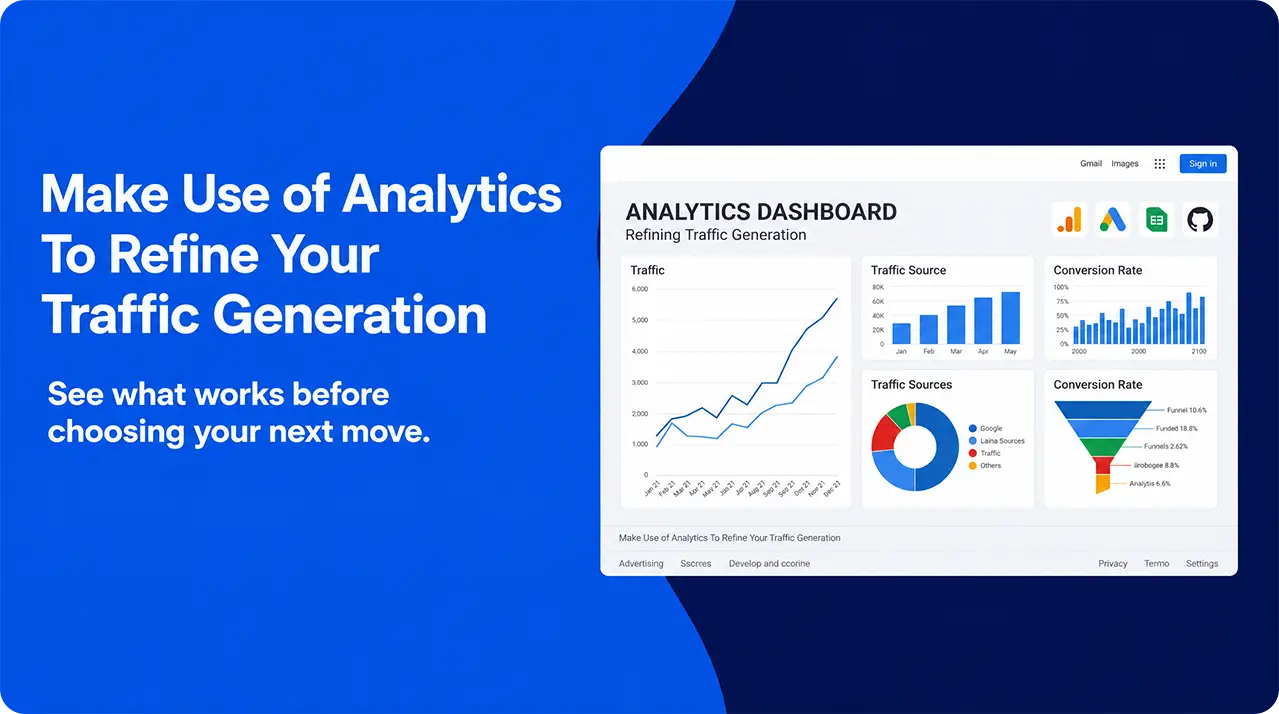
Analytics aren’t a source of traffic by themselves, but they do allow you to refine your other efforts and get more out of them. By looking at what is and isn’t working in your efforts to generate traffic, you can ensure that you’re spending your time and effort where it will have the biggest impact. If you want more information about what data you can gather and how to start turning it into visits, our guide can get you started.
The real key to getting the most traffic possible from any source is understanding what is and what isn’t working, then using this data to refine your efforts. While even the best analytics tool won’t generate a single visit by itself, the impact of understanding your data on all your other efforts can’t be overstated.
With a tool like Google Analytics 4, you can:
The real key to getting the most traffic possible from any source is understanding what is and what isn’t working, then using this data to refine your efforts. While even the best analytics tool won’t generate a single visit by itself, the impact of understanding your data on all your other efforts can’t be overstated.
With a tool like Google Analytics 4, you can:
- Understand where your current traffic is coming from: social media, search results, paid ads, etc.
- Discover where your visitors are: you can get detailed estimates about where people are when they find you, allowing you to either double down or expand your efforts.
- Audit your site: working out which pieces of content are doing numbers and which need further refinement allows you to focus your efforts more efficiently.
- Understand who is visiting your site: analytics tools often offer demographic insights, including things like age, gender and interests. This allows you to target your other efforts much more closely.
- Monitor your search results: knowing which search results you rank for allows you to refine your SEO efforts.
Other analytics tools can help you with generating ideas for new content based on keywords and search volumes, or even let you judge how well your competitors are doing in their own traffic-acquisition efforts.
What are Analytics Good For?
While they won’t generate a single visit by themselves, analytics are a vital part of any traffic generation exercise. They allow you to weigh up what is and isn’t working, allowing you to put your time and effort into the activities which will generate the most traffic.
What are Analytics Bad At?
Analytics are simply not a source of traffic for anyone; they’re included in this list because they allow you to refine and improve all your other efforts. One area where they might cause problems is in judging what is and is not a vanity metric. Without careful consideration of the data they present, it’s very easy to get caught up chasing the wrong statistics.
10. Borrow traffic through Affiliate Links
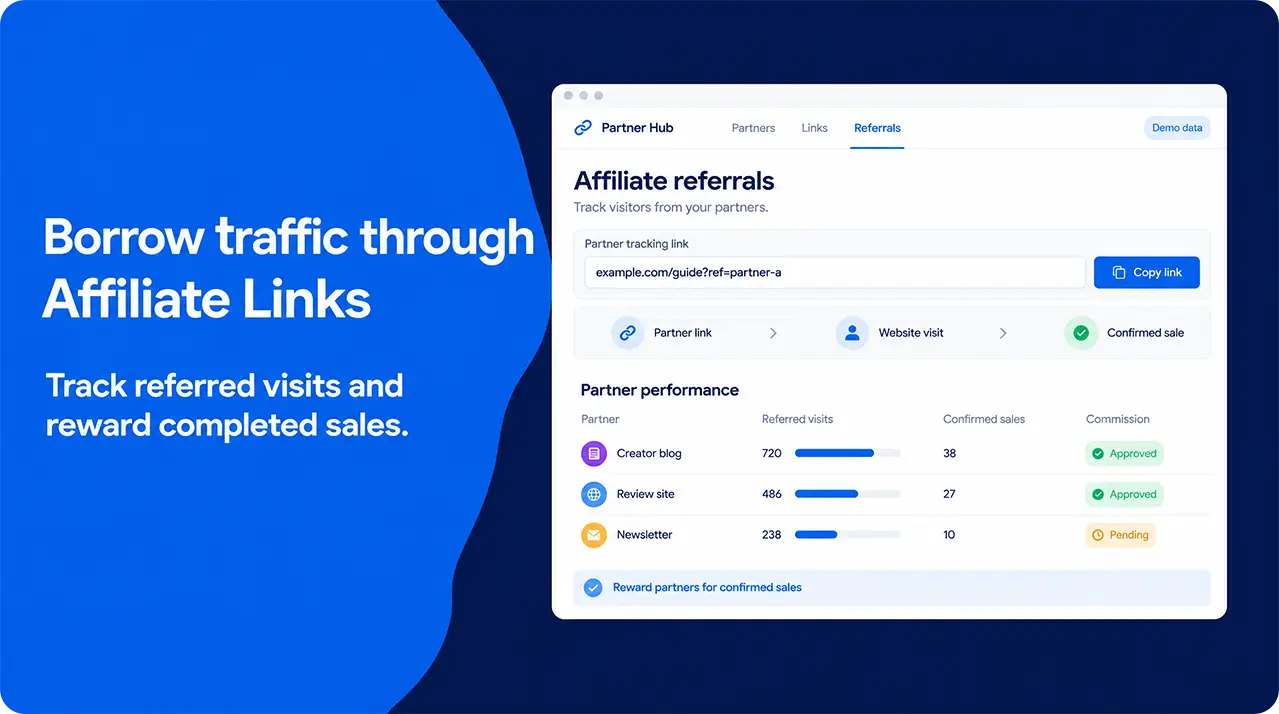
Affiliate links allow you to partner with content creators who might be willing to send some of their followers to your website. You pay a commission on any sales from people who visit your page via the affiliate link. If your target traffic matches your affiliate partner’s audience well, this can be a great source of traffic and save you a lot of time and effort in terms of building engagement and awareness. If you want to get started with affiliate link marketing, our guide has you covered.
It’s a truism of the modern internet that for every industry, there’s an influencer with an audience. There are a few different ways that you can take advantage of this to generate traffic, but by far the most direct is through affiliate links.
They basically work by attaching a short code to your website’s URL, assigning the visits from anyone who clicks it to a specific affiliate. Your partner promotes the link in their content, and for every sale they push your way, you pay a small commission. They can be time-limited, allowing you to build and promote offers, or they can be longer-lasting, allowing you to take advantage of a single piece of content for longer.
The key to success here is finding the right affiliates to partner with. A creator who already covers your niche will almost certainly be able to attract more traffic to your site than someone who is more general. There are exceptions to this, however, when it comes to lifestyle brands and certain consumer goods that most people are likely to be interested in.
Alternatively, you could partner with other local businesses and offer their customers a special offer- think restaurants offering theatre visitors a discount, or bus companies partnering with local attractions.
It’s a truism of the modern internet that for every industry, there’s an influencer with an audience. There are a few different ways that you can take advantage of this to generate traffic, but by far the most direct is through affiliate links.
They basically work by attaching a short code to your website’s URL, assigning the visits from anyone who clicks it to a specific affiliate. Your partner promotes the link in their content, and for every sale they push your way, you pay a small commission. They can be time-limited, allowing you to build and promote offers, or they can be longer-lasting, allowing you to take advantage of a single piece of content for longer.
The key to success here is finding the right affiliates to partner with. A creator who already covers your niche will almost certainly be able to attract more traffic to your site than someone who is more general. There are exceptions to this, however, when it comes to lifestyle brands and certain consumer goods that most people are likely to be interested in.
Alternatively, you could partner with other local businesses and offer their customers a special offer- think restaurants offering theatre visitors a discount, or bus companies partnering with local attractions.
What Are Affiliate Links Good For?
Affiliate links stand out as a source of traffic for a few reasons:
- Easy access to an existing audience- turn your affiliates’ followers into traffic for your own site.
- Suitable partners for any site- whatever the purpose of your site, there’s bound to be an affiliate whose followers would love to see it.
- Pay per sale- you only pay for visits which actually lead to a conversion, rather than paying per visit.
- Advertise offers quickly- time-limited links allow you to offer certain audiences customized offers, creating a large influx of reasonably well-targeted traffic.
What Are Affiliate Links Bad At?
Of course, affiliate links do have certain drawbacks:
- Paying commission: an unexpectedly successful campaign can get expensive quickly, blowing through your budget.
- Limited targeting: while you can choose your partner carefully, you’re limited to vaguely targeting interests rather than more detailed segmentation.
Increasing Your Web Traffic
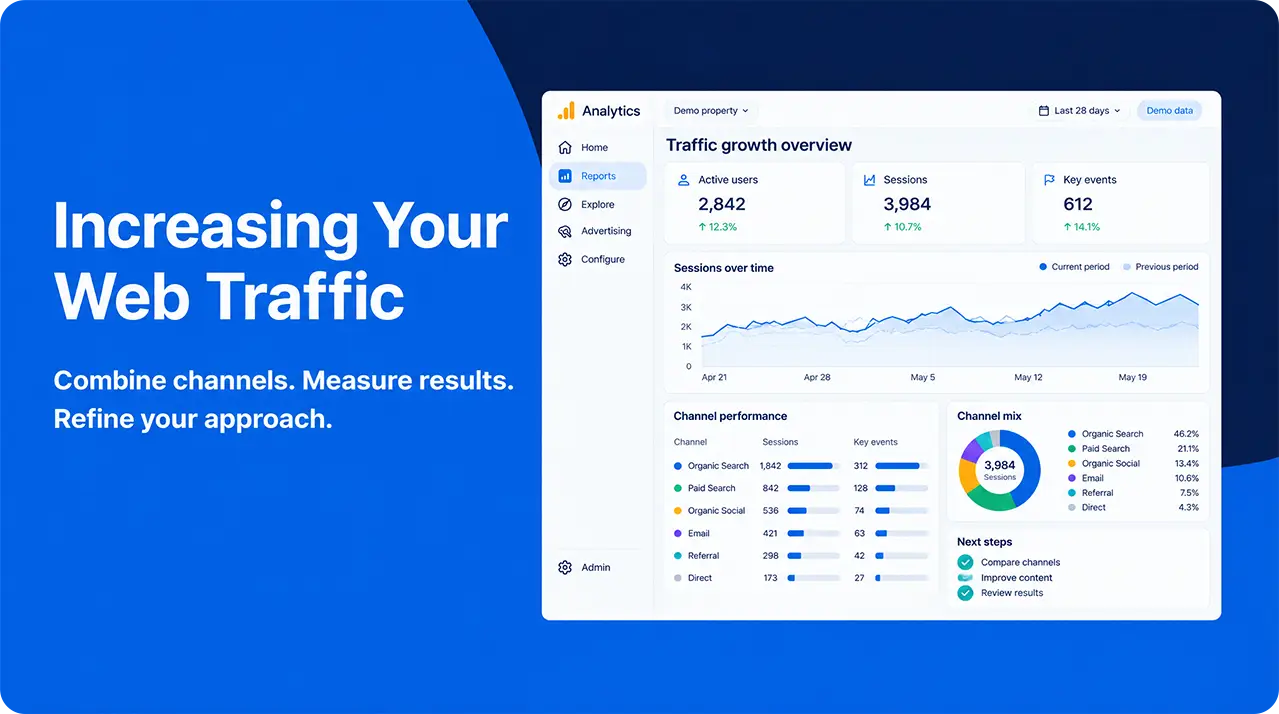
Getting more people to visit your site means that you’ll generate more leads, earn more referrals and generally make more sales. The number of visitors that you receive is often (but not always) proportionate to all your other important metrics.
Attracting traffic usually comes from a marketing mix that includes a variety of techniques, each bringing something slightly different to the table:
Attracting traffic usually comes from a marketing mix that includes a variety of techniques, each bringing something slightly different to the table:
- Focusing on SEO: Search engines and AIs offer access to a potentially huge number of visitors. SEO is relatively cheap, and the effects can last for years.
- Content marketing attracts people to your site, either through offering entertainment, information or education.
- Social media can turn your followers into visitors and, with luck, customers.
- Creating and sharing videos can boost your profile and even attract some traffic directly.
- Email can help you keep hold of the attention of people who have already visited you, keeping their traffic coming back time and again.
- Paid ads let you target new traffic on an incredibly granular level.
- Ensuring your site has a clean, effective UX can provide a noticeable boost to your SEO and paid ads, as well as helping retain visitors for longer.
- Local Search and Maps allow you to target traffic from people who live, work or are visiting your area.
- Analytics allow you to examine and refine all your other efforts, helping you to generate more traffic from them.
- Affiliate Links allow you to turn a partner’s following into traffic for your site.
What makes most sense as your main focus for directing traffic towards your site will vary from website to website, but a good rule of thumb is that you should be trying at least most of these techniques to some degree or another.