.webp)


.svg)


.svg)
.svg)
Unless you’ve been living under a rock for the last 20 or so years, you’re probably already intimately acquainted with social media in its various forms. Since the fall of the Dot Com Boom and the rise of Web 2.0, your customers have been spending an inordinate amount of time scrolling these sites. In fact, social media platforms make up 7 of the 10 most visited sites on the whole internet.
Given that one of the core principles of marketing is “meet your clients where they are” and that the browsing data suggests that they’re spending their time doomscrolling Facebook, X and TikTok, using social media to drive traffic towards your site should be relatively simple, right?
Here are 7 ways to go about it.
Given that one of the core principles of marketing is “meet your clients where they are” and that the browsing data suggests that they’re spending their time doomscrolling Facebook, X and TikTok, using social media to drive traffic towards your site should be relatively simple, right?
Here are 7 ways to go about it.
1. Spend Money on Ads
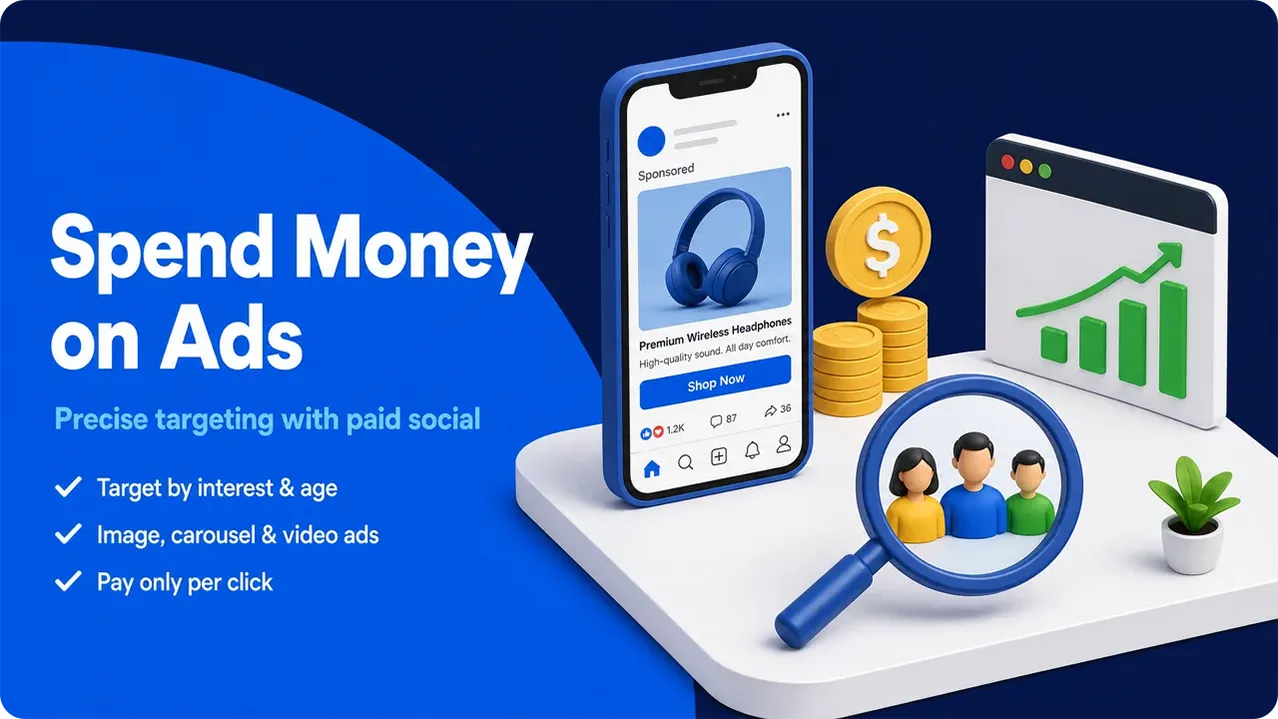
The first, and most obvious, way that you could use social media to start driving traffic towards your website is also the simplest: pay for it through running ads. The various platforms hold a huge amount of data (some might say a scary amount of data) on all of their users, and their business model is generally to turn this information into advertising revenue.
Social media advertising allows you to target very specifically based on interest, with an even greater degree of accuracy than most PPC advertising platforms. This can be as granular or as high-level as you like, and there are various formats that you could use, such as images, text, carousels, or video ads, each with its own uses.
Let’s say you sell horror movie merch- social media lets you target by things as granular as which movies people seem to like most, meaning your Hellraiser hoodies can be shown to the audience who are most likely to splurge. The same goes for almost any business and almost any interest.
Alternatively, you could set broad categories like age, parental status, or nationality and have your ad shown to even more people, with the trade-off that the traffic you generate might be larger but less relevant.
Social media advertising allows you to target very specifically based on interest, with an even greater degree of accuracy than most PPC advertising platforms. This can be as granular or as high-level as you like, and there are various formats that you could use, such as images, text, carousels, or video ads, each with its own uses.
Let’s say you sell horror movie merch- social media lets you target by things as granular as which movies people seem to like most, meaning your Hellraiser hoodies can be shown to the audience who are most likely to splurge. The same goes for almost any business and almost any interest.
Alternatively, you could set broad categories like age, parental status, or nationality and have your ad shown to even more people, with the trade-off that the traffic you generate might be larger but less relevant.
The Downside of Social Media Advertising
There are two notable downsides to paying for adverts on social media. Firstly, the platforms fund themselves through running a pay-per-click model. While this means that you will only pay for actual visits to your site, the costs can mount up quickly.
The average cost-per-click on Facebook, for example, ranges between about 0.44¢ and $2, with more competitive times, like around Black Friday or gift-giving holidays, being even more expensive. For Meta Lead ads, which allow you to collect contact information directly (useful for retargeting traffic through emails and direct communications), you might pay around $5.83.
This is somewhat counterbalanced by the other downside of PPC advertising: most people see your ad and simply filter it out in their minds. Click-through rates for almost all display ads are low, sitting at between 0.5 and 2% (itself counterbalanced by the fact that those who do click are very likely to be interested in your products).
Generally, social media sits somewhere in the middle of this range, so while it might be seen by a potentially huge number of people who are interested in your business, the number who actually click through and visit might be significantly lower.
The average cost-per-click on Facebook, for example, ranges between about 0.44¢ and $2, with more competitive times, like around Black Friday or gift-giving holidays, being even more expensive. For Meta Lead ads, which allow you to collect contact information directly (useful for retargeting traffic through emails and direct communications), you might pay around $5.83.
This is somewhat counterbalanced by the other downside of PPC advertising: most people see your ad and simply filter it out in their minds. Click-through rates for almost all display ads are low, sitting at between 0.5 and 2% (itself counterbalanced by the fact that those who do click are very likely to be interested in your products).
Generally, social media sits somewhere in the middle of this range, so while it might be seen by a potentially huge number of people who are interested in your business, the number who actually click through and visit might be significantly lower.
2. Keep Your Links For The Comments
If you’re looking to avoid the pitfalls of pay-per-click, social media offers many great options for attracting visitors to your site. In fact, social media platforms allow you to really flex all your marketing muscles and get creative in lots of fun ways.
Social media is a bit of a strange beast. They want brands and users to create content that keeps people on their sites, consuming ads and generating revenue. They also understand that a lot of this content will be created with marketing in mind and be designed to drive their visitors towards another site. This has created a slightly uneasy balancing act for the social media marketer and forced us to get a little more creative.
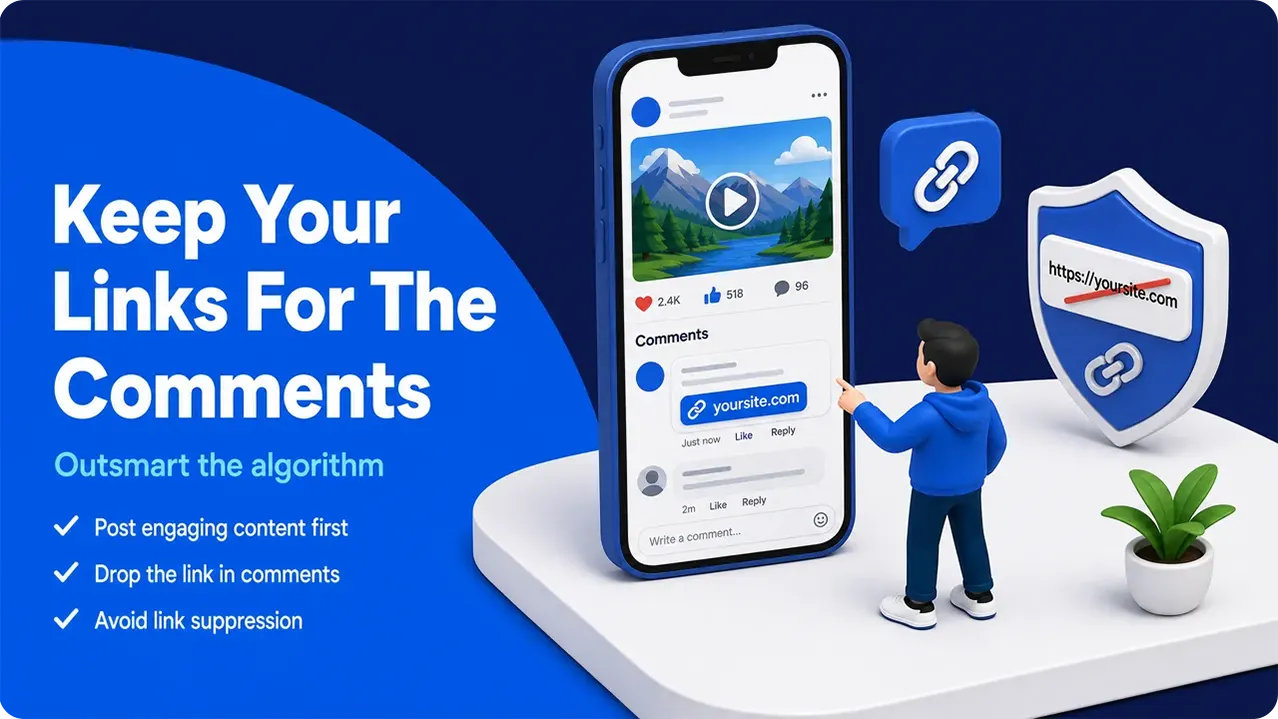
Once upon a time, using Facebook (for example) to drive traffic towards your site was simple: you just posted a link, and the algorithm showed it to people that it thought would be interested. Nowadays, this isn’t the case, and direct external links are generally suppressed.
On the one hand, the algorithms favor content that keeps people engaged and scrolling; on the other, you have your marketing goals. This means that we’ve got to juggle creating content that’s fun, educational and engaging (much like with SEO) with our aim of generating some traffic, so we’ve got to get a little more creative and gently slip our links into the comments or a call to action.
Social media is a bit of a strange beast. They want brands and users to create content that keeps people on their sites, consuming ads and generating revenue. They also understand that a lot of this content will be created with marketing in mind and be designed to drive their visitors towards another site. This has created a slightly uneasy balancing act for the social media marketer and forced us to get a little more creative.
Once upon a time, using Facebook (for example) to drive traffic towards your site was simple: you just posted a link, and the algorithm showed it to people that it thought would be interested. Nowadays, this isn’t the case, and direct external links are generally suppressed.
On the one hand, the algorithms favor content that keeps people engaged and scrolling; on the other, you have your marketing goals. This means that we’ve got to juggle creating content that’s fun, educational and engaging (much like with SEO) with our aim of generating some traffic, so we’ve got to get a little more creative and gently slip our links into the comments or a call to action.
3. Give Your Audience What They Want
One of the huge advantages of social media when it comes to earning clicks and visits is that very nearly 70% of the global population is using one platform or another. That gives your content a potentially massive audience. The real strength of social media marketing isn’t in the sheer number of potential visitors, though; it’s in how well you can craft your content to target certain people.
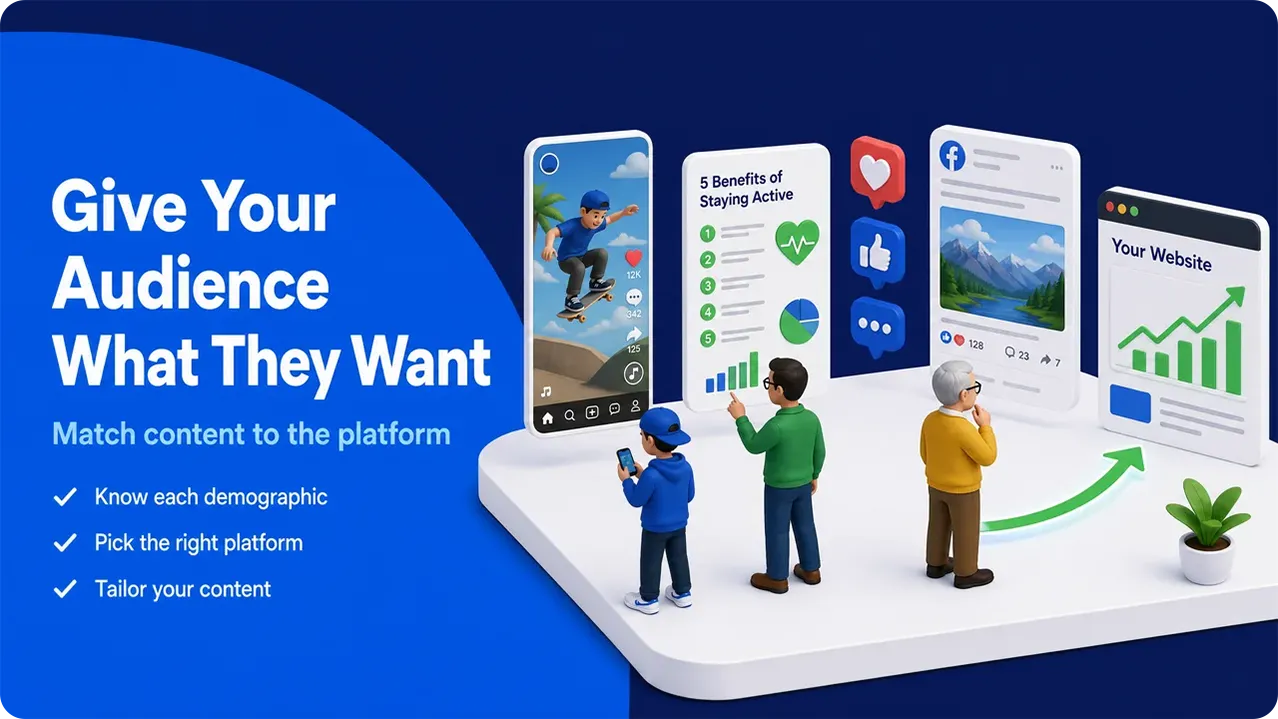
Certain demographics favor different platforms: younger generations prefer short-form videos like TikTok, while older people are more likely to be regular Facebook users. Of course, these are pretty high-level forms of targeting, but being armed with this information lets you know where to focus your efforts.
Once you’ve picked your main platform, you can start creating posts and content that will let you slip in your links and start building a bit of buzz around your brand. Think about who your customers are and what kinds of content they like to consume, and tailor to that profile. Shortform videos and reels might suit some topics and audiences, whereas others might be better targeted through infographics and photography or clever copywriting. Each creative marketing discipline has a role to play.
If people stick around and really engage with your content, they’re far more likely to see the link or call to action that you’ve embedded.
Certain demographics favor different platforms: younger generations prefer short-form videos like TikTok, while older people are more likely to be regular Facebook users. Of course, these are pretty high-level forms of targeting, but being armed with this information lets you know where to focus your efforts.
Once you’ve picked your main platform, you can start creating posts and content that will let you slip in your links and start building a bit of buzz around your brand. Think about who your customers are and what kinds of content they like to consume, and tailor to that profile. Shortform videos and reels might suit some topics and audiences, whereas others might be better targeted through infographics and photography or clever copywriting. Each creative marketing discipline has a role to play.
If people stick around and really engage with your content, they’re far more likely to see the link or call to action that you’ve embedded.
4. Get Creative With Your Posts
Knowing that simply putting your link out there is no longer enough to guarantee that anyone will actually see it (let alone click it), we’re left with the question of how we can show our links to people while satisfying the algorithm’s requirements. This is where the fun starts with social media marketing.
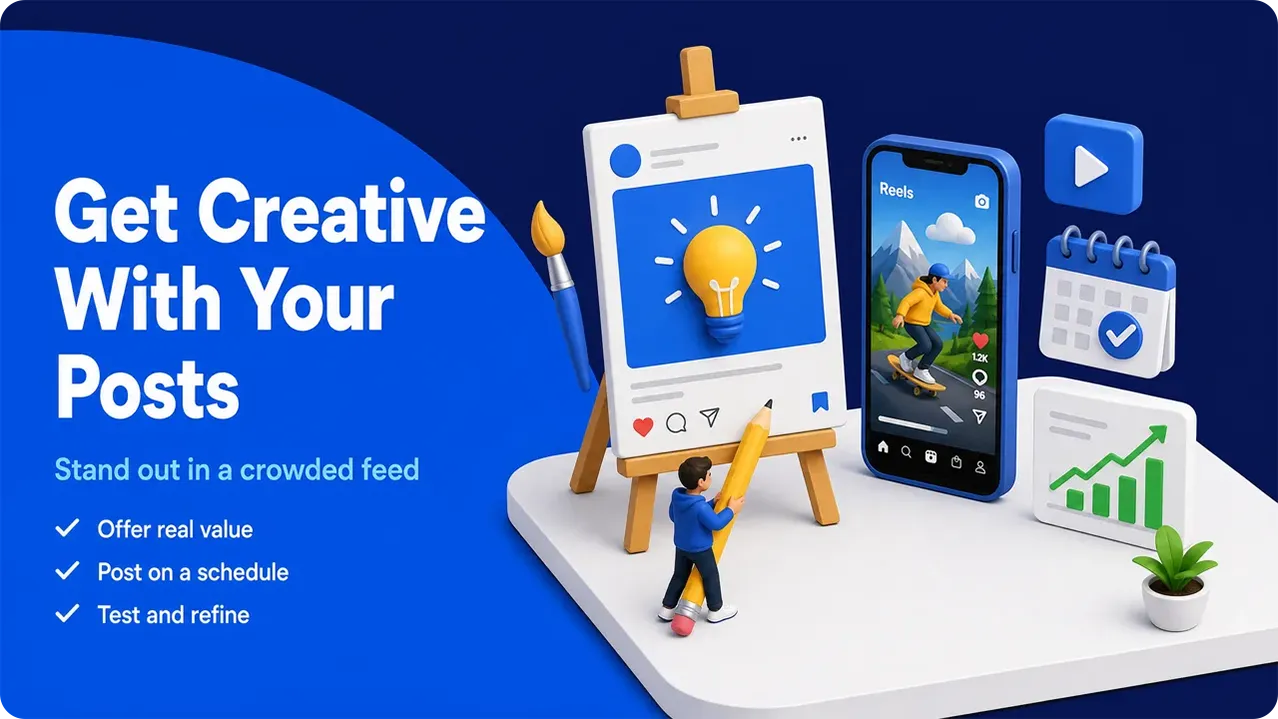
Creativity is key here. Your content can’t simply be a purely marketing exercise, and it has to offer people some real value. This might be in the form of being entertaining, informing or creating a sense of community (it is social media, after all). Find your voice and play up to it- for some, this might be fun, tongue-in-cheek reels on Facebook or Instagram, others might have more luck with in-depth videos on YouTube or community outreach posts on whichever platform.
The problem that many brands face is that with so many accounts competing for attention, standing out is hard. To call it a crowded marketplace would be an understatement, and coupled with the average adult attention span while scrolling being around 8 seconds, you really need to grab all the attention you can get.
While there is no end of blogs on how exactly to present your posts, the truth is that standing out often means breaking these ‘rules’. Following trends quickly becomes samey, and in a world of infinite scrolling, in-jokes need to be balanced with genuine originality to break through. There’s no magic formula, and what works will vary from platform to platform, so experimentation is key.
Social media platforms also love to drop updates to their algorithms without warning, so a certain amount of trial and error always comes with the territory. What works one week might be punished the next.
The only way around this is quantity. Posting regularly and slowly building up your following and engagement ratings is what gets results. Set up a regular schedule, experiment with different types of posts and keep a close eye on your analytics so you can see what does and doesn’t work for you.
Of course, regular posting is not enough by itself (though it certainly helps), and quality should always be your main concern. You never quite know what is going to do the numbers and drive traffic towards your site, so always try and do your best work; just be prepared to change direction when the almighty algo says it’s time for a change.
Creativity is key here. Your content can’t simply be a purely marketing exercise, and it has to offer people some real value. This might be in the form of being entertaining, informing or creating a sense of community (it is social media, after all). Find your voice and play up to it- for some, this might be fun, tongue-in-cheek reels on Facebook or Instagram, others might have more luck with in-depth videos on YouTube or community outreach posts on whichever platform.
The problem that many brands face is that with so many accounts competing for attention, standing out is hard. To call it a crowded marketplace would be an understatement, and coupled with the average adult attention span while scrolling being around 8 seconds, you really need to grab all the attention you can get.
While there is no end of blogs on how exactly to present your posts, the truth is that standing out often means breaking these ‘rules’. Following trends quickly becomes samey, and in a world of infinite scrolling, in-jokes need to be balanced with genuine originality to break through. There’s no magic formula, and what works will vary from platform to platform, so experimentation is key.
Social media platforms also love to drop updates to their algorithms without warning, so a certain amount of trial and error always comes with the territory. What works one week might be punished the next.
The only way around this is quantity. Posting regularly and slowly building up your following and engagement ratings is what gets results. Set up a regular schedule, experiment with different types of posts and keep a close eye on your analytics so you can see what does and doesn’t work for you.
Of course, regular posting is not enough by itself (though it certainly helps), and quality should always be your main concern. You never quite know what is going to do the numbers and drive traffic towards your site, so always try and do your best work; just be prepared to change direction when the almighty algo says it’s time for a change.
5. Grow Your Community and Build Engagement
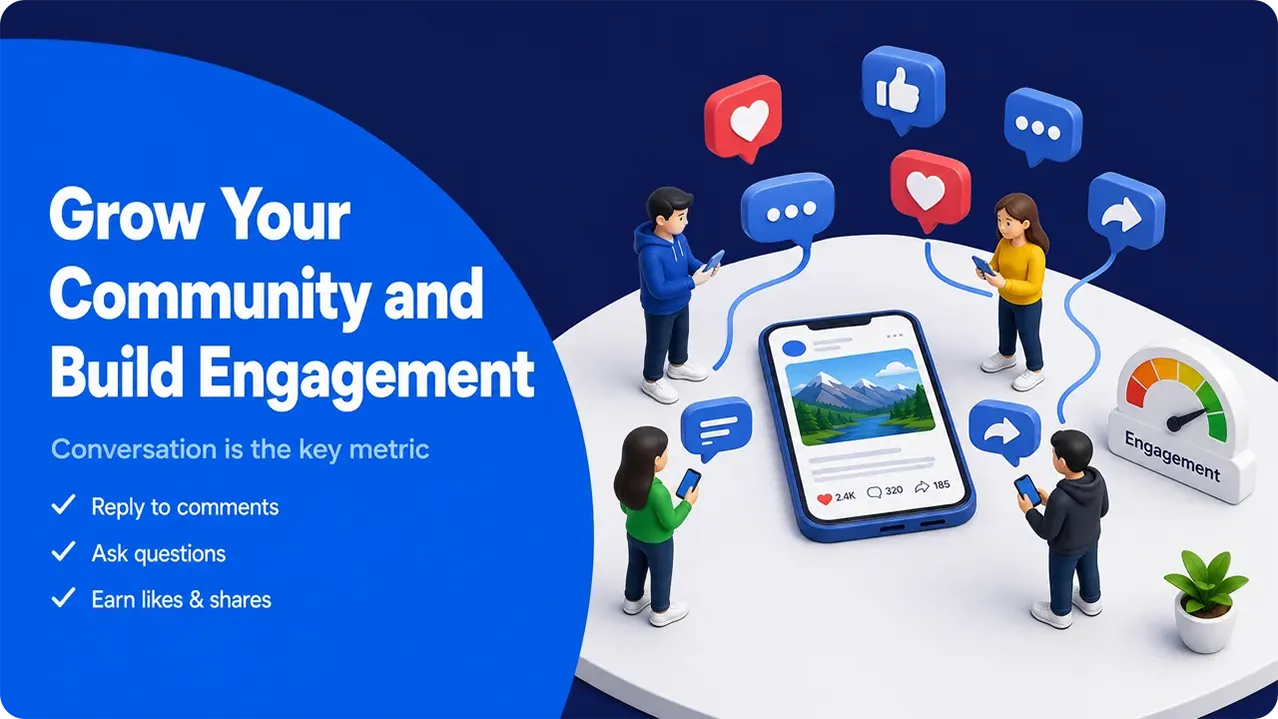
The clue is in the name! Social media allows a level of back-and-forth interaction that other marketing channels simply can’t. This is great from a number of points of view:
- It builds genuine relationships between customers and brands
- You can use comments and questions to build awareness, drive traffic and conversions
- It builds up engagement- the key metric that social media platforms use to judge what constitutes “good” content
This engagement is the single most important metric when it comes to turning your social media efforts into measurable results. People interacting with your content in various ways (generally comments, views, likes, shares and saves) send the signal that this is what they want to see. Over time, this builds up and marks your content out to the algorithms as valuable, meaning that it will be served up more often to people who are similar to those who have interacted.
Again, there are no hard-and-fast rules around what will and won’t build engagement, and each platform places a different emphasis on each type of engagement. For example, YouTube likes to show similar content, rewarding watch time and likes more than comments, but Threads is all about the back-and-forth conversation.
Courting engagement could be as simple as asking a question or even directly asking for “likes and shares” at the end of your videos. It could also be wading into the comments section and directly engaging, keeping the conversation flowing.
Knowing your platform and audience will help you naturally start to build engagement as you post content that will appeal to them.
Again, there are no hard-and-fast rules around what will and won’t build engagement, and each platform places a different emphasis on each type of engagement. For example, YouTube likes to show similar content, rewarding watch time and likes more than comments, but Threads is all about the back-and-forth conversation.
Courting engagement could be as simple as asking a question or even directly asking for “likes and shares” at the end of your videos. It could also be wading into the comments section and directly engaging, keeping the conversation flowing.
Knowing your platform and audience will help you naturally start to build engagement as you post content that will appeal to them.
6. Adapt Your Strategy to Improve Your Click Rate and Attract Indirect Traffic
The clue is in the name! Social media allows a level of back-and-forth interaction that other marketing channels simply can’t. This is great from a number of points of view:
While it’s great that people will come into the comments section and click your strategically placed link or navigate through your profile and find you that way, the vast majority of people who see your posts probably won't. X (formerly Twitter) generally boasts the best link CTR of all the platforms, sitting at a mighty 2%. LinkedIn, where you may expect people to be more engaged, on the other hand, only has 0.06%.
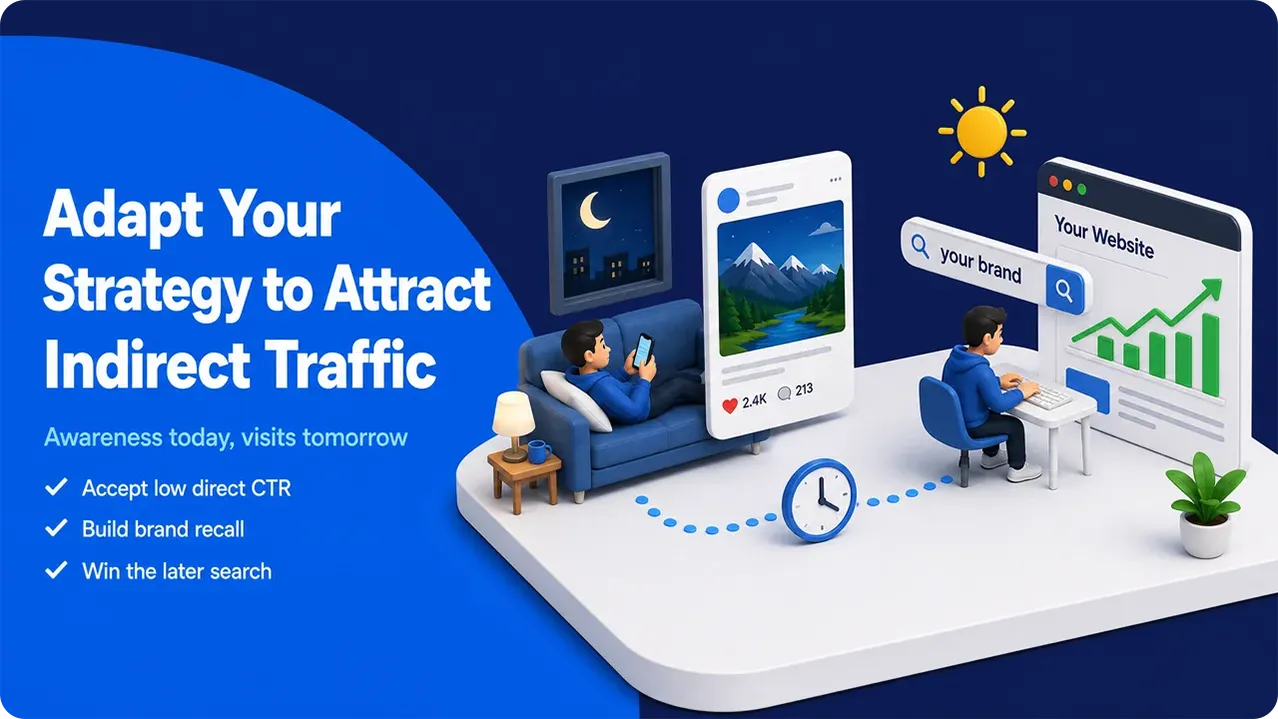
While these rates are generally pretty low (a top-ranking SEO blog might get around 40%), they don’t really represent the whole traffic-generation journey. Social media is often best used to build awareness and drive traffic indirectly.
A potential customer who’s mindlessly scrolling late at night might not instantly want to go and buy your product, but a clever post or short-form video might stick in their heads enough that they go looking the next day. This is the real power of social media from a marketing perspective.
While it’s great that people will come into the comments section and click your strategically placed link or navigate through your profile and find you that way, the vast majority of people who see your posts probably won't. X (formerly Twitter) generally boasts the best link CTR of all the platforms, sitting at a mighty 2%. LinkedIn, where you may expect people to be more engaged, on the other hand, only has 0.06%.
While these rates are generally pretty low (a top-ranking SEO blog might get around 40%), they don’t really represent the whole traffic-generation journey. Social media is often best used to build awareness and drive traffic indirectly.
A potential customer who’s mindlessly scrolling late at night might not instantly want to go and buy your product, but a clever post or short-form video might stick in their heads enough that they go looking the next day. This is the real power of social media from a marketing perspective.
7. Make Use of Marketplace
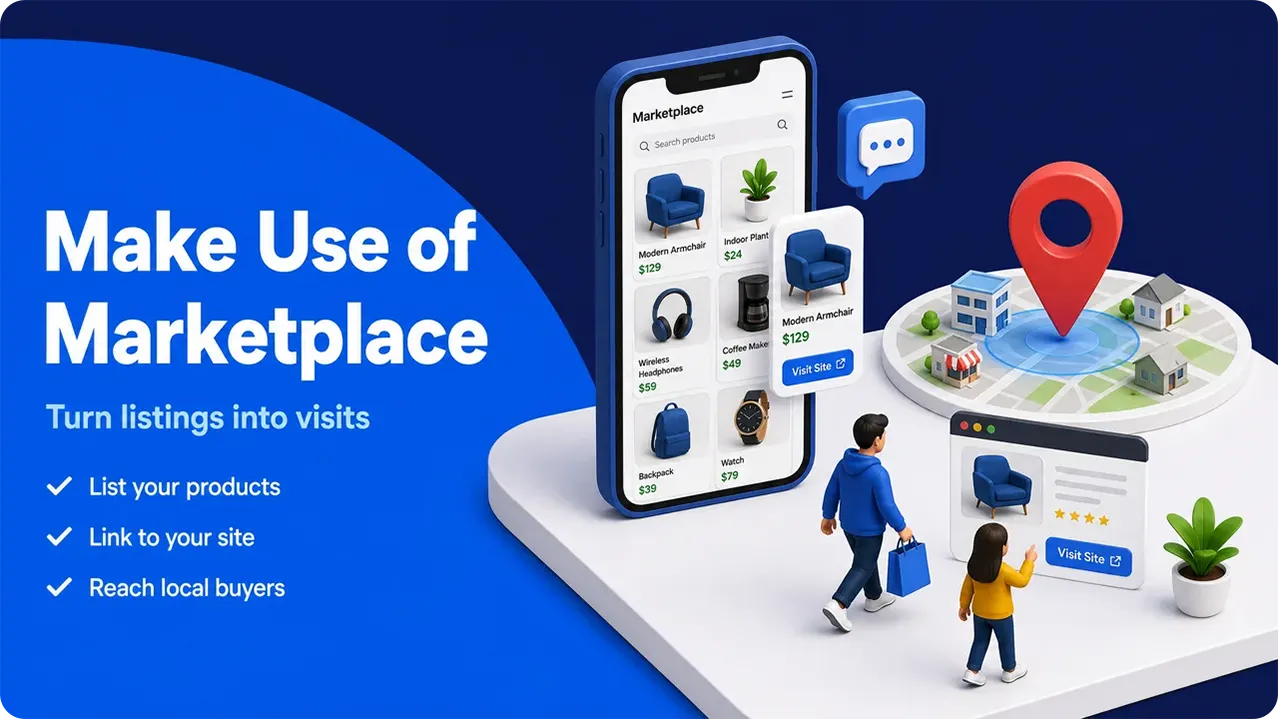
While the original intention of features like Marketplace was for social media platforms to build on their community elements and allow people to sell second-hand goods, they can actually be a great way of reaching local customers and driving both foot and web traffic.
Post a few of your products as listings, and in the description, include a link to your site where they can see/learn more. This gives you three separate chances to turn idle curiosity into traffic;
Post a few of your products as listings, and in the description, include a link to your site where they can see/learn more. This gives you three separate chances to turn idle curiosity into traffic;
- Some viewers will click the link straight away and start browsing.
- Some might send a DM, giving you a chance to talk to them directly and build links, hopefully leading to a visit.
- Some might remember that you’re the guys who sell this thing and come back to you later.
This technique is particularly useful for businesses with a well-defined local market, as the searches people do on Marketplace are generally pretty well geographically defined within a certain radius.
Problems With Using Social Media To Drive Traffic
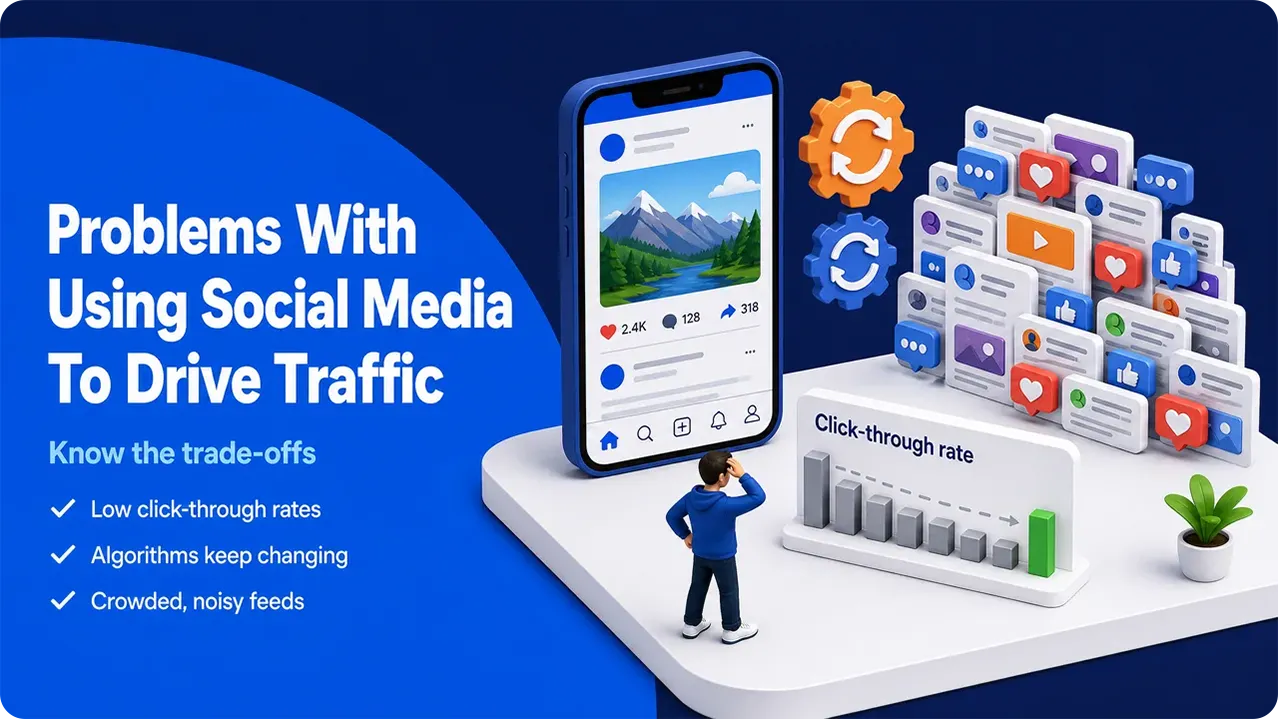
While social media is a very powerful marketing tool and can be a great way to attract traffic to your site, it’s not without its problems:
- Direct click-throughs are generally low
- Algorithms change and require constant refinement to make the most of them
- Targeting, unless you’re paying for it, is vague, relying on you influencing rather than controlling who sees your content
- It’s the very definition of a crowded marketplace- attention spans are short, and there are a lot of distractions
Even with these problems, social media stands out as a source of traffic thanks to the fact that it’s cheap - you don’t pay for clicks, and your content doesn’t need huge production values to be successful- and, with nearly 60% of the global population on one platform or another, the potential reach is huge.
It’s also a lot of fun to get out there and engage directly with your customers, elevating your marketing from a simple traffic grab to something that can benefit all aspects of your brand.
It’s also a lot of fun to get out there and engage directly with your customers, elevating your marketing from a simple traffic grab to something that can benefit all aspects of your brand.
Conclusion: Social Media As A Way of Earning Traffic
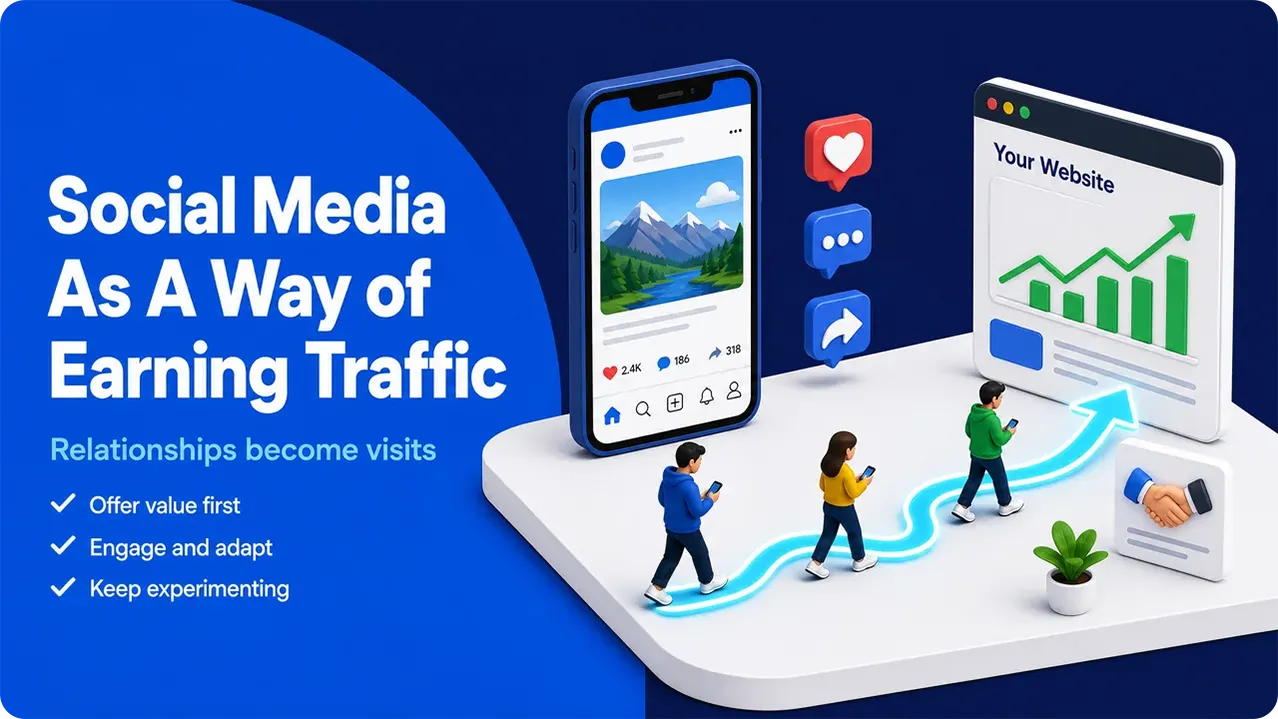
As much as we might all complain about it, there’s a reason that around 17% of global marketing budgets are spent on social media. Persuading people that visiting your site will help them solve their problems is much easier when you can engage in a little back-and-forth and build up relationships.
Making the most of this potentially huge reach and turning at least some of your followers into customers isn’t an exact science, but with a little art and finesse and a lot of determination and experimentation, social media can work wonders for your business.
Making the most of this potentially huge reach and turning at least some of your followers into customers isn’t an exact science, but with a little art and finesse and a lot of determination and experimentation, social media can work wonders for your business.
- Don’t just post links- you have to actually offer something worth engaging with. Links come second, if at all.
- Really spend a bit of time getting to know your target traffic. Creating content that appeals to them and is shown in the right places drives results.
- Stretch your creativity. People are bombarded with marketing all day, every day. To cut through, you need to stand out and offer them something they haven’t seen 60 times that day.
- Understand that the algorithm can and will change, so be prepared to pivot.
- Spend a little time reaching out and engaging with the people who engage with you. It builds relationships and lets you help them on their journey.
- Remember that traffic isn’t purely driven by people clicking links- time spent building the brand on social media is still earning you visits.
- You’re not limited to just the direct followers you earn. Reach out through all a platform’s features and use them to full advantage.
- Remember that you never know which post will do numbers, so keep at it and always be refining your efforts as you go.
- If all else fails, every social media platform runs paid ads. They’re so successful because these ads offer incredibly granular targeting and the model works.
While social media shouldn’t be the only tool in your marketing box, it is an important one. If you can break through the noise and draw in a little awareness for your brand, the results can be striking. We’re living in an attention economy after all.