.webp)


.svg)


.svg)
.svg)
SEO, or Search Engine Optimization, is the art of making search engines and AIs like ChatGPT better understand your content and help users find your website. Over the long run, SEO tends to offer the best return on investment, and the amount of traffic it can generate is astounding.
Google alone drives around 63% of all web traffic and accounts for around 90% of all searches, so ranking here should be the aim of pretty much any digital marketing strategy. Of course, we’re now well into the age of AI, and search summaries and chatbot conversations are playing an ever-increasing role too.
Google alone drives around 63% of all web traffic and accounts for around 90% of all searches, so ranking here should be the aim of pretty much any digital marketing strategy. Of course, we’re now well into the age of AI, and search summaries and chatbot conversations are playing an ever-increasing role too.
The Aim of SEO
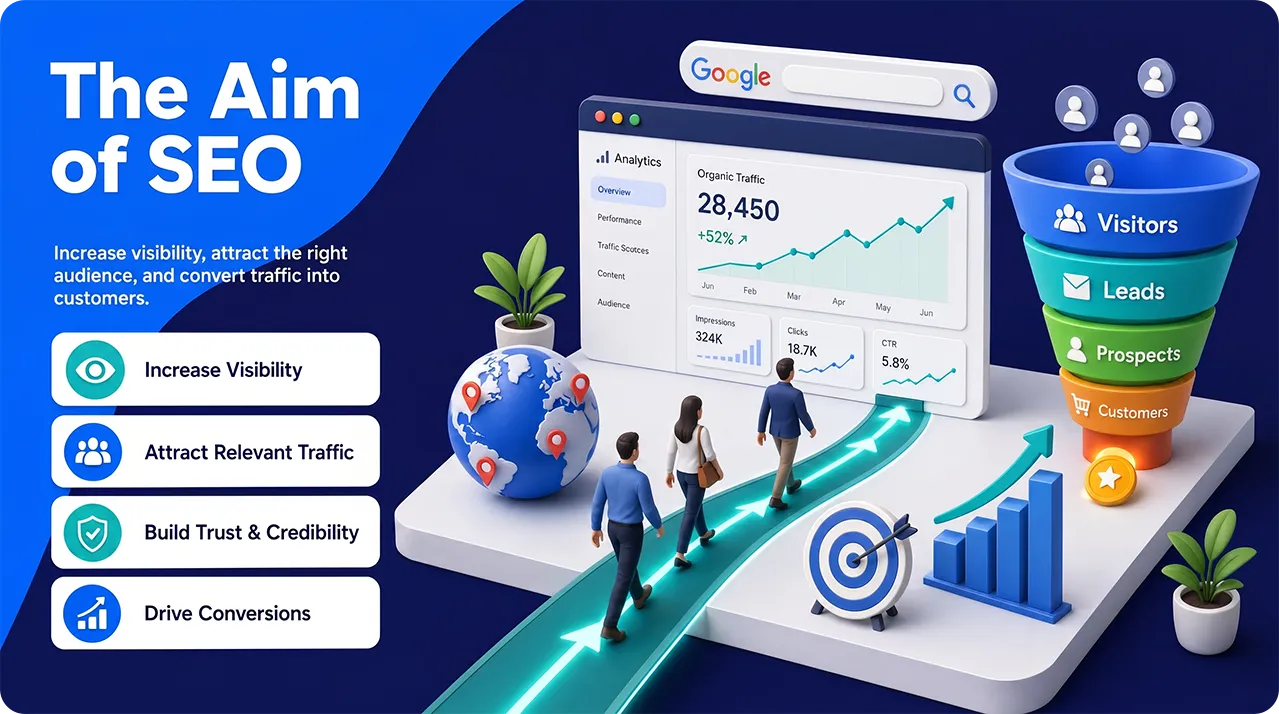
Put simply, the main aim of SEO is to increase organic traffic by giving searchers useful answers on your website. This answer might be in the form of a blog like this that explains a concept and how you can help them with their problems, a landing page that sells them a service, or even the product that they’re looking for.
Search engines and AIs want to be able to offer the best answers to their users. Working on your SEO means that you’re thinking about how users see your content and if it has the best information relating to a query and is therefore the best option for Google or ChatGPT to serve up.
Once upon a time, the way that we went about this was simple; in the early days of the internet, just mentioning a keyword again and again was enough to ensure you ranked. Today, there are a lot more moving and interconnected parts that you need to think about.
How Does SEO Work?
Before you can get started climbing up the ranks, it makes sense to have a basic grasp on the mechanics of search engines and AIs. Don’t worry, this really isn’t as complicated as it sounds.
Three pillars go into deciding how search engines rank their results pages for any given query and how AIs structure their answers:
- Technical SEO- the “behind the scenes” things, including how quickly your site loads, how easy it is for search engines and AIs to understand, and a few other factors.
- On-page SEO- this is what most people think of when they think of search engine optimization. It’s basically creating content that appeals to search engines and AIs.
- Off-page SEO- how links to your site on other pages relate and lend authority to your content.
Combining elements from each of these three pillars should give you the best chance of ranking.
How Do Search Engines and AIs Work?
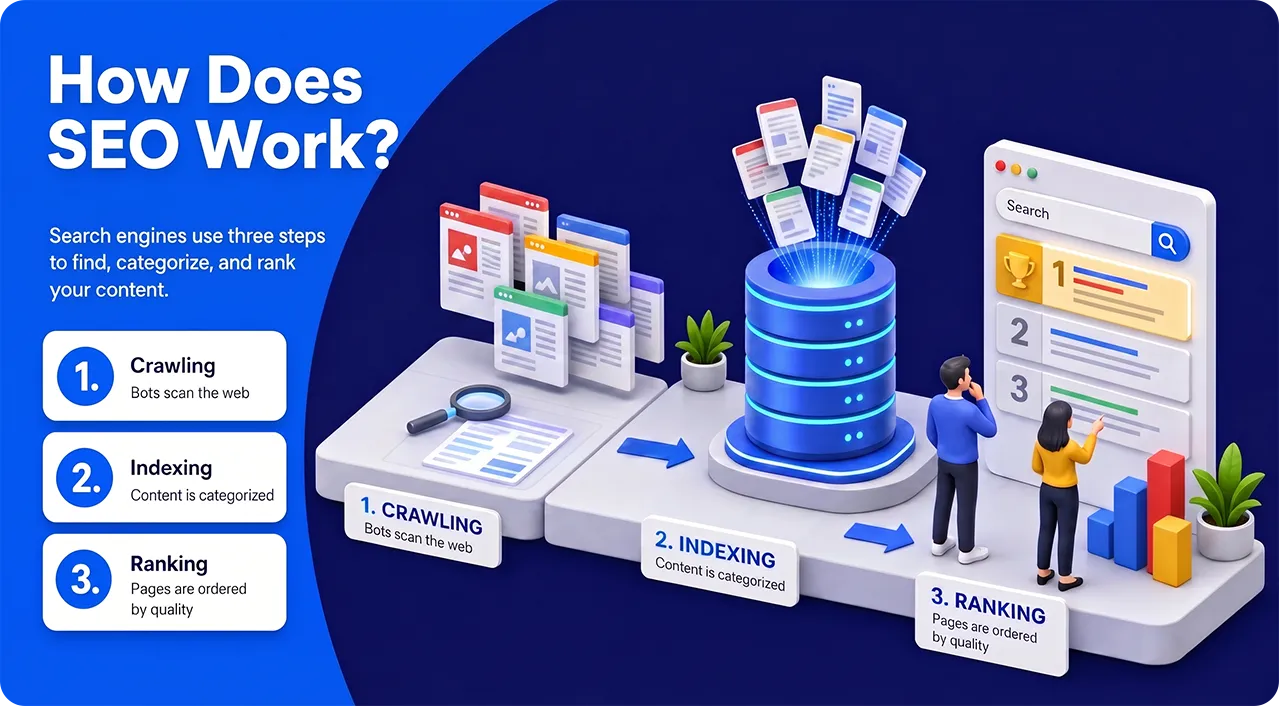
Search engines like Google and chatbots like ChatGPT use three steps to find, categorize, and rank your content. These are crawling, indexing, and ranking.
Crawling
The first step that AIs and search engines take is sending out bots to trawl through the internet and find all the content they can. These bots are called crawlers or spiders, and they navigate their way around the web, following links and reporting their findings back. This can take them anywhere between a couple of hours and a couple of weeks- the internet is a big place.
You can make life easy for these crawlers (and increase your chances of being indexed) by organizing your site, regularly updating it, and fixing any broken links that might confuse them.
You can make life easy for these crawlers (and increase your chances of being indexed) by organizing your site, regularly updating it, and fixing any broken links that might confuse them.
Indexing
Once the crawlers report back, the information about each page is then organized into a huge index containing nearly every page online. This index is broken down into broader categories and involves the analysis of the content to make sure that it can be offered as a result for a given search or query. This is mostly done by scanning the content for keywords and trying to get an understanding of what it’s really about.
You can improve how relevant your content is in the index by ensuring that it’s keyword-rich, unique, and using things like meta-tags and alternative image text to help Google et al understand the content better.
You can improve how relevant your content is in the index by ensuring that it’s keyword-rich, unique, and using things like meta-tags and alternative image text to help Google et al understand the content better.
Ranking
Once your content has been indexed, it’s ranked for quality and relevance (we’ll cover this in more detail in the next section). This allows AIs and search engines to decide which bits of content are the best match for what their users actually want, and enables them to present them in descending order.
Most SEO activity is based on ensuring that your content ranks well for the relevant searches, and this is the area that we’ve got the most influence over. The basic premise is that you want to write high-quality content that targets different search intents- whether those are people looking for goods and services or just a little more info.
Most SEO activity is based on ensuring that your content ranks well for the relevant searches, and this is the area that we’ve got the most influence over. The basic premise is that you want to write high-quality content that targets different search intents- whether those are people looking for goods and services or just a little more info.
How Do I Get SEO Content To Rank?

Every piece of indexed content is ranked via a system that we call EEAT- expertise, experience, and authority. These are the measures that search engines and AIs use to grade content and ensure that it’s useful for their users. Basically, the more useful your content is for a given question, the better it will rank.
Google’s algorithms are trained to prioritize helpful content and penalize stuff that looks like it’s set out to rank rather than offer real, human-centric answers. While this might sound like a problem from an SEO perspective, it’s actually pretty freeing- rather than stuffing keywords in again and again, you can concentrate on writing interesting, useful content.
Building Authority
Authority is, at its simplest, a basic measure of how credible your content is. It can be broken down into two different, but interlinked, areas: topical authority and page authority.
- Topical Authority- this is a cumulative metric that takes into account all of your content and determines if your site generally knows what it’s talking about on a given topic.
- Page Authority- this is based on the content of a given blog, landing page, or part of your site that you want to rank.
There are lots of factors that go into determining how authoritative a page is, but the most important is how well you back up your points with outgoing links and how many relevant pages link back to you.
Outgoing Links
Every piece of content that you write for your site should be backed up by solid research, and the easiest way to demonstrate that you’ve done the work is by linking back to your sources. Finding good quality, authoritative content to link to allows you to “borrow” a little of their authority.
This is always free, and you can link to whatever you want to (though some choices will be better than others), so scatter them around all of your content.
This is always free, and you can link to whatever you want to (though some choices will be better than others), so scatter them around all of your content.
Backlinks
Links from other pages that point towards your content are called backlinks, and they carry a lot of weight when it comes to SEO. These links serve as a sort of endorsement of your content, signalling that it’s reliable and high-quality enough that people want to draw attention to it.
The general rule is that the more links point to your content, the more authority you’ll build, but it’s important that the sites that host your links are relevant to your topic and the content that they’re embedded in serves some purpose beyond SEO. The best way to control this is to engage in content marketing.
The general rule is that the more links point to your content, the more authority you’ll build, but it’s important that the sites that host your links are relevant to your topic and the content that they’re embedded in serves some purpose beyond SEO. The best way to control this is to engage in content marketing.
Internal Linking
The third type of link that’s useful for SEO purposes are links that connect the various pages of your site. These internal links allow you to spread the authority that you build via blogs and news updates through your landing pages and product descriptions.
Make sure that your links are relevant to whatever you’re talking about, and add a little value by explaining the topic in more detail.
These are also a fantastic tool for helping AIs and search engine crawlers understand your content better.
Make sure that your links are relevant to whatever you’re talking about, and add a little value by explaining the topic in more detail.
These are also a fantastic tool for helping AIs and search engine crawlers understand your content better.
Expertise, Experience, and Trust
The other metrics that Google and AIs use to determine the quality of your content are all about who wrote it, what their background in the subject is, and how well it matches up with what other authoritative sources say on the matter.
These are all best tackled by ensuring that someone (either a qualified member of your team or a professional copywriter) with a proven track record is involved in the writing process. Their involvement can be verified by using a byline that links back to either their social media or a dedicated profile page explaining their qualifications.
These are all best tackled by ensuring that someone (either a qualified member of your team or a professional copywriter) with a proven track record is involved in the writing process. Their involvement can be verified by using a byline that links back to either their social media or a dedicated profile page explaining their qualifications.
Step 1: Technical SEO
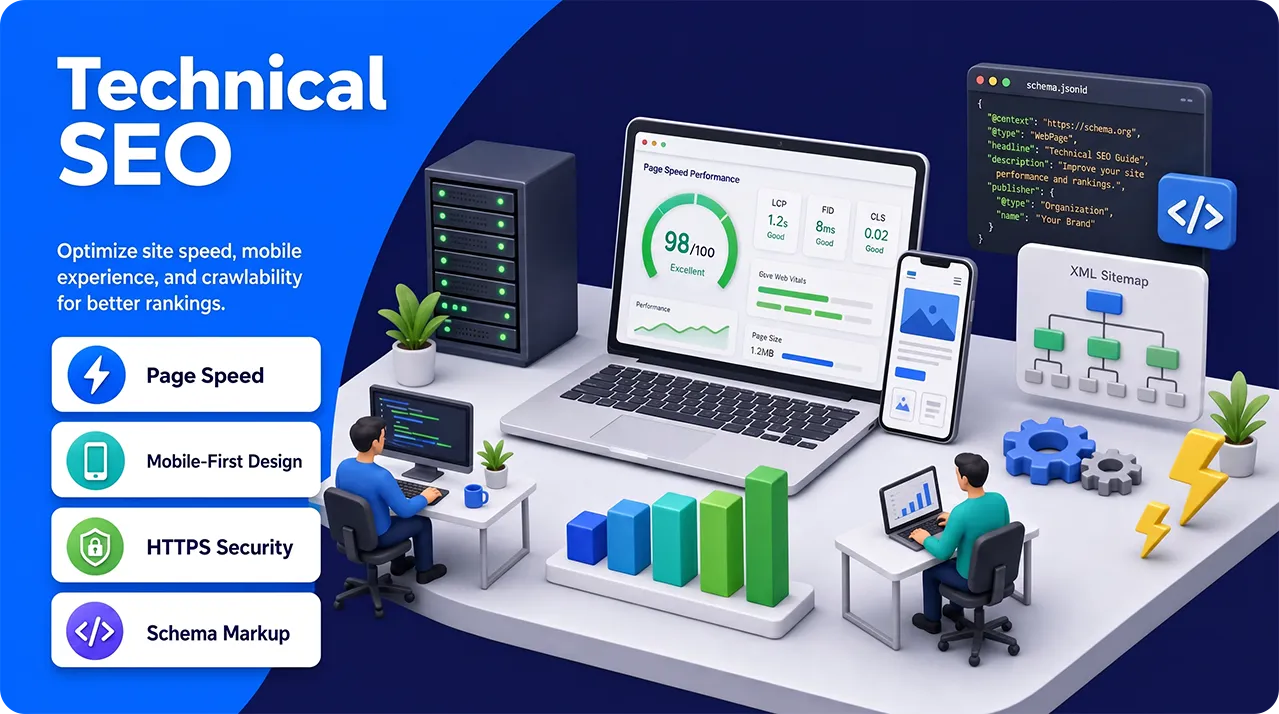
Technical SEO is the term for all your SEO efforts that aren’t focused directly on the content of your site. These elements play a much bigger role than many people think and, as they’re often neglected by your competitors, can be a really powerful tool. They focus on making sure that your site is easily digestible and understandable for crawlers and indexing, and help with quality of life for your human visitors.
UX Design
UX, or user experience, is all about how your site looks and functions as people navigate around it. It can have a massive impact on your SEO efforts. Put most simply, the quicker your site loads and the easier it is to navigate around, the longer people will spend on it and the better your “bounce rate” will be.
The single most important factor when designing your site is how quickly it loads. 38% of visitors are willing to wait up to 10 seconds, and 25% won’t even wait for 3. This is best tackled by ensuring that your images are kept to a minimum and all your caching settings are optimised for speed.
Around 60% of searches are done on people’s phones, which means that mobile-first design (or responsive design) is a must for most sites. Single-column layouts, simple menus, and quality-of-life plugins like “call now” buttons can really help here.
That being said, certain businesses might be more likely to receive results from people searching on desktops. These tend to be bigger purchases or more in-depth research topics, and Google will rank pages accordingly.
The single most important factor when designing your site is how quickly it loads. 38% of visitors are willing to wait up to 10 seconds, and 25% won’t even wait for 3. This is best tackled by ensuring that your images are kept to a minimum and all your caching settings are optimised for speed.
Around 60% of searches are done on people’s phones, which means that mobile-first design (or responsive design) is a must for most sites. Single-column layouts, simple menus, and quality-of-life plugins like “call now” buttons can really help here.
That being said, certain businesses might be more likely to receive results from people searching on desktops. These tend to be bigger purchases or more in-depth research topics, and Google will rank pages accordingly.
Structured Data
Search engines and AIs, as clever as they seem, are still machines- they don’t really “understand” your content but rather evaluate it through various signals that allow them to make sense of it.
One way we can help them to make this evaluation is by deploying structured data like Schema Markup. This is a simple code that sits in the HTML header of your page and contains relevant information about your site and business.
Not only do these markup languages mean that AI and search engines can be more confident in their results, they also allow us to create “rich snippets” which include things like call buttons, pricing information, and FAQs right from the search results page.
One way we can help them to make this evaluation is by deploying structured data like Schema Markup. This is a simple code that sits in the HTML header of your page and contains relevant information about your site and business.
Not only do these markup languages mean that AI and search engines can be more confident in their results, they also allow us to create “rich snippets” which include things like call buttons, pricing information, and FAQs right from the search results page.
Listings and Links
A good source of backlinks that has an outsized impact on your SEO efforts (and can bring in a lot of business themselves) are directories and listings sites. Not only do these offer a good quality backlink to help boost your authority, but they can also be used to place your business in the community (whether that’s online or in the real world).
These should, wherever possible, link back to your homepage and help build a little topical authority, and absolutely must always have your contact details- known as your NAP (name, address, phone number) presented in the same format.
These listings are particularly useful if you’re aiming to bring in local business, placing you firmly in a certain locality. They can also be helpful if you’re offering niche services by marking you out as a member of that particular community.
These should, wherever possible, link back to your homepage and help build a little topical authority, and absolutely must always have your contact details- known as your NAP (name, address, phone number) presented in the same format.
These listings are particularly useful if you’re aiming to bring in local business, placing you firmly in a certain locality. They can also be helpful if you’re offering niche services by marking you out as a member of that particular community.
Step 2: Researching Your Keywords
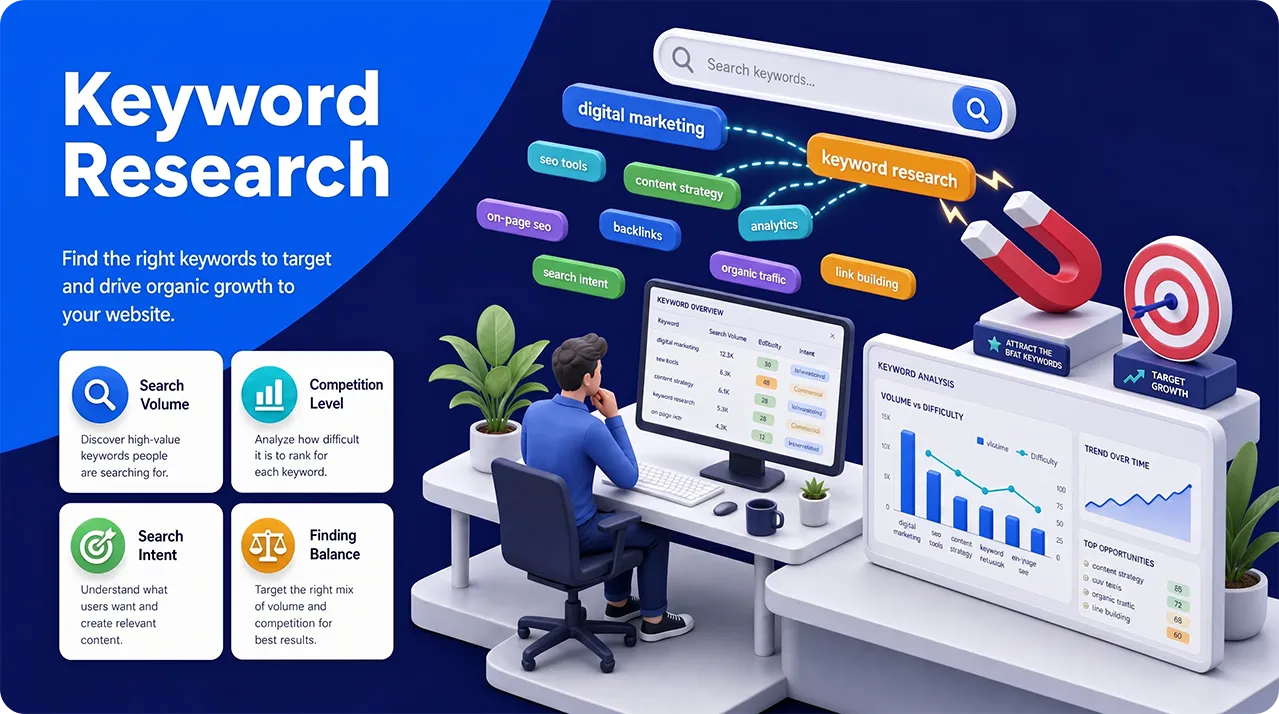
The primary element of any SEO content is the keyword. These are the words and phrases that people are entering into search bars or using in their conversations with chatbots. They’re the signals that search engines and AIs use to understand what people are really looking for.
In the early days of the internet, content would simply be ranked by how often the exact search phrase was mentioned, but this led to all kinds of system gaming, so today things are considerably more involved, and stuffing like this is more likely to see you demoted rather than hitting that top spot.
Finding Keywords
All your content should hang on a target keyword that you want to rank for or have AI mention you when it comes up in a query. The first step towards identifying which ones are most useful is simply to have a brainstorming session.
You could then manually search for all the potential keywords that you came up with and try to reverse engineer the content that you find, or, more sensibly, you could use a tool to do this for you.
Using a tool will present you with various bits of useful data, including:
You could then manually search for all the potential keywords that you came up with and try to reverse engineer the content that you find, or, more sensibly, you could use a tool to do this for you.
Using a tool will present you with various bits of useful data, including:
- Volume: An estimate of how many searches are done each month for that keyword.
- Competition: How many other pages are trying to rank for that particular keyword.
- Difficulty: an estimate of the average authority of each of those pages.
Finding Balance
While jumping in and writing content to target the greatest number of searches possible is always tempting, it’s often not the best use of time and resources. Instead, it’s often better to find a lower-volume keyword that you can actually get to (or near to) the top spot for.
96% of all traffic from Google goes to sites ranked on the first page of results, and only 0.63% goes to anything from the second page onwards. This means that ranking well for a lower-volume keyword might be the more sensible option- a bigger slice of a smaller pie, if you will.
96% of all traffic from Google goes to sites ranked on the first page of results, and only 0.63% goes to anything from the second page onwards. This means that ranking well for a lower-volume keyword might be the more sensible option- a bigger slice of a smaller pie, if you will.
Putting Keywords into Action
Once you’ve worked out what you want to rank for, it’s time to actually start writing. Your keywords should be scattered around your content in a natural way, using them frequently but avoiding the temptation of becoming repetitive or spammy.
Remember, your primary audience is always actual humans, and people will notice if you simply repeat yourself over and over again. In fact, sending signals of “overoptimization” can be hugely counterproductive and end up with you moving down the rankings rather than up. Luckily, AIs and modern search engines tend to like the same things that people do when it comes to writing.
Remember, your primary audience is always actual humans, and people will notice if you simply repeat yourself over and over again. In fact, sending signals of “overoptimization” can be hugely counterproductive and end up with you moving down the rankings rather than up. Luckily, AIs and modern search engines tend to like the same things that people do when it comes to writing.
Semantic Relations
It’s also worth remembering that search engines and AIs group keywords into bigger topics through a process called latent semantic indexing. This means that while you might target something like “pizza shop”, you could also use “takeaway”, “pizza delivery” or other related terms and still rank well for your target.
Not only does this free you from the need to repeat the target phrase over and over, it also means that you can branch out and capture other related searches with the same content.
Not only does this free you from the need to repeat the target phrase over and over, it also means that you can branch out and capture other related searches with the same content.
Targeting Intent
There are basically two reasons people turn to the internet: they’re either looking for information or they’re looking to buy something. The keywords you choose to use influence which of these search intents you’ll appear for.
As a general rule, landing pages should have more “urgent” keywords like “emergency callout plumber”, while blogs for the same business might target “bathroom renovation choices”.
As a general rule, landing pages should have more “urgent” keywords like “emergency callout plumber”, while blogs for the same business might target “bathroom renovation choices”.
Targeting Closely
While it might feel tempting to create a “super-blog” that targets literally everything about your site, this is a bad idea for a few reasons. Firstly, people won’t read it all, and this will damage your engagement metrics, and secondly, search engines and AIs will read it as “overoptimization” and trying to game the system.
Keeping your keywords targeted means that when people search for them, the content that they find is more relevant, useful, and likely to lead to more contact from them.
Keeping your keywords targeted means that when people search for them, the content that they find is more relevant, useful, and likely to lead to more contact from them.
AI and Keywords
While search engines do make use of topical categories and LSI, AI places a lot more emphasis on them. Having a range of related terms included in your text means that AI can be even more confident when it uses your information as a reference in its answers. Basically, including the LSI keywords related to your target means that AI can get a much better understanding of the topic you’re covering.
If a blog includes the terms “windows”, “sash”, and “inward opening”, there’s a better than even chance that that blog is about types of windows in some way. AI will link all these terms together to allow it to craft a more detailed answer to a user’s query and link to your site as a reference.
If a blog includes the terms “windows”, “sash”, and “inward opening”, there’s a better than even chance that that blog is about types of windows in some way. AI will link all these terms together to allow it to craft a more detailed answer to a user’s query and link to your site as a reference.
Step 3: Writing Your SEO Content
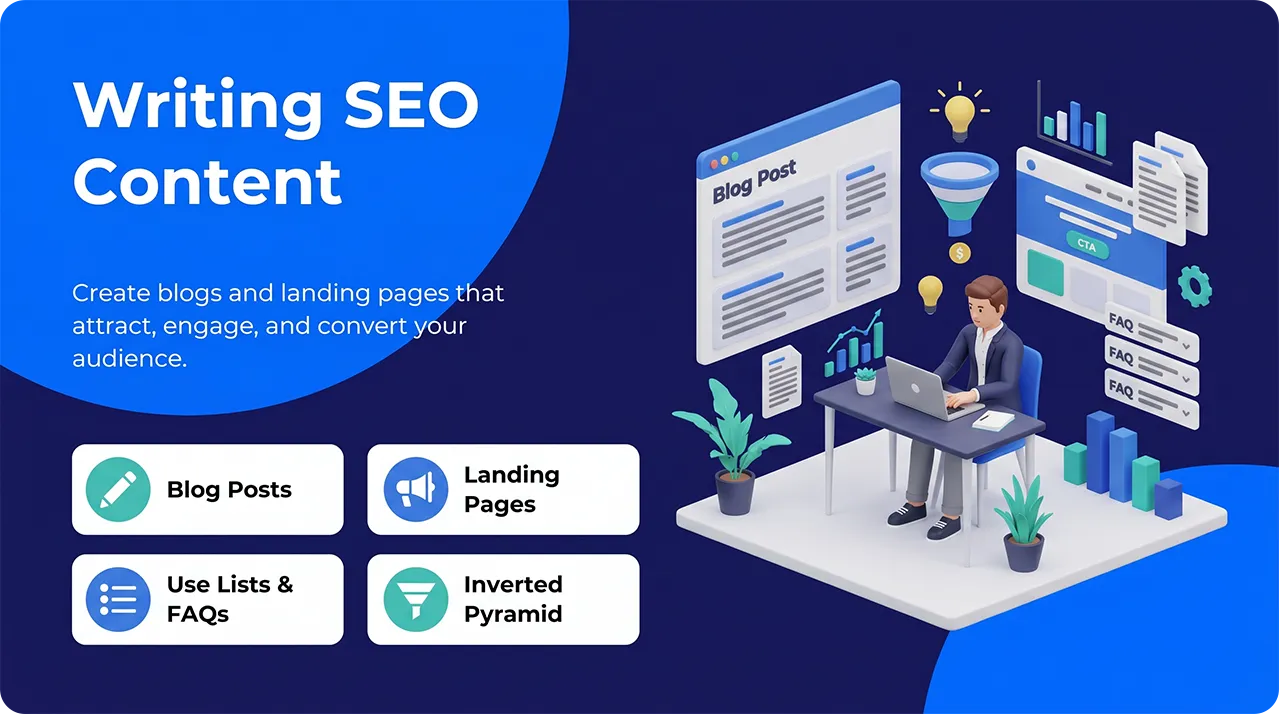
For most websites, two main types of content are useful for SEO purposes: blogs and landing pages. Both need to be written while thinking about the EEAT principles we laid out in the last section, but each targets a different type of search intent.
Exactly what this content should look like will vary between sites, with some being more useful than others. Take a look at what your competitors who rank well have done and try to outcompete them.
Blogs
Blogs are your chance to really demonstrate your knowledge, build topical authority, and help foster trust between you and your readers. They should explore a topic in a little depth and leave your readers feeling that they learned something.
These target general informational searches rather than direct sales, but that doesn’t mean that they’re not useful. In fact, sites with regularly updated blogs often see 67% more leads than others in the same sector without them.
As well as drawing these curiosity-driven searches towards your site, blogs are also a fantastic way of building and spreading authority across your other content.
These target general informational searches rather than direct sales, but that doesn’t mean that they’re not useful. In fact, sites with regularly updated blogs often see 67% more leads than others in the same sector without them.
As well as drawing these curiosity-driven searches towards your site, blogs are also a fantastic way of building and spreading authority across your other content.
Landing Pages
While blogs target people looking for a little more information on a topic, landing pages are there to capture searches from people who want to buy right there and then. They’re best written as short, punchy, sales-focused copy that explains what you do, which problems you can solve, and why someone should choose you.
Each service that you offer should have its own dedicated landing page. This allows you to target certain searches more closely and provide people with what they’re looking for. Someone who wants to book a holiday doesn’t want to read about your offers for short-term let landlords after all.
Each service that you offer should have its own dedicated landing page. This allows you to target certain searches more closely and provide people with what they’re looking for. Someone who wants to book a holiday doesn’t want to read about your offers for short-term let landlords after all.
How To Actually Write Your Content
Whatever type of content you’re writing, there are a few tips and tricks that can help it stand out to search engines, AIs, and humans alike:
- Present Information in an “Inverted Pyramid”- This basically means giving a short, simple answer first and then expanding on it as you go. Someone who stops reading after the first sentence should still know more than when they started.
- Use Lists and Bullets - Break topics down into simple, easy-to-parse chunks. This makes life easy for humans and AIs alike.
- Use FAQs- The structure of FAQs, with a clear question and answer, is particularly useful for attracting AI attention. It also avoids cluttering up your copy and can be a great place to deploy your keywords.
- Use Tables: If you’re comparing things, the neatest and easiest way to read it is to have a simple table. This really stands out to AIs and search engines.
Step 4: Building Backlinks
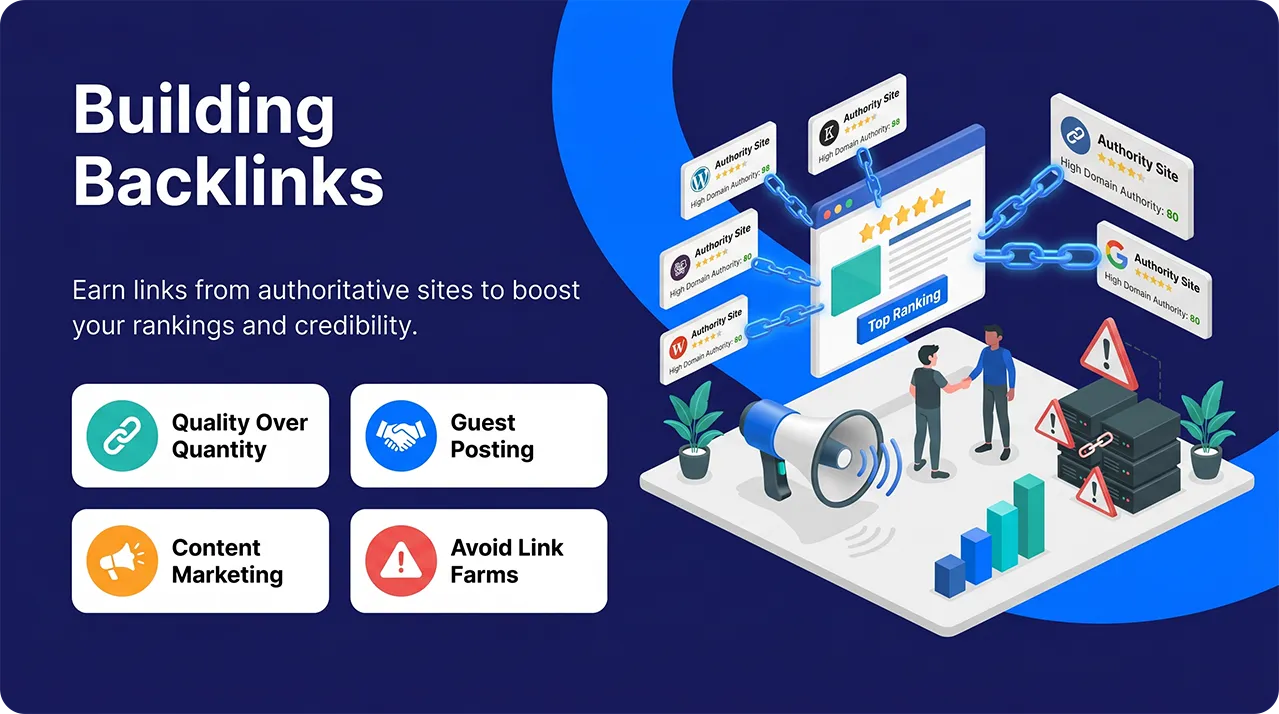
We’ll cover this in more detail in the content marketing blog, but the general gist is that you want to have the content that you’re trying to promote linked to by high-authority, relevant sites. Some of this will happen naturally over time as people find and share your blogs, others can be arranged via offering to write guest posts and content marketing.
There are no bad legitimate backlinks, but being referenced by high-authority, topically relevant sites will have a much greater impact on your rankings.
This emphasis on relevance is even more important when it comes to getting AI to include you in their mentions- remember that they can only really reference between 5-8 sites in a summary, so topical authority is a vital metric.
Common Problems With Using SEO To Generate Traffic
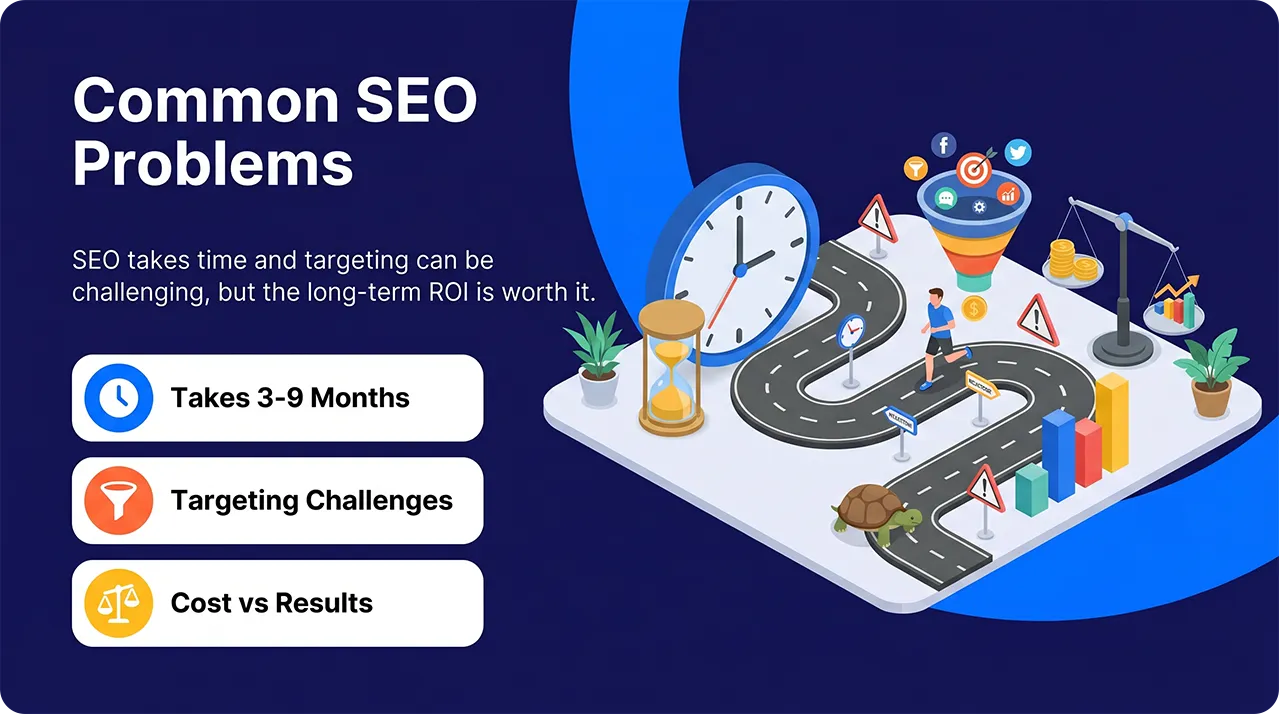
While SEO is, by pretty much any measure, the most cost-effective way of generating traffic, it’s not without its weaknesses that need to be considered before you invest your time and energy.
Firstly, SEO is not a quick process. Results might take anywhere between 3 and 9 months to really start to show. For newer sites or particularly high-competition keywords, it might be even longer. This is certainly a marathon rather than a sprint.
Secondly, while SEO can bring in more potential customers than any other digital marketing channel, it’s not a particularly closely targeted way of generating relevant traffic. While you’ll get more visitors than with say PPC advertising, you’ve got no guarantees that they’ll be particularly relevant. There are things we can do to help this situation, like targeting local traffic or choosing our keywords carefully, but ultimately, we’re limited to influence rather than control.
While we’re limited in the targeting that we can do, a well-executed SEO strategy should more than make up for this in the sheer bulk of traffic it can attract. It’s also worth remembering that while you pay for every visit from a paid ad, the same isn’t true for organic traffic from search engines or AI- the irrelevant visits don’t matter nearly so much when you’re not paying for them.
Conclusion: Why You Should Be Using SEO To Generate Traffic
Put simply, people are out there looking for answers to their questions, and SEO is your tool to be the one who provides them. Getting started is simple and, if you own a website, you’re likely already doing the basics:
- Build Your Site To Perform Fast - choose images carefully to minimize loading time.
- Implement Schema Markup- Help search engines and AIs understand your site. This can also help you stand out in the SERPs by creating rich snippets.
- Identify Which Relevant Keywords Your Customers Are Searching For- Use a keyword checker tool to balance your efforts between volume, difficulty, and competition.
- Write Content That Provides Real Value- Answer your customers' questions and use external links to build authority and offer more information. Remember to build around your keywords and that your primary audience is always going to be human.
- Avoid Overoptimization- Good quality content that serves a purpose beyond SEO will rank better and be far more engaging.
- Build Links Through Content Marketing and Listing Your Business to Increase Authority- offer content to relevant, high-authority sites that operate in your sector. It helps build authority and can bring in more direct traffic than you might think.
When it comes to getting a lot of traffic to visit your site without breaking the bank, SEO should be your go-to choice of channel. While it takes time to reach full effect, once content has been created, it can sit on your site, generating visits from search engines and AI mentions for years to come without costing you for each click.