.webp)


.svg)


.svg)
.svg)
While analytics aren’t going to bring in any traffic on their own, they’re still a vital part of the marketing process. When you apply the insights and lessons they offer, you can fine-tune all your other efforts, ultimately earning a lot more visits.
Put simply, Google Analytics and other similar products are amongst the most powerful tools in any marketer’s arsenal. While they don’t earn visits directly, they allow you to assess the impact of all your other efforts and refine your offering accordingly. You can use them to see where you’re doing well and what needs improvement, generating new traffic either through doubling down or changing direction entirely. Basically, they let you make choices armed with the best available information.
Here’s how to make the most of them:
Put simply, Google Analytics and other similar products are amongst the most powerful tools in any marketer’s arsenal. While they don’t earn visits directly, they allow you to assess the impact of all your other efforts and refine your offering accordingly. You can use them to see where you’re doing well and what needs improvement, generating new traffic either through doubling down or changing direction entirely. Basically, they let you make choices armed with the best available information.
Here’s how to make the most of them:
1. Find Out Where Your Current Traffic Comes from
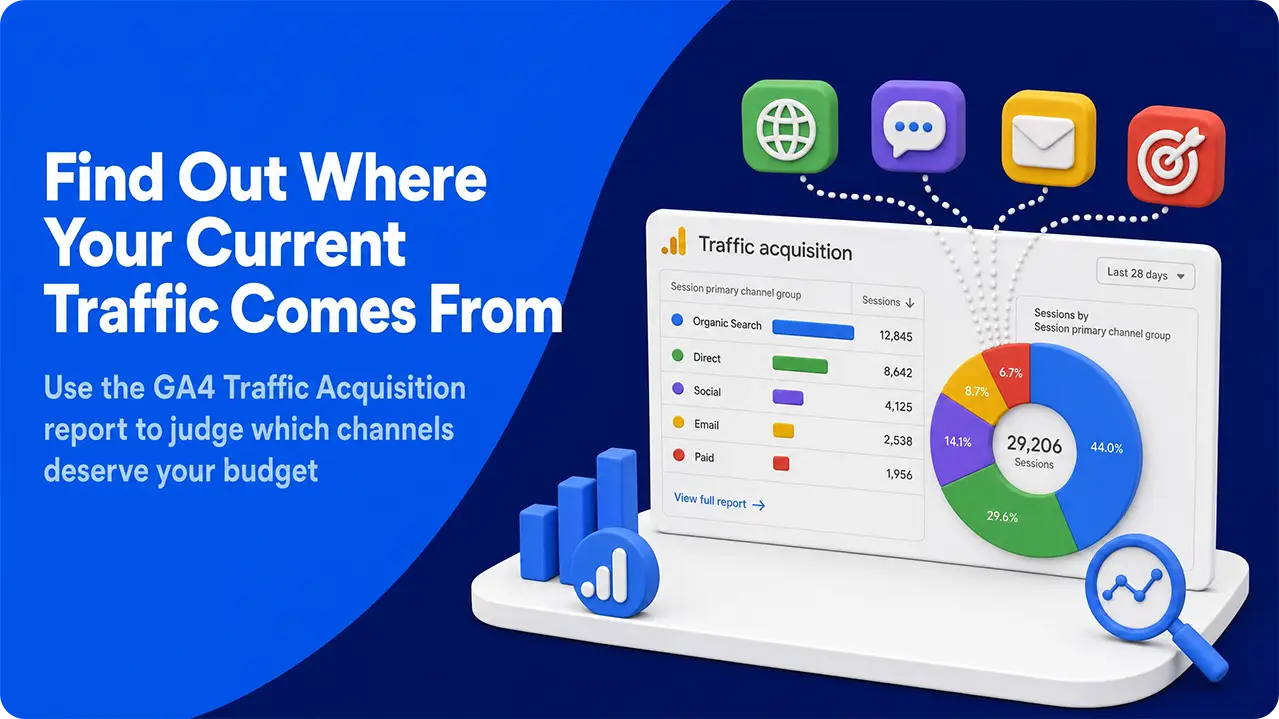
Understanding how people are currently finding your site allows you to judge where to put your future efforts better.
The first thing you should do when using analytics to refine your marketing efforts is to work out what’s already bringing visits to your website. Google Analytics 4 provides fairly detailed information on this in its traffic acquisition reports. Armed with this information, you can start to make choices about what is and isn’t worth putting more time into.
For some websites, most of your traffic might be coming from social media, in which case it’s probably worth spending more time posting and interacting with your community. For others, search might be the most useful, meaning that creating and refining your blogs, landing pages, and content would be the best use of your time. Others might be getting the bulk of their traffic from paid ads or retargeting previous customers through email campaigns.
Alternatively, you could take the view that spending time refining your underperforming channels makes the most sense. It really depends on the numbers you’re seeing, your budget, and the time you have to invest.
The first thing you should do when using analytics to refine your marketing efforts is to work out what’s already bringing visits to your website. Google Analytics 4 provides fairly detailed information on this in its traffic acquisition reports. Armed with this information, you can start to make choices about what is and isn’t worth putting more time into.
For some websites, most of your traffic might be coming from social media, in which case it’s probably worth spending more time posting and interacting with your community. For others, search might be the most useful, meaning that creating and refining your blogs, landing pages, and content would be the best use of your time. Others might be getting the bulk of their traffic from paid ads or retargeting previous customers through email campaigns.
Alternatively, you could take the view that spending time refining your underperforming channels makes the most sense. It really depends on the numbers you’re seeing, your budget, and the time you have to invest.
2. Perform an Audit to Identify Your Best Content, Then Make More
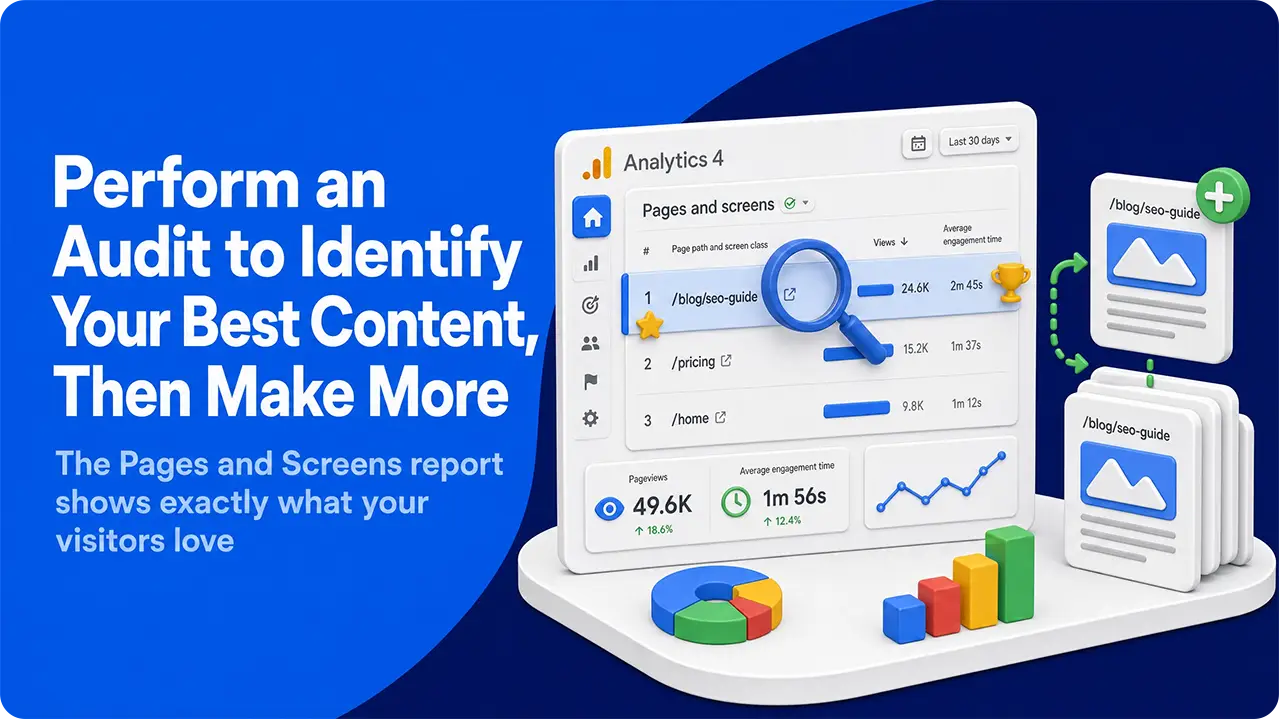
Working out which pages people like best allows you to create more and attract even more web traffic.
The Pages and Screens report (as Google calls it) gives you detailed information on which pages on your site people are actually visiting and how long they’re spending (on average) on each. This lets us work out what kinds of content our visitors really want. There’s a good chance that whatever platform you host your website on will have a report of this nature.
The idea here is simple; with the information from your analytics report, you can create more of the kind of content that people come to your site to see. You might be able to identify common themes, formats, and topics that are holding attention better than others; in which case, it makes sense to keep making more of that to attract new visitors and keep old ones coming back.
This will directly impact your choices about design, content types, and how you structure your site. Each contributes to a metric we refer to as “bounce rate” and this, in turn, impacts things like your search engine rankings, how likely your page is to be shared, and your advertiser quality score, ultimately impacting the amount of traffic you receive.
The Pages and Screens report (as Google calls it) gives you detailed information on which pages on your site people are actually visiting and how long they’re spending (on average) on each. This lets us work out what kinds of content our visitors really want. There’s a good chance that whatever platform you host your website on will have a report of this nature.
The idea here is simple; with the information from your analytics report, you can create more of the kind of content that people come to your site to see. You might be able to identify common themes, formats, and topics that are holding attention better than others; in which case, it makes sense to keep making more of that to attract new visitors and keep old ones coming back.
This will directly impact your choices about design, content types, and how you structure your site. Each contributes to a metric we refer to as “bounce rate” and this, in turn, impacts things like your search engine rankings, how likely your page is to be shared, and your advertiser quality score, ultimately impacting the amount of traffic you receive.
3. Monitor Your Demographics And Plan Accordingly
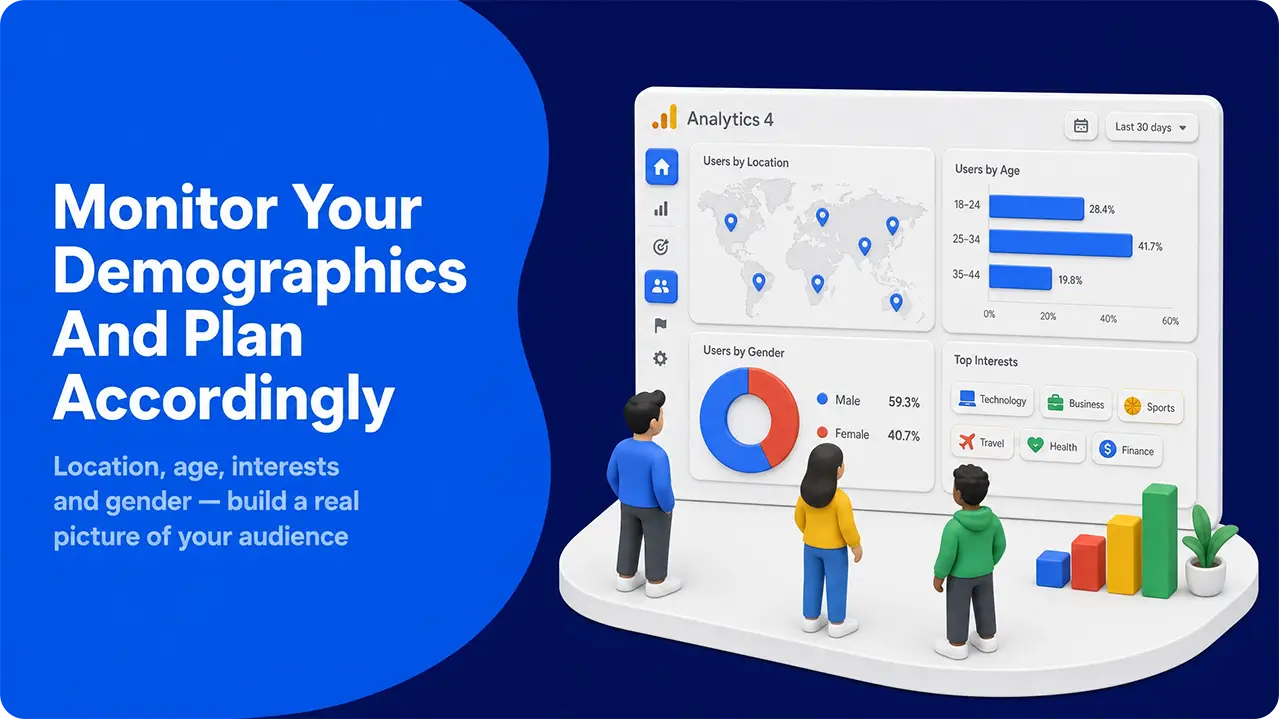
Understanding the types of people who already visit your website allows you to either focus on these groups or expand your efforts to target new groups of visitors.
Whenever we visit a website, we leave valuable data about ourselves behind, which tools like Google Analytics can help us understand. With these insights, we can plan our marketing efforts more accurately, either expanding towards a given demographic or increasing our hold on the share that we already have.
In terms of using analytics to generate new traffic, the most valuable insights that this data can offer are:
Whenever we visit a website, we leave valuable data about ourselves behind, which tools like Google Analytics can help us understand. With these insights, we can plan our marketing efforts more accurately, either expanding towards a given demographic or increasing our hold on the share that we already have.
In terms of using analytics to generate new traffic, the most valuable insights that this data can offer are:
- Visitor Location- which country, city, or even zip/postal code your visitors come from.
- Visitor Ages- A rough age range estimate for your visitors, generally presented as a percentage. This might be based on their cookies or the data they entered when creating a Google account.
- Visitor Interests- what kinds of websites do they visit, the things they search for.
- Visitor Gender- a rough estimate of the gender of your visitors, again generally presented as a percentage.
These data points allow you to better understand which types of traffic already visit your website. With this understanding, you can craft a user profile of your actual visitors and see how well it matches with your target audience.
From here, you can either change direction or double down on your current efforts in an attempt to change your visitors or solidify your current demographics. Whatever you choose, these reports should inform your next steps.
Content can be crafted to appeal to a certain age range or series of interests, whether this is video content or things like blogs and product descriptions. Paid advertising can be tuned to either expand out into new markets or target those who look like your current visitors.
From here, you can either change direction or double down on your current efforts in an attempt to change your visitors or solidify your current demographics. Whatever you choose, these reports should inform your next steps.
Content can be crafted to appeal to a certain age range or series of interests, whether this is video content or things like blogs and product descriptions. Paid advertising can be tuned to either expand out into new markets or target those who look like your current visitors.
4. Fix Underperforming Content
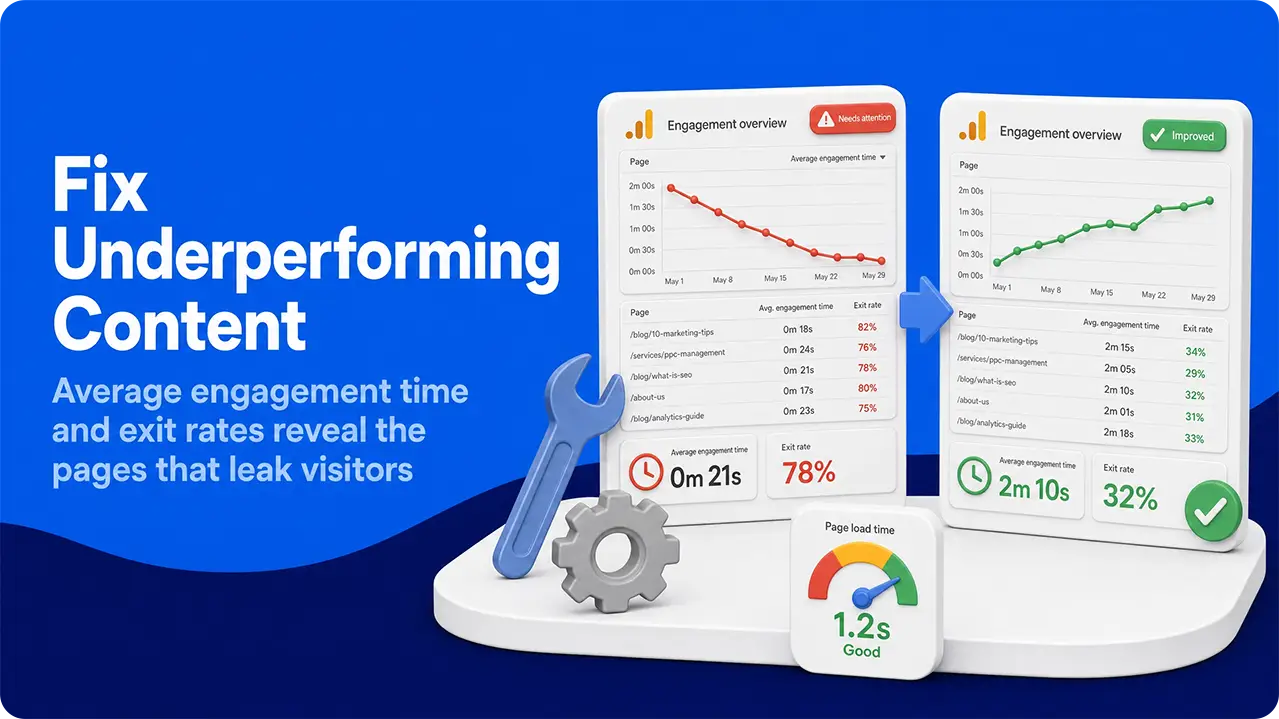
Understanding which pieces of content are not attracting enough traffic gives you the chance to fix them.
On the flip side of our previous point about developing more of the content that works, you can also use these tools to identify underperforming content and tweak it. The key metrics that you’re looking at here are time-on-page (known as Average Engagement Time on Google) and single-page exit rates.
These let you know the average length of time that people spend viewing your content and how many of them click away rather than navigating around your site. If a page is underperforming, there are certain things you can do to increase engagement with it and improve these stats:
On the flip side of our previous point about developing more of the content that works, you can also use these tools to identify underperforming content and tweak it. The key metrics that you’re looking at here are time-on-page (known as Average Engagement Time on Google) and single-page exit rates.
These let you know the average length of time that people spend viewing your content and how many of them click away rather than navigating around your site. If a page is underperforming, there are certain things you can do to increase engagement with it and improve these stats:
- Ensure the page loads quickly- 53% of people will navigate away if they’re left waiting more than 3 seconds.
- Improve the text- engaging text keeps people on your site longer.
- Update Broken Links: internal links help people navigate around your site. A 404 error message will make them navigate away.
- Ensure your design is easy to read: a cluttered or overly complex design will frustrate people, leading to a higher bounce rate.
These stats, particularly the length of time people spend on your page (known as bounce rate), affect your SEO performance. Engagement is a key indicator of user experience, and as Google and other search engines want to offer good results, they take this into account when determining their rankings. It also impacts your Advertiser Quality Score, helping your paid ads be seen by more people.
5. Monitor Which Searches Your Content Appears In
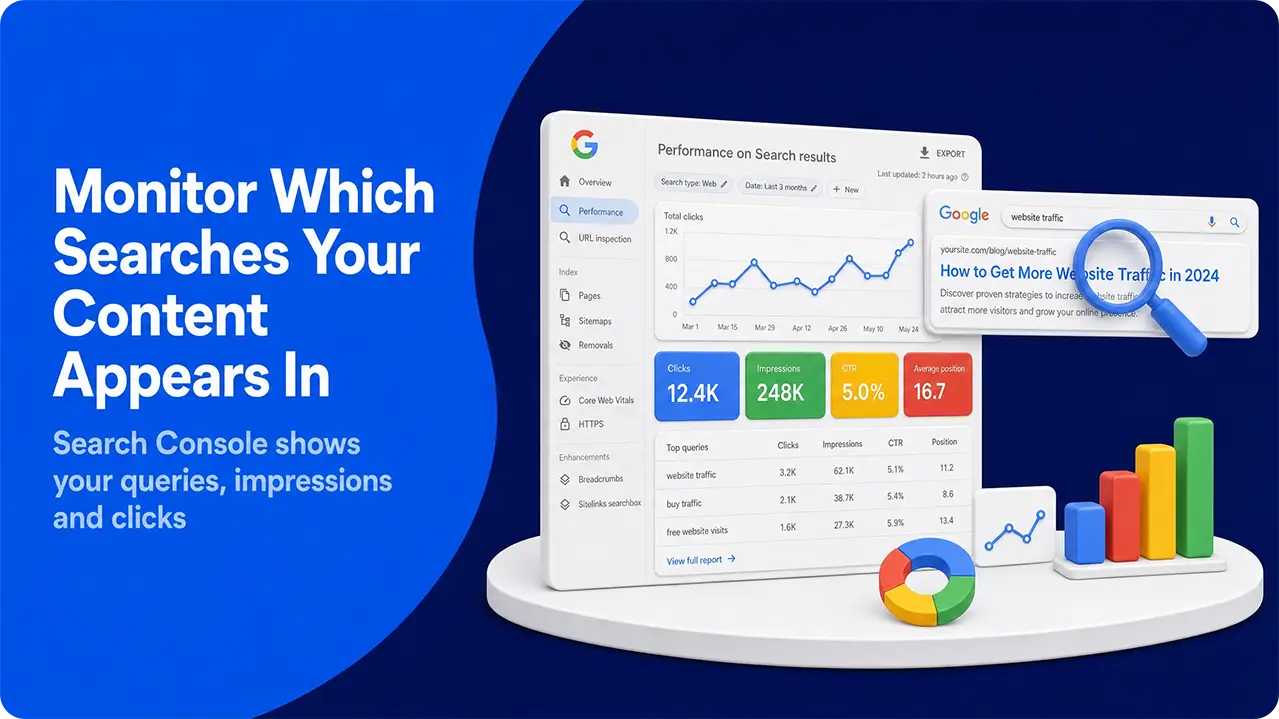
Knowing which search queries lead to website visits allows you to refine your SEO efforts.
About 63% of all online experiences start with someone searching for something. This means that search engine optimization is generally the best value way of generating traffic, combining long-lasting effects with potentially large numbers of visits and a relatively low cost. As with every other channel, the key to making the most of your SEO efforts is understanding what does and doesn’t work.
Analytics tools, like Google Search Console, allow you to monitor which search results your content appears in, how many times it appears over a given period of time, and how many clicks it receives.
This information allows you to judge how effective your content is in attracting clicks from search results pages. If you find that you’re getting lots of impressions (appearing in results) but relatively few of these are turning into actual visits, the issue might be your meta-title and meta-description.
These are the blue link text and the couple of lines of text underneath it on search results pages (SERPs). Generally, they should describe your content and tempt people to click your link rather than another result.
These reports might also highlight keywords that you could be targeting better, allowing you to further refine your existing content.
About 63% of all online experiences start with someone searching for something. This means that search engine optimization is generally the best value way of generating traffic, combining long-lasting effects with potentially large numbers of visits and a relatively low cost. As with every other channel, the key to making the most of your SEO efforts is understanding what does and doesn’t work.
Analytics tools, like Google Search Console, allow you to monitor which search results your content appears in, how many times it appears over a given period of time, and how many clicks it receives.
This information allows you to judge how effective your content is in attracting clicks from search results pages. If you find that you’re getting lots of impressions (appearing in results) but relatively few of these are turning into actual visits, the issue might be your meta-title and meta-description.
These are the blue link text and the couple of lines of text underneath it on search results pages (SERPs). Generally, they should describe your content and tempt people to click your link rather than another result.
These reports might also highlight keywords that you could be targeting better, allowing you to further refine your existing content.
6. Check Your Competitor’s Web Traffic
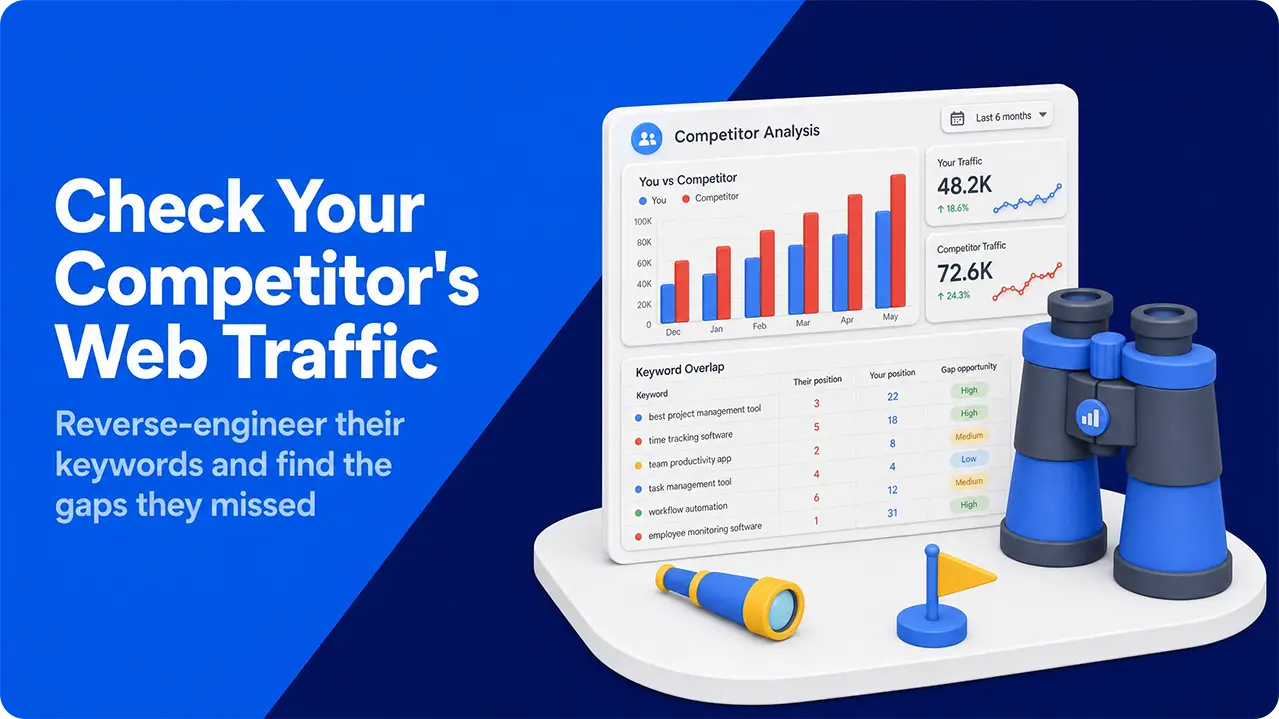
Gaining information on what is working for your competitors allows you to either find gaps in their strategies or compete with them directly.
Analytics tools aren’t limited to monitoring your own results. They can be used to estimate how much traffic your competitors are getting too. While they’re not absolutely perfect, they can provide you with a lot of valuable insights, allowing you to refine your own efforts considerably.
Not only do these tools provide a reasonably accurate estimate of the organic search traffic that visits your competitors’ sites, they can be used to reverse-engineer their strategies, highlighting which keywords they’re likely to be targeting. Armed with this data, you can start to make choices about the direction your own content should be heading in.
Ideally, you’ll be able to spot a gap where a keyword gets lots of search volume and is relatively easy to compete for, though this won’t always be possible. Instead, you can use the information from these tools to decide whether you should be aiming at the largest search volume or finding a compromise where you might be able to earn a larger slice of the total visits.
Analytics tools aren’t limited to monitoring your own results. They can be used to estimate how much traffic your competitors are getting too. While they’re not absolutely perfect, they can provide you with a lot of valuable insights, allowing you to refine your own efforts considerably.
Not only do these tools provide a reasonably accurate estimate of the organic search traffic that visits your competitors’ sites, they can be used to reverse-engineer their strategies, highlighting which keywords they’re likely to be targeting. Armed with this data, you can start to make choices about the direction your own content should be heading in.
Ideally, you’ll be able to spot a gap where a keyword gets lots of search volume and is relatively easy to compete for, though this won’t always be possible. Instead, you can use the information from these tools to decide whether you should be aiming at the largest search volume or finding a compromise where you might be able to earn a larger slice of the total visits.
7. Use Keyword Analytics Tools To Target New Traffic
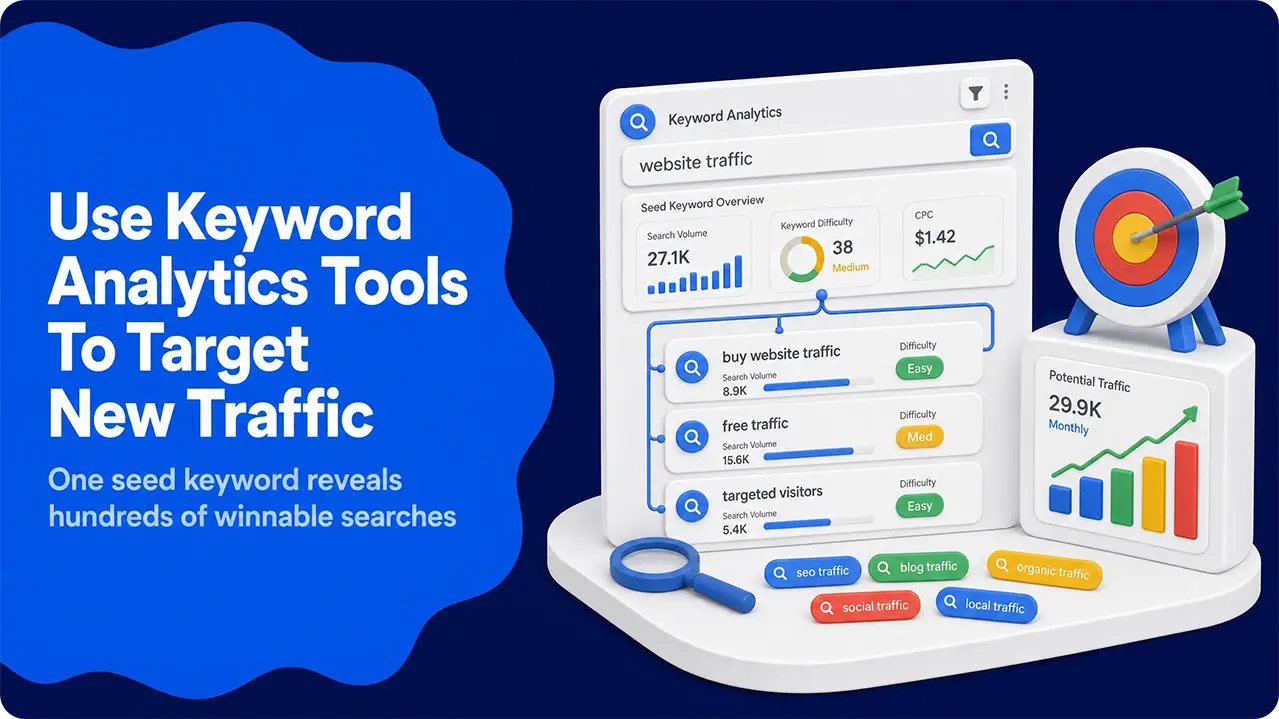
Finding new keywords to base your content on allows you to generate more traffic by appearing in more searches.
Along the same lines as our last section, there are tools out there that allow you to research your keywords, offering an understanding of what people are and aren’t searching for, before you start writing.
These tools can take a “seed keyword” (something related to your site) and generate a range of options related to it. They then present a report that lets you know who is targeting it, how often it’s searched for from a given target location, and how much traffic it might be able to bring in for you.
Combining this information with the data you get from checking your competitor’s web traffic means that you can refine your content strategy to target high-volume, low-competition searches and, hopefully, attract more traffic to your sites.
Along the same lines as our last section, there are tools out there that allow you to research your keywords, offering an understanding of what people are and aren’t searching for, before you start writing.
These tools can take a “seed keyword” (something related to your site) and generate a range of options related to it. They then present a report that lets you know who is targeting it, how often it’s searched for from a given target location, and how much traffic it might be able to bring in for you.
Combining this information with the data you get from checking your competitor’s web traffic means that you can refine your content strategy to target high-volume, low-competition searches and, hopefully, attract more traffic to your sites.
8. Use Platform and Channel Specific Tools
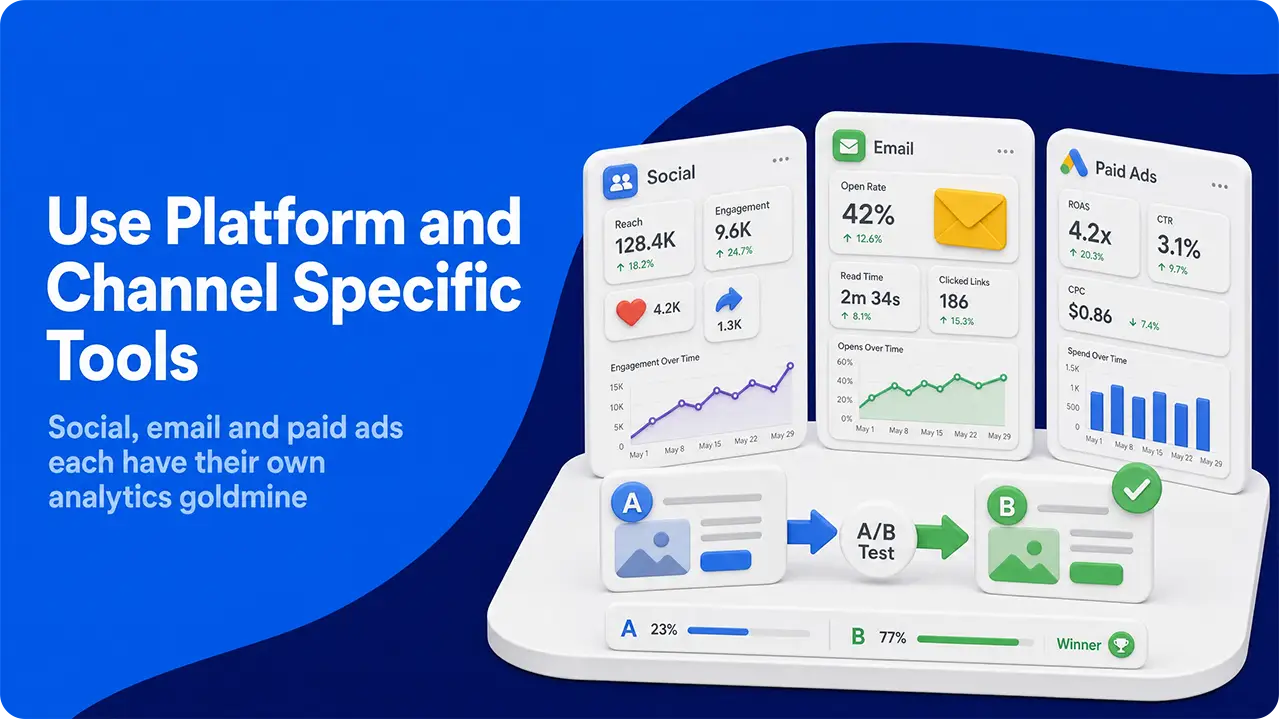
Analytics tools aren’t just for search results and your website. Every piece of marketing data you collect could ultimately lead to more web traffic.
Whatever platform you’re using for your marketing efforts, the chances are good that it offers some pretty deep analytics of its own. This data is potentially invaluable in making the most of things like social media, email marketing, or paid advertising, as it allows you to see in granular detail what is and isn’t working.
While these data points won’t directly lead to more traffic themselves, they do allow you to refine your efforts more confidently, and that will lead to more people clicking your links and visiting your site.
Whatever platform you’re using for your marketing efforts, the chances are good that it offers some pretty deep analytics of its own. This data is potentially invaluable in making the most of things like social media, email marketing, or paid advertising, as it allows you to see in granular detail what is and isn’t working.
While these data points won’t directly lead to more traffic themselves, they do allow you to refine your efforts more confidently, and that will lead to more people clicking your links and visiting your site.
- Social media: You can expect metrics like reach and engagement, as well as some insight into which links are being clicked. This allows you to reverse-engineer your most successful posts and repeat the formula.
- Email marketing: analytics should include things like open rate, read time, and which links people actually clicked on. With this, you can test which designs, subject styles, and other elements work for you.
- Paid advertising: metrics like return on advertising spend (ROAS), Click-through rate (CTR), Cost per click (CPC), and others allow you to evaluate how well your budget is being spent. You can use this information to refine your ads through targeting or changing up your creatives. The guide to pop-under, native and push advertising shows how pop-under visits can appear in GA4 and which metrics to monitor for the other formats.
The key to making the most of these metrics, regardless of platform, is comparison. It’s generally wise to run A/B tests (putting out multiple versions of a piece of marketing material) and evaluate which is most successful. This isn’t a one-and-done thing, and the best results come from constant refinement.
It’s also worth finding benchmarks from your competitors. This will generally be a fairly abstract dataset- people don’t generally share their results in detail, so we’re working with averages- but it allows you to make a judgement on how well your efforts compare to the industry standard in terms of CTR, ROI, and other important metrics.
It’s also worth finding benchmarks from your competitors. This will generally be a fairly abstract dataset- people don’t generally share their results in detail, so we’re working with averages- but it allows you to make a judgement on how well your efforts compare to the industry standard in terms of CTR, ROI, and other important metrics.
Problems With Using Analytics To Increase Website Traffic
As we mentioned at the start of this article, analytics is not a direct source of traffic. Instead, it allows you to refine your other efforts based on the data available and take a slightly more scientific approach to traffic generation.
That being said, your results will only ever be as good as your interpretation of the insights your analytics tools offer. It’s perfectly possible to pick up the wrong takeaways and find yourself compounding mistakes. For example, you might spend time refining content that simply won’t ever generate much traffic or, in trying to chase a new demographic, push away your existing customers.
This can be avoided by considering the data carefully and thinking strategically, while constantly checking the results of any changes you make and comparing the results of your A/B testing.
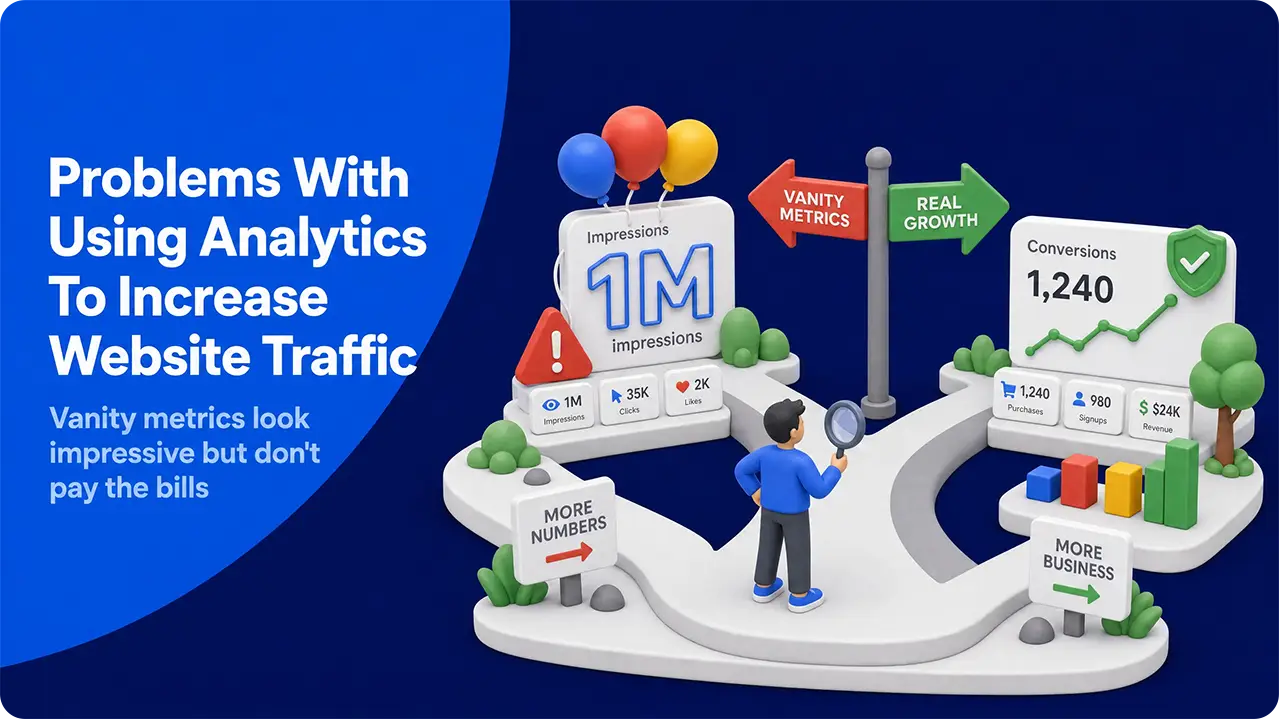
There’s also the risk that you fall into the trap of chasing “vanity metrics”. These are pieces of data that look impressive on the surface but don’t directly convert into a growth in traffic, conversions, or something else tangible. They’re great to have, but they should never be the focus.
Any metric could end up being a vanity metric if it doesn’t convert into a solid piece of data that you can use for your marketing efforts. The key to avoiding this trap is to analyse your metrics as closely as possible, ensuring that you’re focusing on the ones which actually bring the end result you’re looking for.
That being said, your results will only ever be as good as your interpretation of the insights your analytics tools offer. It’s perfectly possible to pick up the wrong takeaways and find yourself compounding mistakes. For example, you might spend time refining content that simply won’t ever generate much traffic or, in trying to chase a new demographic, push away your existing customers.
This can be avoided by considering the data carefully and thinking strategically, while constantly checking the results of any changes you make and comparing the results of your A/B testing.
There’s also the risk that you fall into the trap of chasing “vanity metrics”. These are pieces of data that look impressive on the surface but don’t directly convert into a growth in traffic, conversions, or something else tangible. They’re great to have, but they should never be the focus.
Any metric could end up being a vanity metric if it doesn’t convert into a solid piece of data that you can use for your marketing efforts. The key to avoiding this trap is to analyse your metrics as closely as possible, ensuring that you’re focusing on the ones which actually bring the end result you’re looking for.
How To Use Your Analytics Tools To Generate More Traffic
Ultimately, analysis is the key to marketing success. They allow you to understand what is and is not working for you, allowing you to put your efforts into the sources that actually generate the traffic you’re looking for.
terms of SEO, advertising, and every other marketing channel that does directly impact the number of visits your site receives.
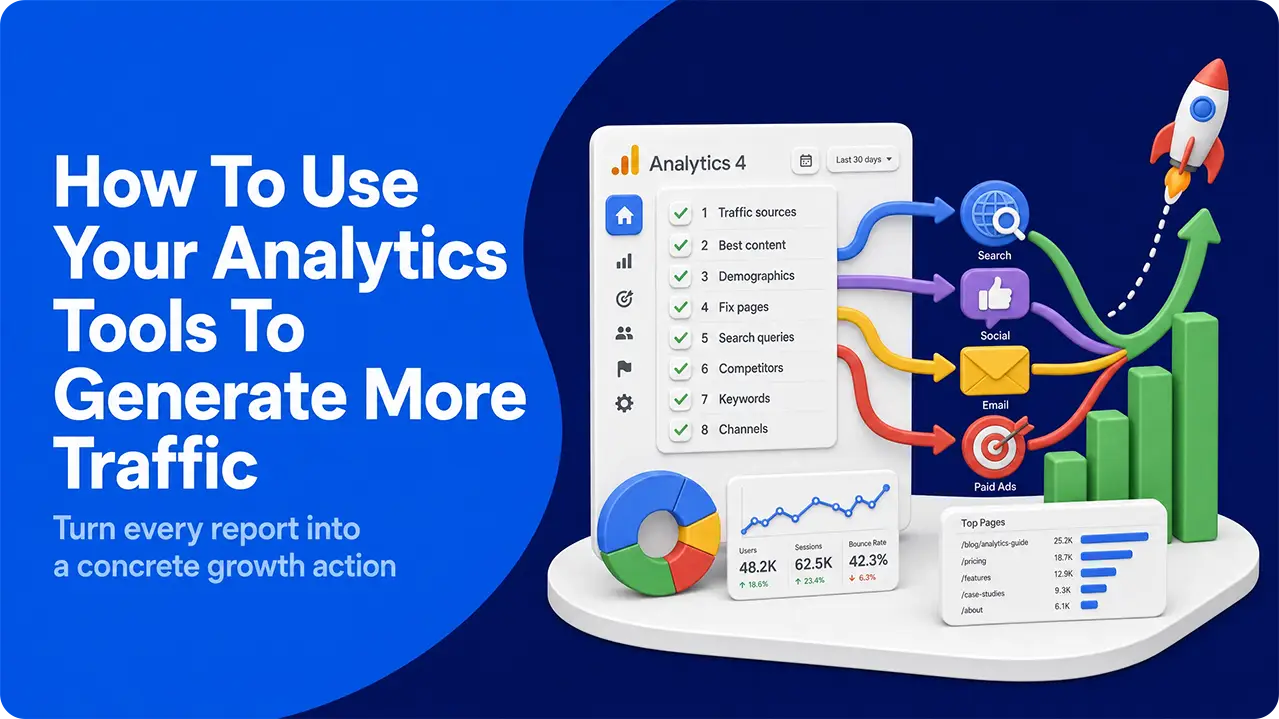
The key elements of making the most of these valuable bits of information are:
terms of SEO, advertising, and every other marketing channel that does directly impact the number of visits your site receives.
The key elements of making the most of these valuable bits of information are:
- Evaluating where your current traffic comes from
- Working out which pages and pieces of content are attracting visits
- Evaluating which groups of people are making up the bulk of your traffic
- Identifying and fixing pieces of content which could perform better
- Refining your SEO strategy based on solid data to attract more visits from search engines
- Understanding what is and isn’t working for your competitors and then either going after their traffic or finding gaps in their strategies.
- Finding new keywords and understanding which ones are worth your effort to compete for.
- Weighing up what is and isn’t successful across all your marketing efforts, like your social media presence, and understanding which emails work and don’t.
Even though generating analytics reports won’t net you a single visit in and of themselves, they arm you with invaluable information that should be the driving force behind all your other efforts.
Put simply, understanding your analytics is the difference between actively chasing traffic and simply chancing upon it.
Put simply, understanding your analytics is the difference between actively chasing traffic and simply chancing upon it.