.webp)


.svg)


.svg)
.svg)
If you’ve spent more than 5 minutes browsing the web, you’ve been bombarded with paid ads. Statistics say that the average person sees anywhere between 4000 and 10,000 adverts a day, with most of them being online. This huge wave of paid advertising is basically the funding model for most of the internet- advertisers pay websites so that you don’t have to.
They’re almost inescapable, with many websites breaking down entirely if you try to block them, so paid ads are an incredibly useful tool for targeting all kinds of traffic.
Here’s how to make the most of them:
They’re almost inescapable, with many websites breaking down entirely if you try to block them, so paid ads are an incredibly useful tool for targeting all kinds of traffic.
Here’s how to make the most of them:
1. Set Up A Retargeting Campaign And Bring Back Your Traffic
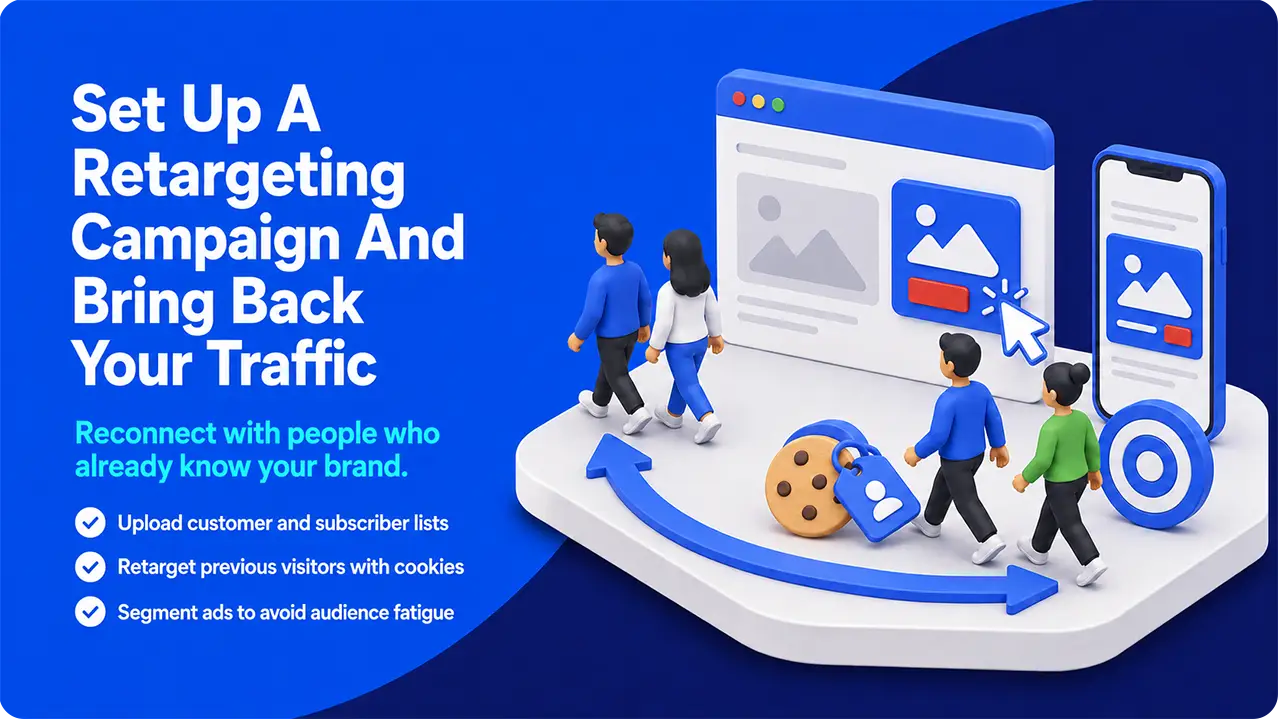
Retargeting is the easiest way of reminding your previous customers, mailing list subscribers, and anyone who’s interacted with you before that you still exist and your website is open for business.
There are two ways that this happens in the case of paid ads:
There are two ways that this happens in the case of paid ads:
- Uploading contact lists to platforms like Facebook or other social media, which will then match them with their users and serve up the appropriate ad.
- Through cookies. These tiny text files are left behind on people’s computers as they browse the internet. You can use these to target people who have visited your site
While this might not technically represent new traffic, it is a valuable way of getting people to come back, visit again, and, hopefully, make a purchase. The biggest advantage of remarketing is that those people you’re targeting already know about your business, so the battle is already half won.
Retargeting like this can help cut through “banner blindness” as people will recognize your branding, but it’s best done carefully. Over-targeting the same relatively small group of people may actually have the opposite effect from the one we’re aiming for and annoy them, putting them off revisiting your site.
Like all paid advertising, it’s best to segment your audience fairly carefully. If you know someone has browsed for a particular product, it might make sense to serve them ads that relate to it (depending on the product: people don’t often collect toilet seats). This helps bring relevant traffic back to your site without wasted spend.
Retargeting like this can help cut through “banner blindness” as people will recognize your branding, but it’s best done carefully. Over-targeting the same relatively small group of people may actually have the opposite effect from the one we’re aiming for and annoy them, putting them off revisiting your site.
Like all paid advertising, it’s best to segment your audience fairly carefully. If you know someone has browsed for a particular product, it might make sense to serve them ads that relate to it (depending on the product: people don’t often collect toilet seats). This helps bring relevant traffic back to your site without wasted spend.
2. Get Visits From A New Location
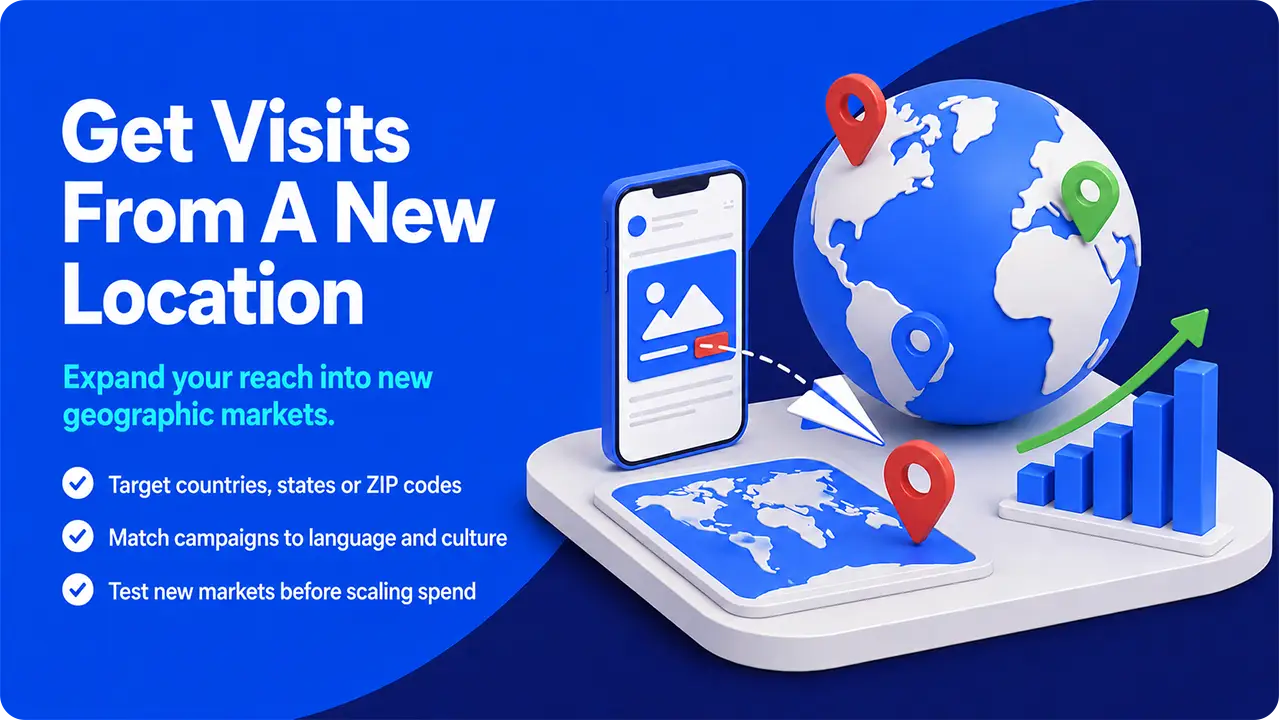
Paid advertising stands out as a marketing channel precisely because you can be exact with your targeting. This might mean segmenting your audience by things like age, gender, or interests based on their previous browsing, but where they really stand out is targeting by geography.
Ads can be targeted down to the ZIP/Postal code, should you so wish (which is great for local businesses who have a very defined area of operations. More on that later.), but equally, they can be targeted by state or even a whole country. This potentially opens up whole new markets and can represent a lot of new traffic.
Let’s say you sell shoes online. Most of your customers come from the UK, and you want to expand into other countries. Simply set your targeting to other English-speaking markets (or target by language use), and the ad networks will show your ads to new potential visitors.
Of course, different markets will have different cultures and demographics, so you may need to create new campaigns to get the most out of wider targeting. It might take some experimentation to find the perfect fit for your campaign, but the promise of a whole new market’s worth of traffic can make it worth the effort.
Ads can be targeted down to the ZIP/Postal code, should you so wish (which is great for local businesses who have a very defined area of operations. More on that later.), but equally, they can be targeted by state or even a whole country. This potentially opens up whole new markets and can represent a lot of new traffic.
Let’s say you sell shoes online. Most of your customers come from the UK, and you want to expand into other countries. Simply set your targeting to other English-speaking markets (or target by language use), and the ad networks will show your ads to new potential visitors.
Of course, different markets will have different cultures and demographics, so you may need to create new campaigns to get the most out of wider targeting. It might take some experimentation to find the perfect fit for your campaign, but the promise of a whole new market’s worth of traffic can make it worth the effort.
3. Reach Out To Your Local Customers
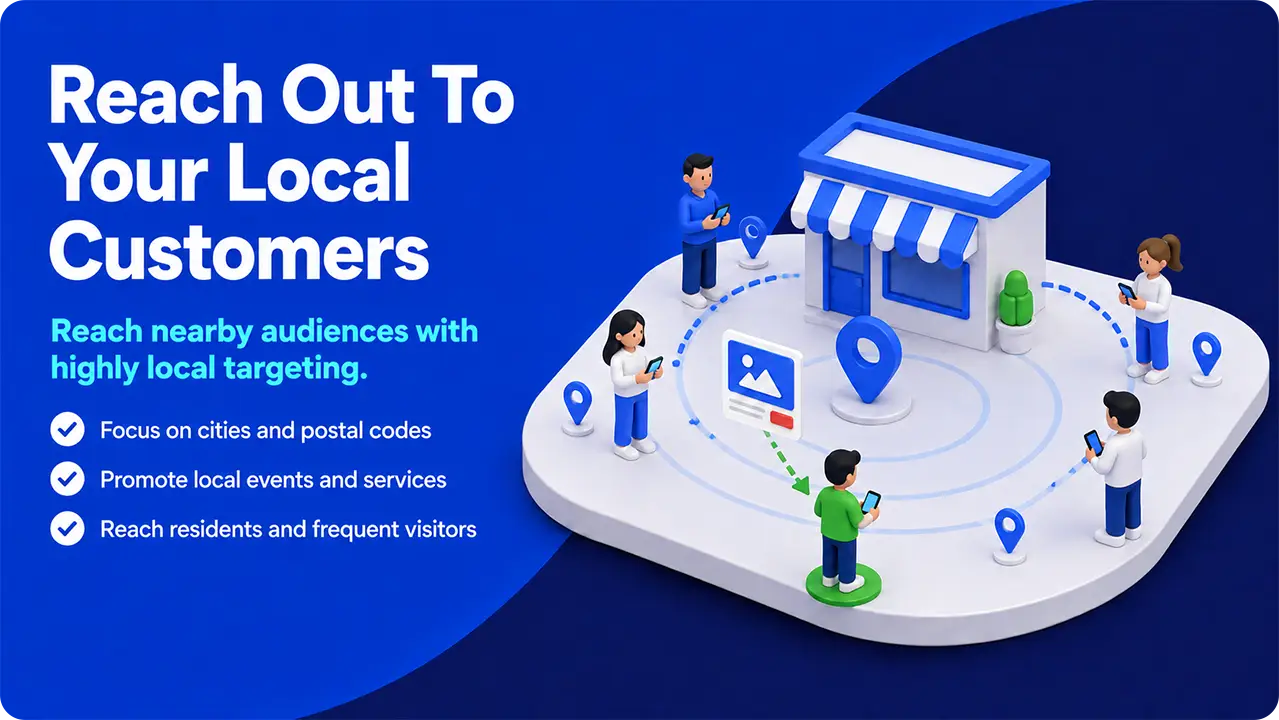
On the flip side of that previous point, many paid advertising networks allow you to target incredibly locally, down to the city or even an individual ZIP/Postal code. It goes without saying that this can be an amazing source of traffic for businesses that have a physical location.
Targeting locally can be particularly useful in getting visits relating to an event or from people researching local options. This can be great for bringing in traffic from local residents or visitors to your location who might be interested in browsing your site.
You can even use location data to target people who are outside your immediate area but who regularly visit. This allows you to target traffic from people who might be planning a trip, offering them an easy way to find your site and make their plans before they leave.
Targeting locally can be particularly useful in getting visits relating to an event or from people researching local options. This can be great for bringing in traffic from local residents or visitors to your location who might be interested in browsing your site.
You can even use location data to target people who are outside your immediate area but who regularly visit. This allows you to target traffic from people who might be planning a trip, offering them an easy way to find your site and make their plans before they leave.
4. Catch People While They’re On Your Premises
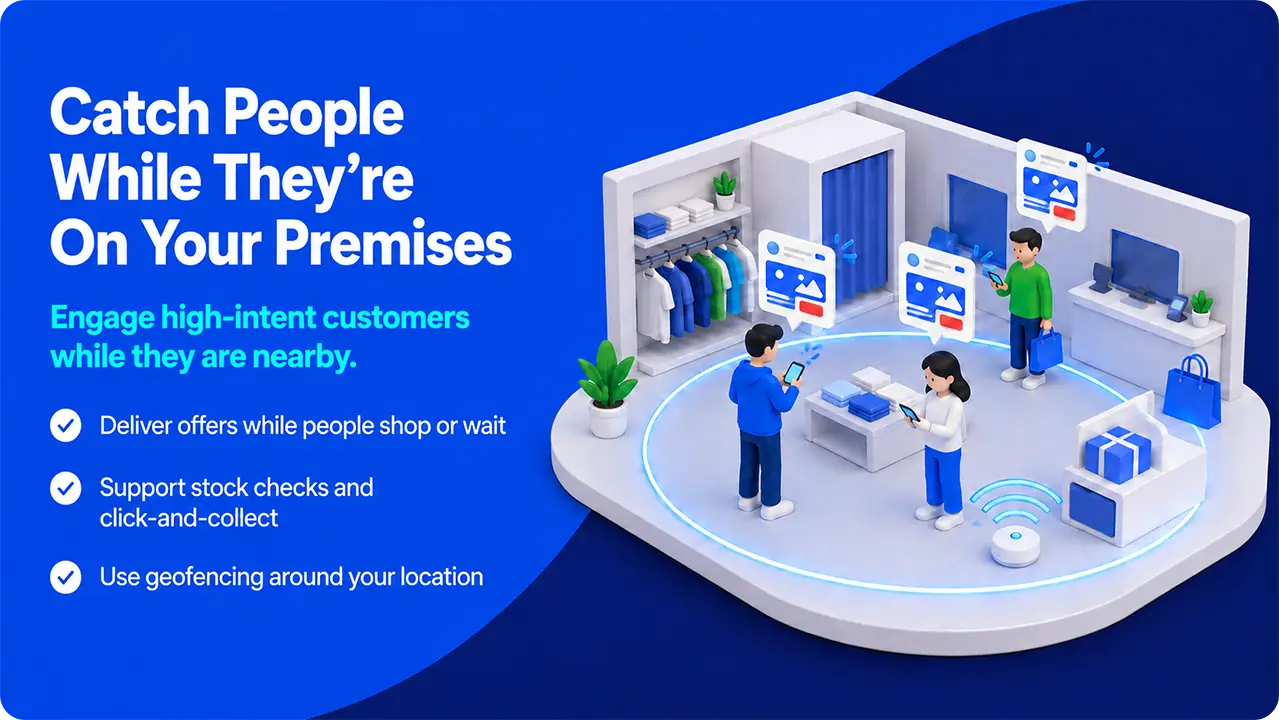
In fact, to take that last point to the extreme, you can even target people while they are on your premises.
This means that you can serve up offers while they wait, draw traffic to your website from people as they shop in person (perhaps to click-and-collect or to perform a stock check), or tempt visitors from nearby to browse your site as they take a break from whatever they’re doing.
This allows you to target extremely high-intent traffic by serving up adverts as people glance at their phones while they’re already in your desired location.
This means that you can serve up offers while they wait, draw traffic to your website from people as they shop in person (perhaps to click-and-collect or to perform a stock check), or tempt visitors from nearby to browse your site as they take a break from whatever they’re doing.
This allows you to target extremely high-intent traffic by serving up adverts as people glance at their phones while they’re already in your desired location.
5. Use Maps To Help Them Find Your Site
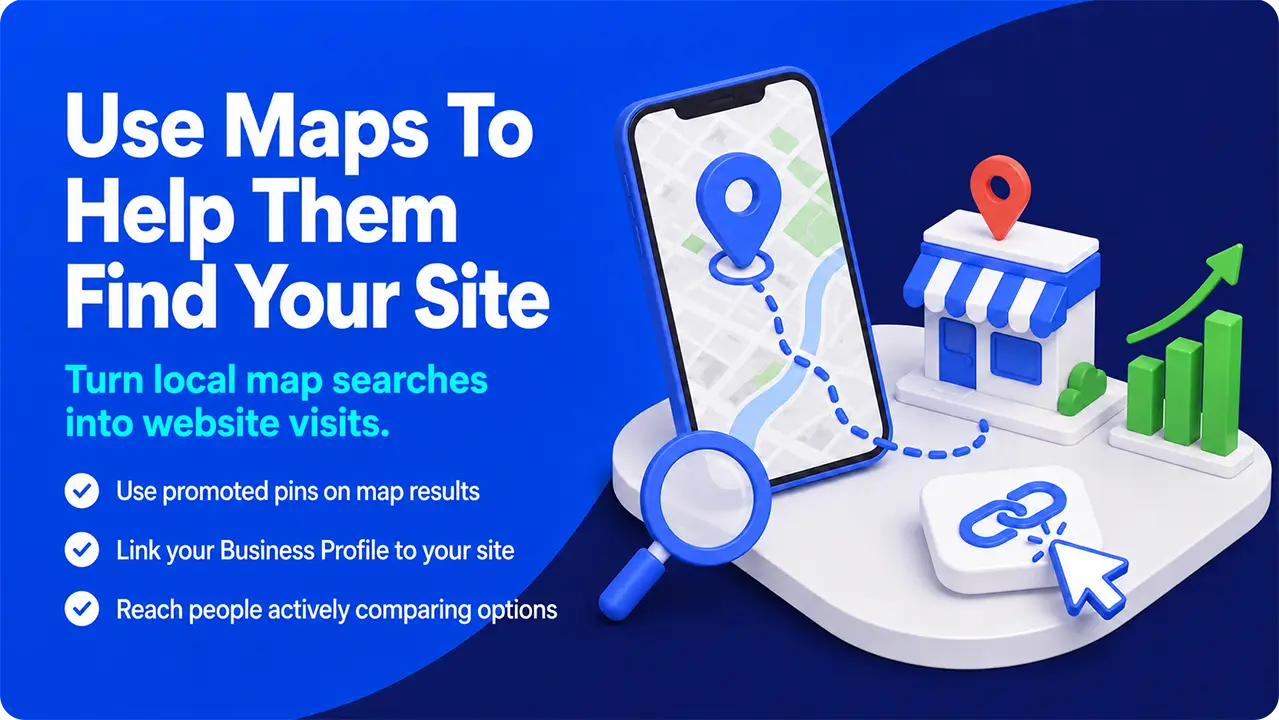
Beyond banners and pop-ups, paid advertising also includes pop-under, native and push advertising, formats we encounter every day. One often neglected variety is advertising on Google Maps.
If your business has a physical location you want customers to visit or a well-defined service area, Google Maps can be a great tool for driving traffic to your website. By targeting people when they’re searching or literally about to head out in search of a product or service, you can position your ads at the very moment they’re most likely to be of interest.
There are a few ways that advertising on Google Maps can be helpful.
For driving website traffic, you can set up a promoted pin which, when clicked, allows people to access your Google Business Profile and, from there, your website (or location). Alternatively, you can simply appear as a sponsored link in local searches, based on location and keywords (such as Pizza Edinburgh)- this allows you to target your ads at the moment people are actively researching their options, serving them up a direct link to your website.
If your business has a physical location you want customers to visit or a well-defined service area, Google Maps can be a great tool for driving traffic to your website. By targeting people when they’re searching or literally about to head out in search of a product or service, you can position your ads at the very moment they’re most likely to be of interest.
There are a few ways that advertising on Google Maps can be helpful.
For driving website traffic, you can set up a promoted pin which, when clicked, allows people to access your Google Business Profile and, from there, your website (or location). Alternatively, you can simply appear as a sponsored link in local searches, based on location and keywords (such as Pizza Edinburgh)- this allows you to target your ads at the moment people are actively researching their options, serving them up a direct link to your website.
6. Advertise To People As They Search
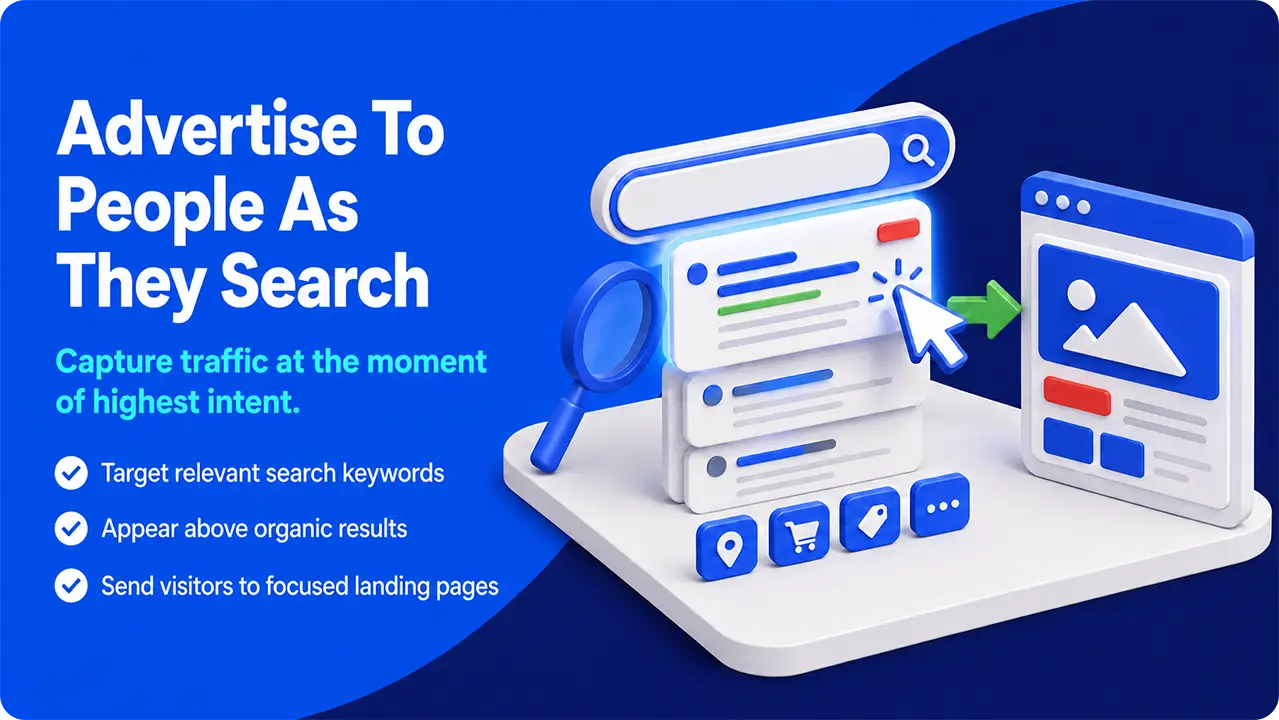
Most search engines, such as Google and Bing, start their results with a short list of “sponsored results”, which is really a fancy way of saying “paid ads”. These are a fantastic source of traffic for some websites.
There are certain businesses which people probably won’t visit on a whim- no one is visiting accountants’ websites for a spot of impulse auditing. This means that banner ads might be a great way of building brand awareness, but they’re probably not very useful as a way of directly targeting traffic. This is where search ads really stand out, though they can be a great source of traffic for any business.
These ads are found at the top (or scattered throughout) search results and are served based on the keywords that the user has looked up. This means that they can target people at the moment that they’re looking for a particular product or service, making them incredibly useful for targeting traffic in the midst of a high-intent moment.
There are certain businesses which people probably won’t visit on a whim- no one is visiting accountants’ websites for a spot of impulse auditing. This means that banner ads might be a great way of building brand awareness, but they’re probably not very useful as a way of directly targeting traffic. This is where search ads really stand out, though they can be a great source of traffic for any business.
These ads are found at the top (or scattered throughout) search results and are served based on the keywords that the user has looked up. This means that they can target people at the moment that they’re looking for a particular product or service, making them incredibly useful for targeting traffic in the midst of a high-intent moment.
7. Find Traffic With Related Interests
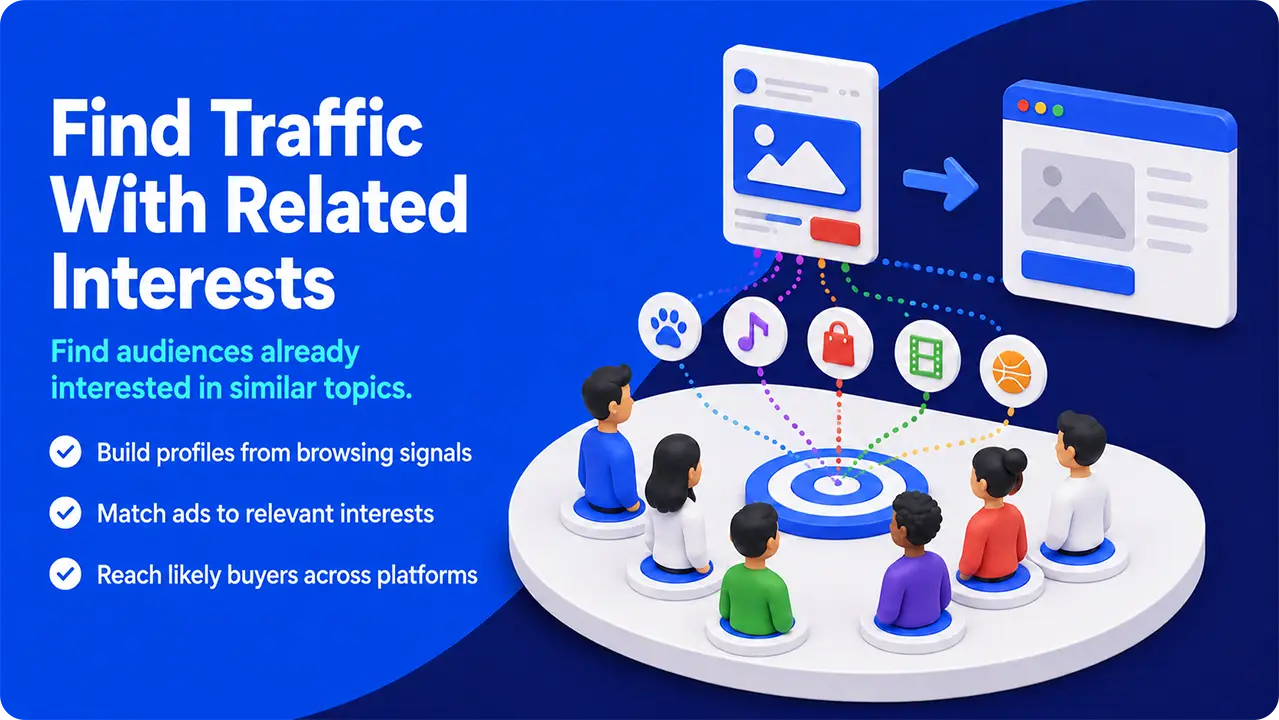
When we browse the internet, we leave behind traces of which websites we visit through things like cookies. These little text files are invaluable to anyone who wants to make the most of things like banner ads. This also applies to social media advertising such as Facebook, X, and YouTube, where the platforms can have incredibly detailed profiles of individual users by taking note of their activity on the platform and around the internet.
By building a profile of your targeted traffic types, it’s possible to serve ads based on their interests, meaning that you have access to a whole host of traffic that you can be fairly sure is interested in your products.
For example, if someone regularly visits sites related to pet care, it’s likely that they have a pet and might be interested in things like local vets, pet shops, and so on. If their previous activity is all about cats, they probably either have a cat or are very interested in getting one, allowing even closer targeting for anyone who sells cat toys, food, or other related products and services.
This could even be used more generally. People who are interested in certain types of music or film might be interested in certain fashions or other products.
By building a profile of your targeted traffic types, it’s possible to serve ads based on their interests, meaning that you have access to a whole host of traffic that you can be fairly sure is interested in your products.
For example, if someone regularly visits sites related to pet care, it’s likely that they have a pet and might be interested in things like local vets, pet shops, and so on. If their previous activity is all about cats, they probably either have a cat or are very interested in getting one, allowing even closer targeting for anyone who sells cat toys, food, or other related products and services.
This could even be used more generally. People who are interested in certain types of music or film might be interested in certain fashions or other products.
8. Compete Directly For Your Competitors’ Traffic
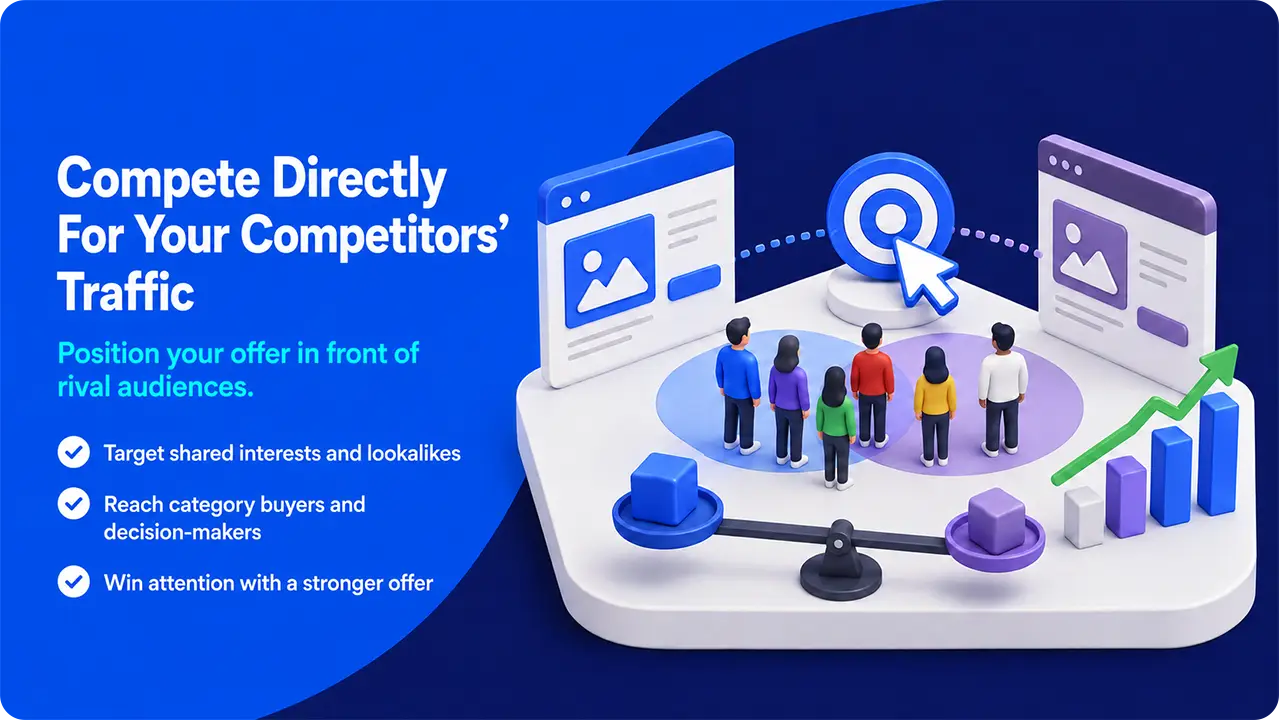
Interest-based targeting, especially on social media, can even allow you to target people who are interested in businesses like yours already, allowing you to position yourself as an interesting alternative.
If someone regularly visits a certain webstore which sells similar products to you, this will leave behind a targetable trail, allowing you to swoop in and offer them a better deal. Most platforms won’t allow you to simply target “customers of XYZ site”, but through interest-based and lookalike targeting, it’s a fairly simple process.
Particularly large brands may even appear in your dashboard as targetable interests in their own right, allowing you to directly communicate with their customers.
Platforms like LinkedIn even allow you to target decision-makers and buyers within a category, which can be a powerful tool for anyone in the B2B sales space, allowing you access to the people who buy from your direct competitors.
If someone regularly visits a certain webstore which sells similar products to you, this will leave behind a targetable trail, allowing you to swoop in and offer them a better deal. Most platforms won’t allow you to simply target “customers of XYZ site”, but through interest-based and lookalike targeting, it’s a fairly simple process.
Particularly large brands may even appear in your dashboard as targetable interests in their own right, allowing you to directly communicate with their customers.
Platforms like LinkedIn even allow you to target decision-makers and buyers within a category, which can be a powerful tool for anyone in the B2B sales space, allowing you access to the people who buy from your direct competitors.
Common Problems With Paid Advertising
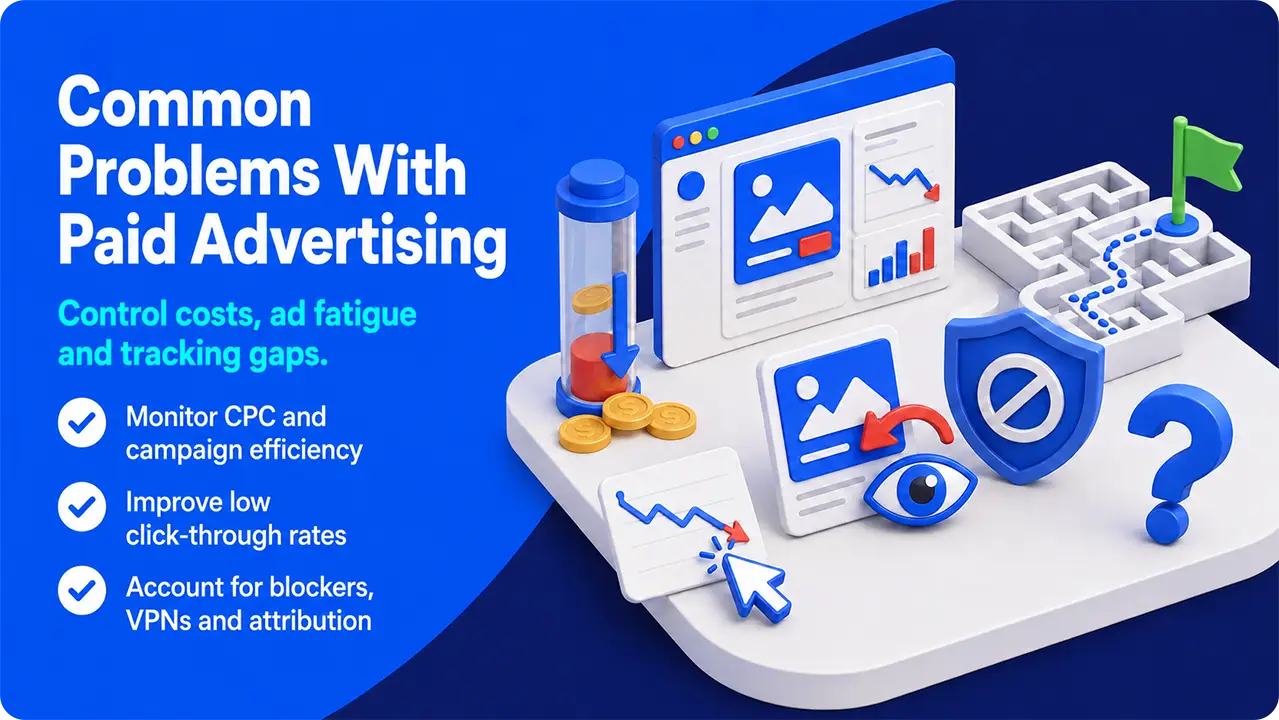
While paid advertising is obviously a hugely useful tool for marketing any website and attracting visits, it’s not without its problems.
Firstly, it can quickly become very expensive. As you’re likely to be paying per click, the more clicks you get, the quicker your budget will evaporate. Focusing on your cost-per-click and refining your campaign regularly to ensure efficiency can help balance costs and results, but it can be a time-consuming process to really get the most out of PPC advertising.
Secondly, there’s the fact that people are good at ignoring ads. It’s commonly said that we’re served around 10,000 a day (though this is a disputed stat), but we only actually take in and process around 100 of them, meaning that every ad you run might only get a CTR of around 3.5% for search ads and 0.45% for display ads. This can be combated through quantity to a certain extent, which leads us neatly on to our final point.
There is also the rise of VPNs and AdBlockers to consider. While these have a much lesser impact on things like social media and search ads (though they can interfere with geofencing), they can play havoc with other forms of paid ads. There’s no simple solution to this problem, but clever marketers can maximize their paid ad impact by considering the context in which people see their ads carefully and avoiding becoming overly intrusive.
A successful paid ads campaign balances granular targeting with quantity. While you might be able to target people by some very niche criteria, this is often not the best way to attract traffic to your landing page. Instead, you should aim for a balance between niche and numbers for the best results.
Firstly, it can quickly become very expensive. As you’re likely to be paying per click, the more clicks you get, the quicker your budget will evaporate. Focusing on your cost-per-click and refining your campaign regularly to ensure efficiency can help balance costs and results, but it can be a time-consuming process to really get the most out of PPC advertising.
Secondly, there’s the fact that people are good at ignoring ads. It’s commonly said that we’re served around 10,000 a day (though this is a disputed stat), but we only actually take in and process around 100 of them, meaning that every ad you run might only get a CTR of around 3.5% for search ads and 0.45% for display ads. This can be combated through quantity to a certain extent, which leads us neatly on to our final point.
There is also the rise of VPNs and AdBlockers to consider. While these have a much lesser impact on things like social media and search ads (though they can interfere with geofencing), they can play havoc with other forms of paid ads. There’s no simple solution to this problem, but clever marketers can maximize their paid ad impact by considering the context in which people see their ads carefully and avoiding becoming overly intrusive.
A successful paid ads campaign balances granular targeting with quantity. While you might be able to target people by some very niche criteria, this is often not the best way to attract traffic to your landing page. Instead, you should aim for a balance between niche and numbers for the best results.
How To Use Paid Ads To Increase Website Visits
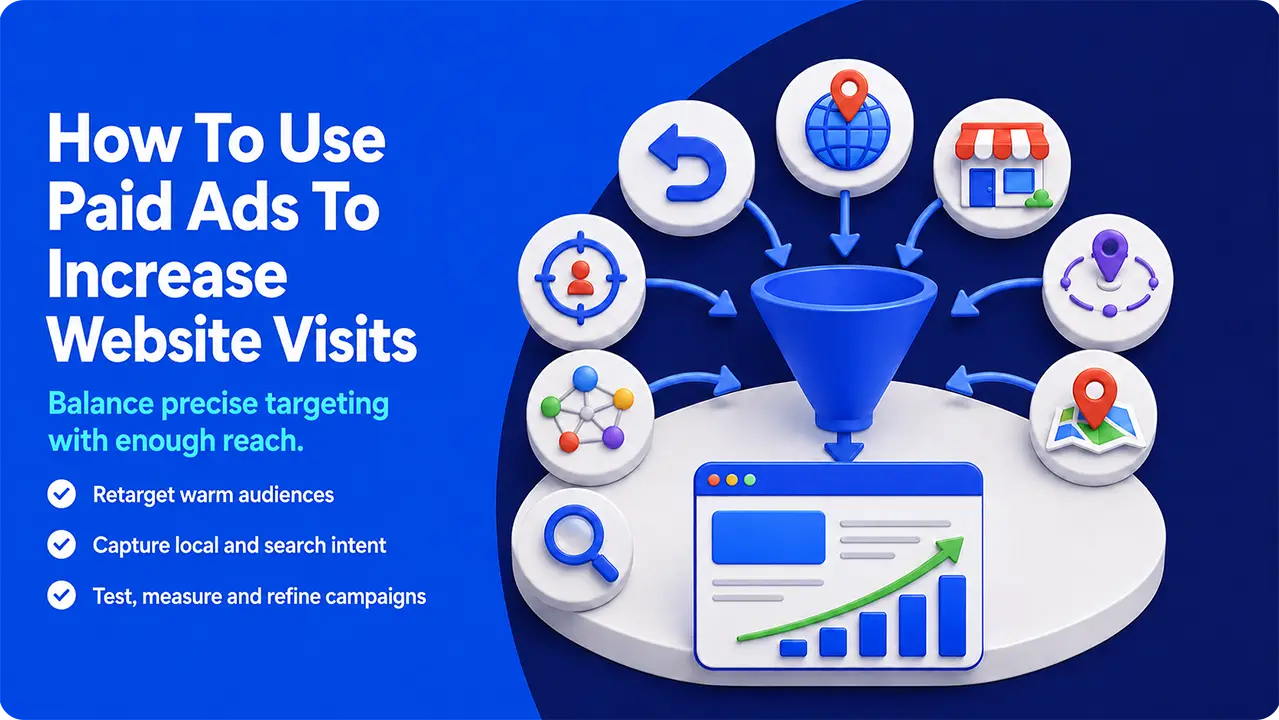
With around $650 billion being spent on paid advertising online each year, it’s safe to say that it really does get results. Almost everyone can be reached via paid ads to some extent or another, meaning that if you’re looking to generate huge amounts of traffic, especially targeted traffic, this might be your best bet.
There are an almost endless number of strategies that you could try, but our recommendations are:
There are an almost endless number of strategies that you could try, but our recommendations are:
- Retarget your previous customers and mailing lists
- Use paid ads to reach new markets
- Target your local community
- Target people while they shop
- Use Maps to target people as they research their options
- Use search ads to target people at their point of highest intent
- Target people who are interested in related topics
- Target your competitors’ traffic by reaching out to their customers via shared interests