Si hay algo que todo propietario de un sitio web ha querido desde los albores de internet, es más tráfico.
Más visitas significan más personas comprando, reservando servicios, leyendo tu contenido y generando ingresos. Existen docenas de estrategias viables para atraer a más personas a tu sitio, pero en cuál deberías centrarte cambiará según tus circunstancias.
Algunos propietarios de sitios web podrían querer redoblar esfuerzos en SEO, mientras que otros podrían necesitar centrarse en el tráfico segmentado que puede aportar la publicidad de pago, y otros más querrán centrarse en asegurarse de que el tráfico que ya tienen siga regresando. La respuesta “correcta” depende exactamente del problema al que te enfrentas.
Aquí tienes 9 de las situaciones más comunes que podrían estar limitando tu tráfico web y cómo solucionarlas:
1. El sitio web es nuevo y recibe poco o ningún tráfico
Un sitio web nuevo puede obtener rápidamente una afluencia de tráfico mediante publicidad de pago, pero también es importante comenzar con una fuente de visitas más sostenible.
Identificar el problema
Este es el problema más sencillo de identificar: es poco probable que un sitio web nuevo reciba mucho tráfico hasta que empieces a promocionarlo y a dar a conocer su existencia.
Cómo solucionarlo
Un sitio web nuevo es un momento emocionante para un marketero: trae mucho potencial y la oportunidad de realmente marcar el rumbo. La respuesta honesta (aunque simple) a este problema es que, en este punto, realmente podrías probar cualquier cosa y empezar a generar algunas visitas más. Dicho esto, hay un par de estrategias que tienen más sentido en esta etapa temprana.
Puedes abordar este problema de dos maneras: una solución a largo plazo o una solución más rápida.
Puedes abordar este problema de dos maneras: una solución a largo plazo o una solución más rápida.
Aunque el SEO suele considerarse la mejor fuente de tráfico para los sitios web, ya que solo Google genera casi el 63% de todas las visitas, no es un proceso rápido, y como nuevo propietario de un sitio web, quieres resultados medibles ahora.
. A diferencia del ritmo de crecimiento lento y constante que proviene del blogging, los anuncios de pago pueden, con el presupuesto y la segmentación adecuados, generar una oleada de visitas casi instantánea.
Puedes publicar anuncios en redes sociales, en los o como los anuncios de banner tradicionales en los que todos pensamos cuando escuchamos la frase “publicidad online”. Estos pueden diseñarse y segmentarse con una precisión increíble según todo tipo de criterios, convirtiendo a casi cualquier persona en un visitante potencial del sitio web.
Cada uno tiene su uso ideal:
- Anuncios de búsqueda: ideales para dirigirse a quienes tienen urgencia y para servicios que es poco probable que la gente explore por impulso.
- Anuncios display y videos: más generales. Ideales para dar a conocer una oferta en particular, dirigirse a intereses específicos y aumentar el reconocimiento de marca.
- Redes sociales: ideales para dirigirse a clientes “similares” que comparten intereses con tu tráfico actual.
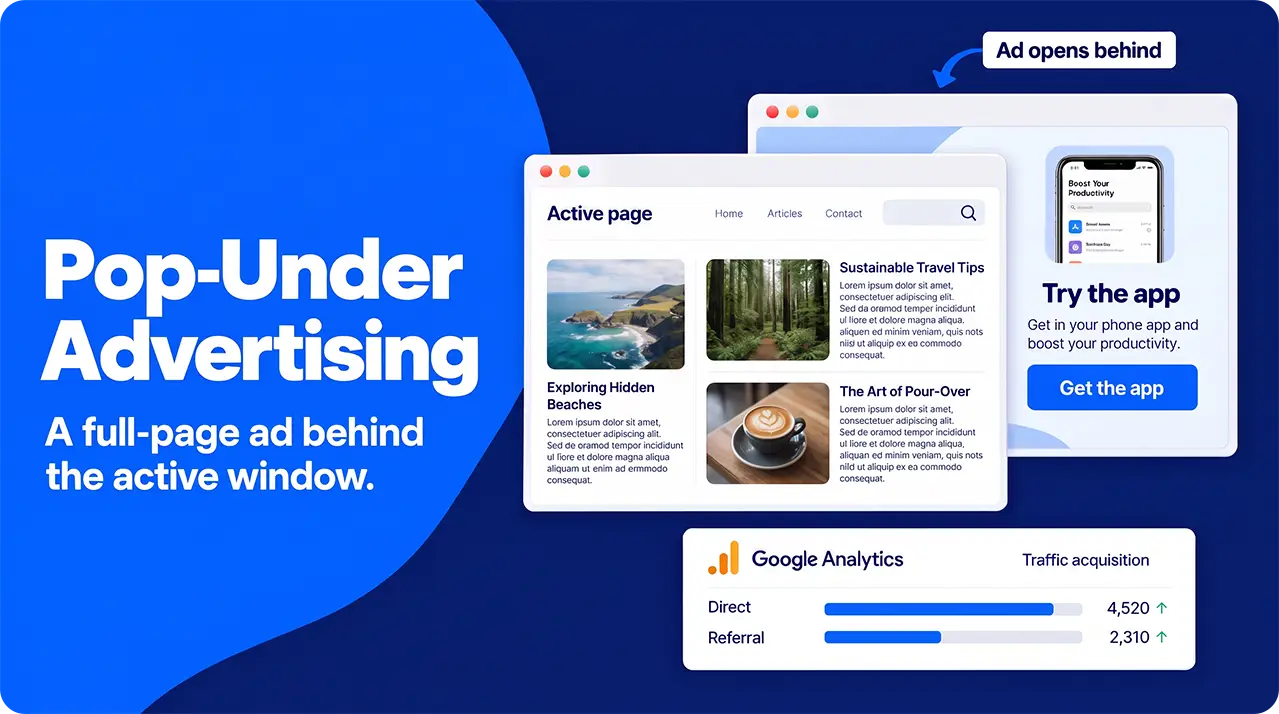
- Awareness Building- though click-through rates are generally pretty low, it’s very hard to ignore a full-page advert entirely.
Configurar una campaña es bastante sencillo: solo tienes que crear la imagen, el vídeo o el texto que quieras que vea la gente con el software que prefieras, indicar a las redes publicitarias a quién quieres mostrárselo y establecer tu presupuesto en la plataforma que estés usando.
En unos instantes, puede que empieces a ver tus primeras visitas procedentes de tu anuncio. Hay muchísimos matices y ajustes en los que podrías profundizar, y los explicamos en nuestra, pero la regla general es que cuanto mayor sea el presupuesto, más clics obtendrás.
Las desventajas de toda esta flexibilidad y rapidez son el coste y la cantidad de supervisión y pruebas que debes realizar para obtener los mejores resultados. Como generalmente generado, una campaña exitosa puede volverse cara rápidamente. Si tu campaña no parece estar generando muchos clics, probar y optimizar puede llevar bastante tiempo.
What Does Pop-Under Traffic Look Like In Your Analytics and How Should You Monitor Success?
Google Analytics 4 doesn’t have a category specifically for pop-under traffic, so your visitors might appear in a couple of different ways, depending on how you’ve set up your campaign.
If you’ve not set up tracking specifically for your pop-unders (usually through embedding tracking data in your URLs- there are tools which can help you create these), they’ll show up as “direct” traffic, or might show up as a “referral” from your chosen advertising network’s domain.
In terms of tracking the success of your campaigns, we’re not just looking at raw traffic numbers, though; we need some understanding of how people reacted to your pop-unders. This is best monitored through your reach/impressions and bounce rates. You should also keep a close eye on how many people go from your pop-under prelander (a landing page which is designed to drive people to a landing page) to your site proper.
How To Set Up Pop-Under Campaigns
Setting up a pop-under campaign is relatively straightforward. There are 6 steps to follow:
- Build your page.
Pop-unders work by opening a new page under the one your target viewer is already browsing, so the first step is designing the page you want them to see. All the usual design rules and best practice tips apply- they should be relatively clean, quick-loading, and easy to read at a glance. Rather than directing people straight to an already existing landing page, it’s better to “warm them up” with a prelander- think of it as a landing page for your landing page. - Find An Ad Network.
There are a few ad networks out there that specialize in pop-under traffic generation. Shop around a little to see who can offer you the best deal in terms of features, targeting, and, naturally, cost. - Set up your campaign.
Follow your chosen ad network’s instructions, pasting in your URL and any tracking tags that you’re using. - Set your bidding and pricing model.
Depending on your advertising goals and what your chosen network offers, you might want to pay per impression (best for mass-appeal campaigns and awareness building) or pay per action (best for things like app downloads, mailing list sign-ups, etc). - Configure your targeting and frequency capping.
Pop-unders are great for targeting by device and browser types, allowing you to target the people most likely to take an action. If you’re aiming for app downloads, target mobile users. If you’re trying to get people to use your browser extension, target users of that browser, etc.
You can also set a limit for how many times a single person will be shown your ad in a given timeframe. Most commonly, this puts a hard limit of one impression per person per day, as this balances awareness raising with avoiding ad fatigue. - Fund your campaign and launch it.
Once you’re happy with your campaign, launch it. Check your ad network dashboard and Google Analytics regularly to monitor success and make adjustments to timing, targeting, and other features of your campaign as necessary.
Common Mistakes With Pop-Under Advertising
There are three common mistakes that people make while setting up their pop-under campaigns: ignoring frequency caps, poor targeting, and skipping the prelander page.
Firstly, skipping the prelander page in favor of directing people to your main site totally ignores the fact that the person wasn’t actively looking to visit your page. Dropping them straight into a demand is likely to put them off converting. Instead, you should “warm” them up with a prelander page, explaining your offering and guiding them through to your main site where they can do whatever you want them to, should they be interested.
Frequency caps allow you to avoid paying twice for reaching any given individual. A person is only likely to convert once, so reaching someone multiple times in a single day is a waste of your budget that could be better spent targeting more people.
Finally, pop-under campaigns work best when targeted fairly closely. There’s simply no point in telling a Firefox user about a Chrome extension, or advertising your sale in Delhi to someone in Edinburgh. While some industries can be a bit more relaxed about this, for the vast majority of us, some targeting is necessary for useful results.
2. El sitio web recibe tráfico relevante, pero necesita llegar a más personas
Las analíticas son la clave para entender qué está generando tu tráfico. Úsalas para replicar tus esfuerzos más exitosos y eliminar las conjeturas. También puedes usar las redes sociales y el marketing de afiliación para ampliar tu alcance entre audiencias relevantes.
Identificar el problema
Normalmente podemos identificar que el tráfico que estamos recibiendo es “relevante” comparando el número de visitantes con el número de personas que continúan y hacen lo que les estamos pidiendo. Esto puede ser realizar una compra, suscribirse a un boletín o simplemente navegar por nuestros blogs; sea lo que sea, cuanto más cerca estén estas dos cifras, más relevante será el tráfico. Tus herramientas de analítica pueden usarse para encontrar estos datos.
Si descubrimos que el tráfico es relevante pero menor de lo que nos gustaría, podemos analizar de dónde proviene y empezar a pensar en una estrategia para conseguir más.
Si descubrimos que el tráfico es relevante pero menor de lo que nos gustaría, podemos analizar de dónde proviene y empezar a pensar en una estrategia para conseguir más.
Cómo solucionarlo
Si tu sitio web ya está consolidado y recibe visitas de personas relevantes, pero quieres más tráfico, tienes opciones. De hecho, esta es otra situación en la que potencialmente podrías recurrir a casi cualquier forma de marketing digital y ver algunos resultados.
Para determinar la estrategia más adecuada en esta situación, lo primero a lo que debes recurrir es a tu paquete de analítica. A partir de ahí, deberías poder averiguar cómo la gente encuentra tu sitio y qué canales de marketing les están atrayendo; los informes que genera están llenos de información útil, como desde dónde encuentran tu sitio, cuánto tiempo se quedan una vez que lo encuentran y qué páginas están visitando.
La información más relevante aquí será desde dónde hacen clic en tu enlace. Con estos datos, puedes decidir si quieres expandirte o redoblar esfuerzos en tu canal más exitoso. Nuestra guía para usar herramientas de analítica para fundamentar tu toma de decisiones y, en última instancia, multiplicar tus esfuerzos de marketing puede ayudarte a identificar dónde centrarte.
Supongamos que la mayor parte de tu tráfico te encuentra a través de búsquedas en Google. Esto sugeriría que tu estrategia SEO está en plena forma, pero como quieres más de este tráfico, vas a tener que producir más contenido; eso significa analizar tus páginas exitosas (según lo indiquen tus analíticas) e intentar replicar los elementos que las hicieron exitosas en términos de temas y estructura. Si los blogs parecen atraer más atención, escribe más, ampliando tus publicaciones anteriores. Si son tus páginas de destino las que están dando resultados, piensa en cómo puedes crear más para orientar búsquedas similares pero ligeramente distintas.
Esto significa examinar los temas y la estructura de tu contenido exitoso y luego aplicarlo a más contenido, ampliando un poco cada vez para evitar repetirte. Asegúrate de que las palabras clave principales estén relacionadas con tus páginas exitosas, pero no sean exactamente las mismas, para evitar canibalizar tus propios resultados.
Como alternativa, fuentes como las redes sociales y los enlaces de afiliados, que se centran en la relevancia del tráfico que generan más que en el volumen, podrían ser la mejor opción para ampliar tu alcance. Ambas vienen con un cierto nivel de audiencia incorporada y te permiten dirigirte a personas que se “parecen” a tu tráfico actual. Esto te da acceso a un mercado que comparte algo en común con tus clientes actuales. Tenemos guías para usar las redes sociales y el marketing de afiliados para aumentar tus flujos de tráfico.
Y, por supuesto, siempre existe la opción de simplemente publicar más anuncios, segmentando a las personas por ubicación o intereses, para aumentar la cantidad de tráfico relevante que llega a tu sitio.
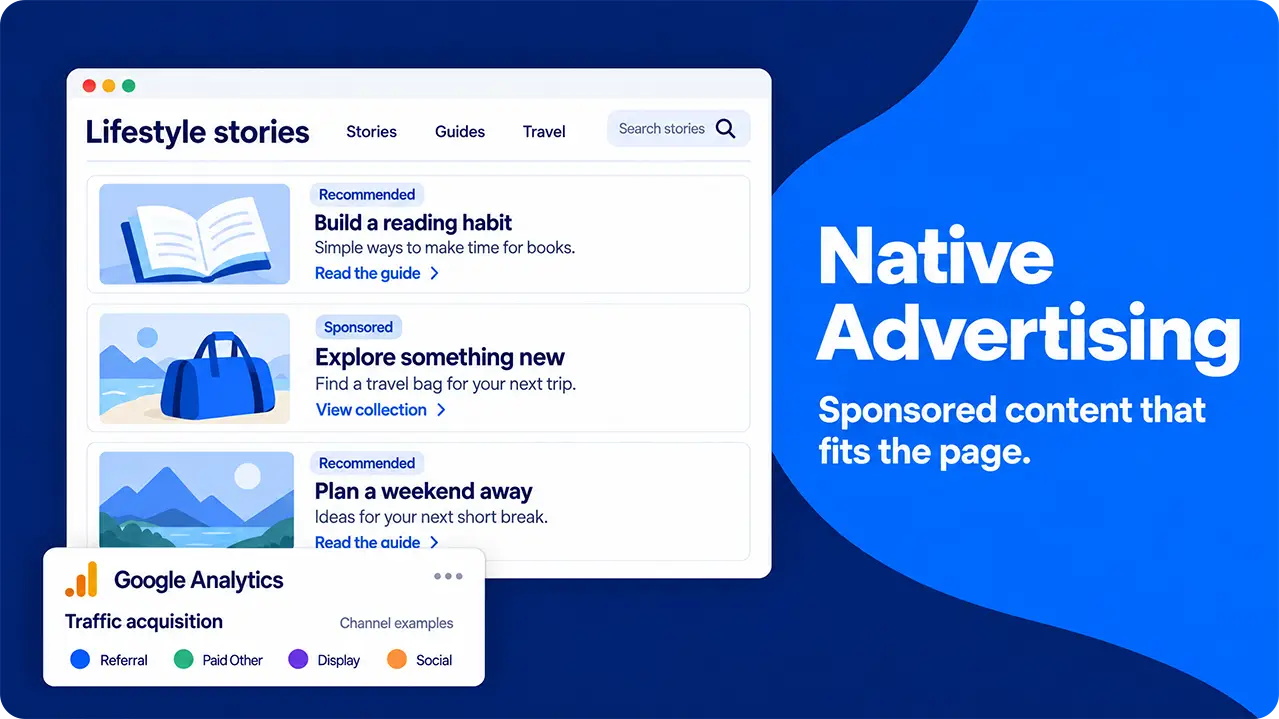
- Reduces Banner Blindness- people are so bombarded with traditional ads that they generally filter out most of them. Native advertising doesn’t look like an ad and generally offers a bit more depth than simply screaming “buy now”, making it great for actually earning some engagement.
- Avoids Annoying Potential Customers- banners and other “intrusive” forms of digital advertising disrupt people’s browsing. Native advertising aims to become part of their browsing.
- High Engagement and Click-Through - By appearing like just another piece of content, native advertising offers far better engagement rates than something like a display ad and can generate a better click-through rate than many other types of paid ads.
- Beats Ad Fatigue- by offering some real value on top of their use as an advert, native ads bypass the habit of viewing adverts as an annoyance and encourage engagement.
- Privacy-friendly and Helps Build Trust- as native ads are related to the type of content that people are already consuming, they don’t rely on privacy-invading cookies and can help build trust with your audience.
- Bypass Ad Blocks- content-based native advertising, such as advertorials, doesn’t trigger ad blockers, so your message is more likely to be consumed.
What Does Native Advertising Look Like In Your Analytics and How Should You Monitor Success?
Native advertising is slightly trickier to track than some other forms of marketing. Exactly how it appears in your analytics will vary from type to type:
- Content-based: For advertorials and other content-based native advertising, you might be limited to checking the referrals to gauge how many people have clicked your links- they’re effectively just posts on their website after all. Whoever hosts your content should be happy to share their metrics with you if you want to dig a little deeper.
- Network-based: For native advertising such as search ads, suggested content ads or similar, they will appear in the Paid Other, Display or Social sections of your reports, depending on where they were displayed.
In terms of measuring the success of a given piece of native advertising, there are a few key metrics to keep an eye on:
- Viewability: A measurement of whether or not 50% of your ad was displayed for a second or more. A higher score here means that there was more chance that your offering was seen and digested by the viewer.
- CTR- setting up a unique URL on each of your native ads, regardless of type, allows you to find out exactly which ones have been most successful.
- Engagement: depending on how you’ve set up your native advertising campaign, you might be able to get insights into bounce rate and other engagement metrics from your partners. These allow you to judge how well people are taking in your messaging.
- Conversion rate: how many people take in your ad and then go on to do the thing you wanted them to.
How to Set Up a Native Advertising Campaign
There are two main ways of getting started with a native advertising campaign: reaching out directly or working with an agency.
If you’re working directly with a host website to create advertorials, simply reach out to them and work out the terms that you’re both comfortable with. They may offer to write them for you or could accept them as a guest post. Work closely with them to ensure that your content matches the tone, purpose and feel of their site while still meeting your advertising goals.
Alternatively, partner with a specialist agency that can cover creating your content and partnerships with distributors on your behalf, while still allowing you to retain control. Most agencies will also give you far more detailed analytics reports, allowing you to refine your efforts more carefully.
Common Mistakes With Native Advertising
While native advertising allows you to reach people when they’re not particularly in the mood to be advertised to, this is as much a potential weakness as a strength. Pushing a “salesy” text on someone who’s simply looking for some information is likely to be a turn-off and result in them navigating away.
A more subtle approach is necessary to get results- aim to inform and entertain the people who are consuming your content rather than push a hard sell on them. Native ads offer a fantastic way to warm up traffic before they even realise that they’re being advertised to.
Another common issue is neglecting the pre-campaign research. You need to have a decent understanding of who you’re targeting, what they want to see and what your competitors are doing before you start creating your campaigns. This allows you to target various buyer personas separately, producing content that appeals to them more directly.
Finally, a lack of transparency often trips up native campaigns. Many countries require adverts to be declared by law, marking them out as not just another piece of content. This applies to paid partnerships with publishers, working with influencers and anything else that might not instantly seem like an advert to someone only glancing at it casually.
3. El tráfico del sitio web ha disminuido
Los cambios en los flujos de tráfico pueden ocurrir por muchas razones, por lo que es importante asegurarse de que tu combinación de marketing sea lo más variada posible. Para obtener resultados rápidos, considera volver a dirigirte a visitantes anteriores mediante anuncios o correos electrónicos.
Identificar el problema
Una caída en el tráfico web aparecerá en tu panel de análisis. Los informes que encuentres allí deberían permitirte saber exactamente qué flujos han cambiado y, a partir de ahí, puedes empezar a reconstruir por qué han cambiado.
Cómo solucionarlo
A veces, lo que ha estado funcionando parece dejar de hacerlo, y el tráfico de tu sitio web caerá. Podría haber innumerables razones detrás de ello; las más comunes son:
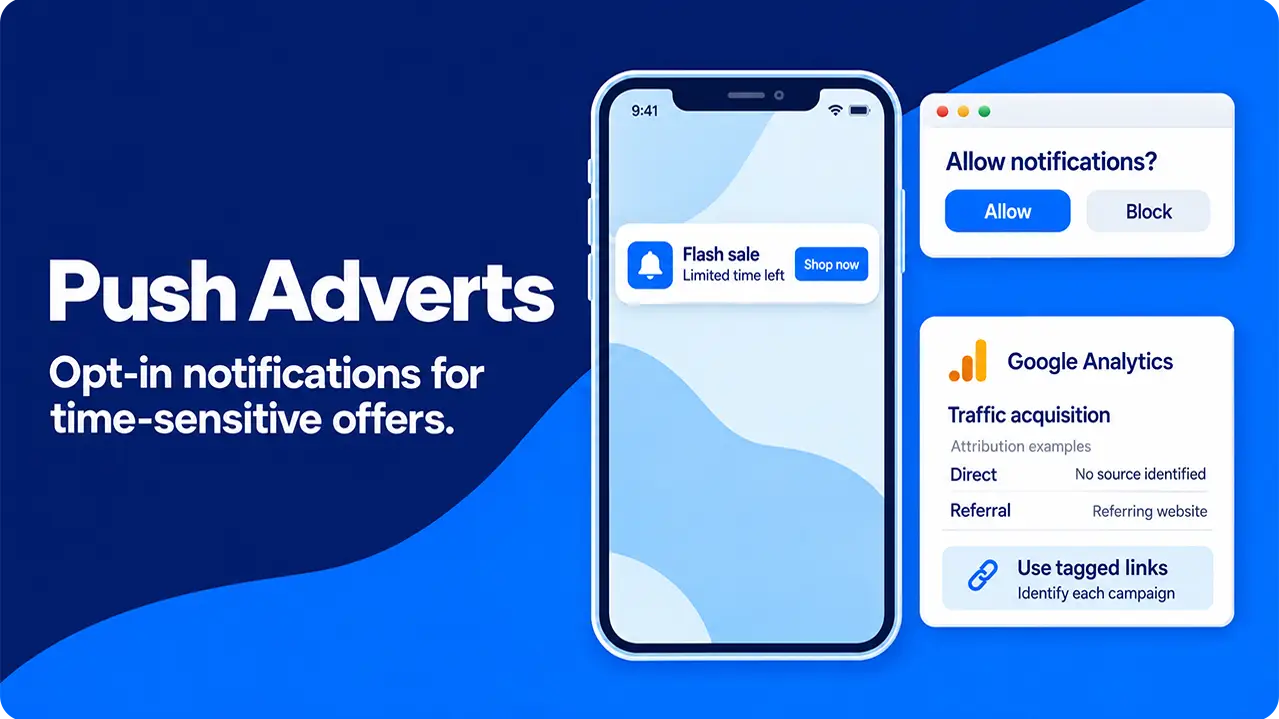
What do Push Ads Look Like In Your Analytics and How Should You Monitor Success?
Google Analytics 4 can track push ads in various ways, depending on how they’re set up.
Ideally, your push ads will link to a “tagged” URL that will allow you to monitor exactly which ads got the responses you were looking for. Without these extra bits of information in the URL, they’re likely to appear as “referral” or “direct” traffic, alongside everyone who manually entered your web address or clicked a link pointing towards your page.
While it may not be quite as accurate as a properly tagged push ad, you can get a good sense of how successful any particular untagged ad has been by comparing your traffic numbers to the time that you sent the push notification out. As the response tends to be quick, a sudden jump that corresponds to your ad hitting people’s phones suggests that it has had the desired effect.
In terms of measuring how successful a particular push ad has been, there are a few metrics to examine, which, as a list-based system, share a lot of ground with email marketing:
- Cambios en los algoritmos: Los motores de búsqueda, las redes sociales y las IA se actualizan con regularidad, cambiando lo que priorizan. Es posible que tu contenido, que antes se posicionaba bien, ahora aparezca más abajo en los resultados.
- Problemas de seguimiento: Ocasionalmente, actualizar tu sitio web podría causar problemas con tu software de analítica. Carga tu página tú mismo y comprueba si tu visita queda registrada.
- Competidores superándote en el ranking: el SEO no se detiene y, si has tenido éxito, es probable que tus competidores se hayan dado cuenta y hayan empezado a copiar tu estrategia.
How to Set Up a Push Advertising Campaign
Setting up a push advertising campaign is remarkably straightforward. As they’re best used for time-sensitive messaging, most platforms operate a self-service model, giving you access to the tools you need to send out your push notifications and putting you in total control.
You can target by geographic location, device type and operating system, how long someone has been subscribed to your list for, how active they are on your site and filter by how often they’ve been targeted recently (top tip: don’t bombard people’s phones with notifications too often- they’ll simply unsubscribe and avoid you in future).
Finally, create your notification. You generally have a single, short headline, one line of body and an image to grab attention. Focus on urgency with lines such as “time is running out - shop the sale now” or similar messages.
Depending on the platform you’re using and your goals, you may choose from a variety of different payment models:
- Cost per click: similar to most digital advertising- you pay for each click that your notification receives. This is ideal for campaigns that are going out to a lot of recipients, as you only pay for the notifications that got a response.
- Cost per mile: You pay for a set number of deliveries. This is ideal if you’re on a tight budget, as there will be no nasty surprises.
- Cost per action: You only pay for notifications which trigger a specific action (most commonly a sale or a sign-up). This can offer the best ROI, but it comes with limited data on the unsuccessful notifications.
Common Mistakes With Push Adverts
There are three major mistakes that people often make with push adverts that render their campaigns ineffective: not segmenting their audiences, pushing too often and putting out bad texts and images.
Firstly, audience segmentation matters. A generic “visit us now” message sent out to your entire subscriber list is unlikely to tempt anyone to actually visit. Instead, segment your audience by the data that you hold on them. The simplest way to do this is by how long they’ve been subscribed or when they last interacted with your site. This allows you to send a message welcoming recent sign-ups and encouraging them to come back, or retargeting previous customers who haven’t visited recently.
Secondly, while people are glued to their phones, notifications actually trigger a range of responses, from dopamine spikes to anxiety. Targeting the same group repeatedly over too short a time is likely to push their response towards the negative end of this spectrum and result in them blocking further notifications from you.
Lastly, with only a few words and a single image to convey your message, it pays to ensure that every single word is serving a purpose. It’s commonly said amongst copywriters that short-form content is harder to write than long-form for this very reason. An overly generic Call to Action is unlikely to gain much response, but getting too targeted will exclude a large proportion of your potential reach.
4. El tráfico está creciendo, pero el sitio web atrae a las personas equivocadas
No todo el tráfico vale lo mismo. Considera dedicar tiempo a trabajar en tu SEO local y en anuncios segmentados, según quién componga tu tráfico más relevante.
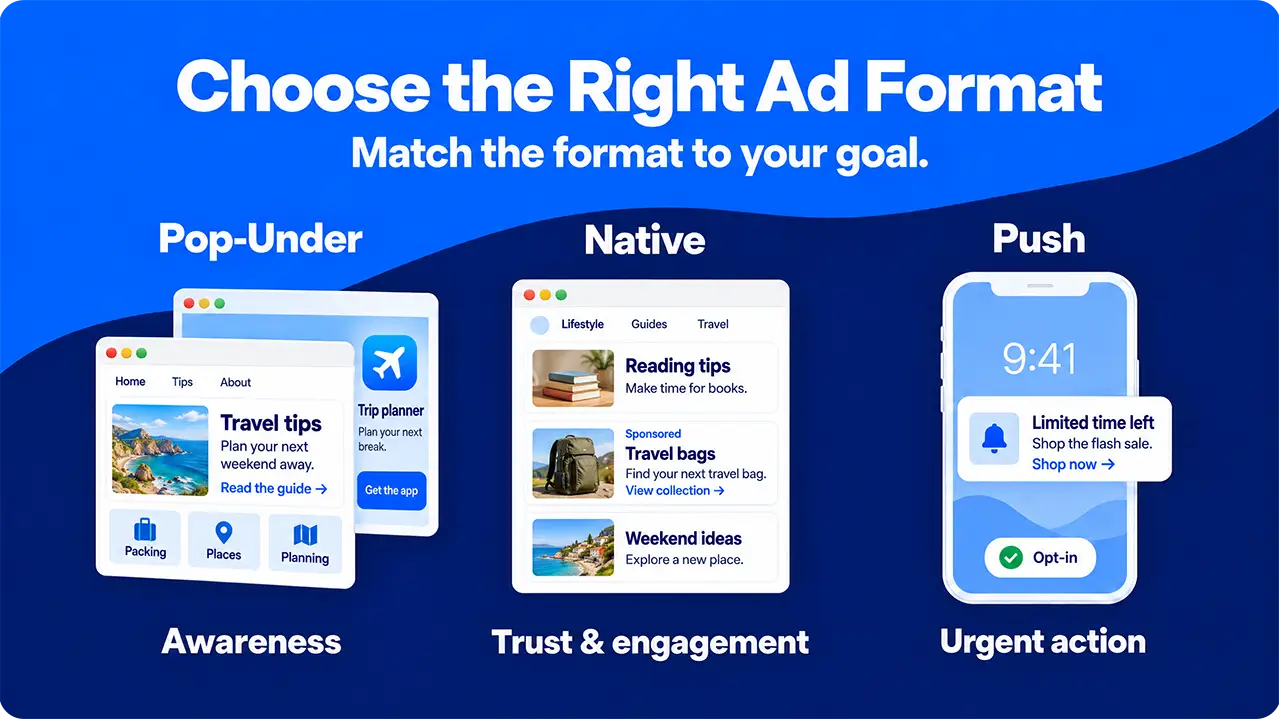
Advertising type
Cost
Targeting
Best For
Main Weaknesses
Main Strengths
Intrusitiveness
Pop-Under
Low
Targeted by browser, location and device type
Mass appeal and awareness building
Low user intent results in poor CTRs
Allows a gentle “warming” of potential traffic, meaning they are ready to sign up when they visit.
Relatively low: waits for viewer to finish what they were doing
Native
High initial costs
Vague targeting by interest and curiosity
Awareness and trust building with engaged audiences
Expensive to create and often slow to get publisher approval
Allows a detailed exploration of a topic and avoids the “hard sell” which can turn off customers
Low: appears as a natural piece of content
Push
Varies depending on pricing model selected.
Target by location, age of subscription and previous interactions
Quick results and time-sensitive messages
High opt-out rate and limited content length
Allows urgent messages to be sent and can generate instant results
High: triggers an alert on the desktop or mobile device they’re pushed to
Si tus analíticas muestran un número creciente de visitantes, pero no ves un aumento correspondiente en las ventas y los registros, es posible que tu sitio esté atrayendo al público equivocado. Una vez que hayas detectado este problema, puedes empezar a replantear tus esfuerzos de marketing y orientarlos con mayor precisión hacia tráfico relevante.