.webp)


.svg)


.svg)
.svg)
Affiliate links are a simple and effective way of partnering with content creators, whether they’re making videos or blogging, to increase your web traffic. You supply them with a unique link to whatever page or website you’re trying to increase traffic to, and they promote it to their audience. In return, you pay a small commission for each sale that comes from their unique link.
With the right partner, this can potentially be a great way of bringing in lots of highly engaged traffic. It’s relatively low-cost too, as you only pay for visits that convert, avoiding wasted spend.
Here’s how to go about it:
With the right partner, this can potentially be a great way of bringing in lots of highly engaged traffic. It’s relatively low-cost too, as you only pay for visits that convert, avoiding wasted spend.
Here’s how to go about it:
1. Find a Partner That Matches Your Niche
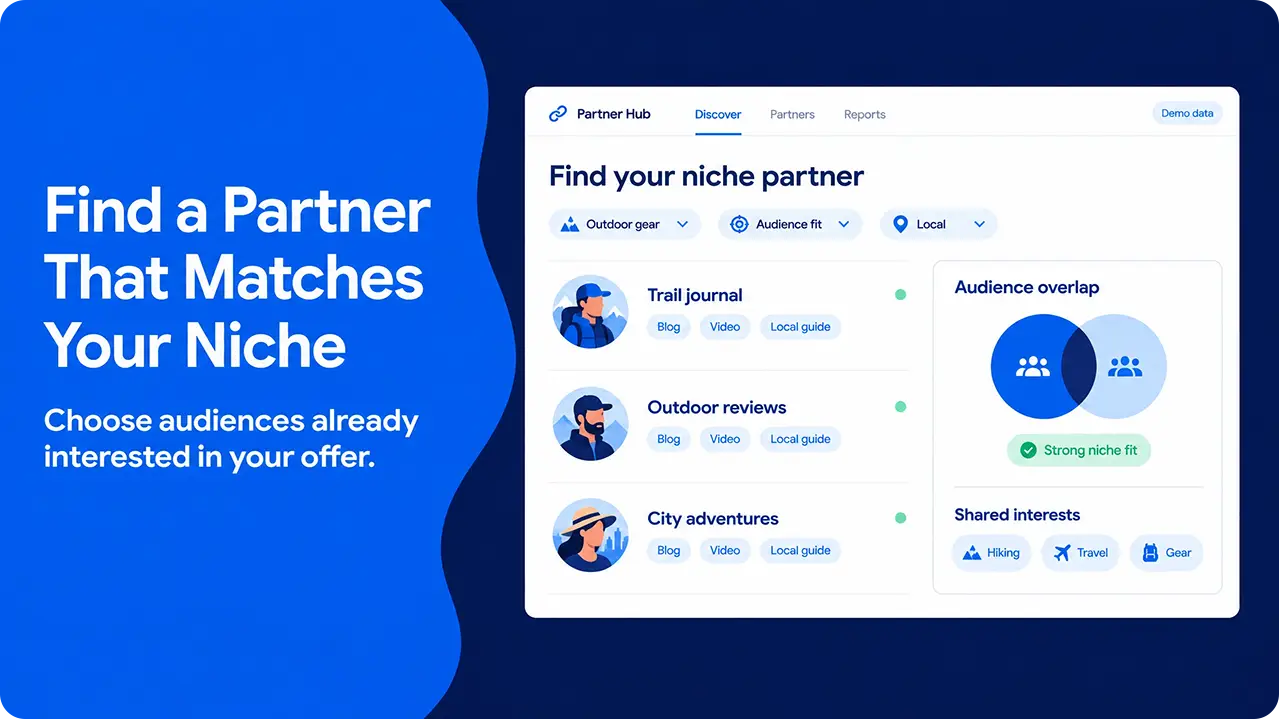
A partner whose audience is already interested in your niche is more likely to supply traffic that converts.
It’s a truism of the internet that no matter what your website sells or talks about, there will be someone else out there who’s also talking about it. They might be blogging, creating videos, or producing any other type of content that you could care to mention, and they have an audience who are already engaged and interested.
Working with a partner means that you can share in some of their audience. They’ve already built a relationship with their readers/viewers, and at least some of them are probably happy to take their recommendations on products and services that match their niche.
For some brands, they can aim at mass appeal- bigger influencers with big, varied audiences. This is best kept for websites that have an equally big appeal, and for most businesses, aiming squarely at your own niche will provide better results.
While you can sign up for an affiliate marketing platform, which will do most of the heavy lifting, the best results, especially for smaller, more niche businesses, often come from networking within your own online communities. Not only does this give you a bit more control over where your links appear, it allows you to build a relationship with the content creator and their audience, refining your offerings over time.
For local businesses, this personal affiliation can be particularly useful- think of restaurants partnering with local cinemas and theatres to offer discounts to their customers for pre-show meals, or tour guides partnering with hotels. These natural links can potentially be more powerful than even the most popular influencers.
It’s a truism of the internet that no matter what your website sells or talks about, there will be someone else out there who’s also talking about it. They might be blogging, creating videos, or producing any other type of content that you could care to mention, and they have an audience who are already engaged and interested.
Working with a partner means that you can share in some of their audience. They’ve already built a relationship with their readers/viewers, and at least some of them are probably happy to take their recommendations on products and services that match their niche.
For some brands, they can aim at mass appeal- bigger influencers with big, varied audiences. This is best kept for websites that have an equally big appeal, and for most businesses, aiming squarely at your own niche will provide better results.
While you can sign up for an affiliate marketing platform, which will do most of the heavy lifting, the best results, especially for smaller, more niche businesses, often come from networking within your own online communities. Not only does this give you a bit more control over where your links appear, it allows you to build a relationship with the content creator and their audience, refining your offerings over time.
For local businesses, this personal affiliation can be particularly useful- think of restaurants partnering with local cinemas and theatres to offer discounts to their customers for pre-show meals, or tour guides partnering with hotels. These natural links can potentially be more powerful than even the most popular influencers.
2. Join an Affiliate Marketing Program
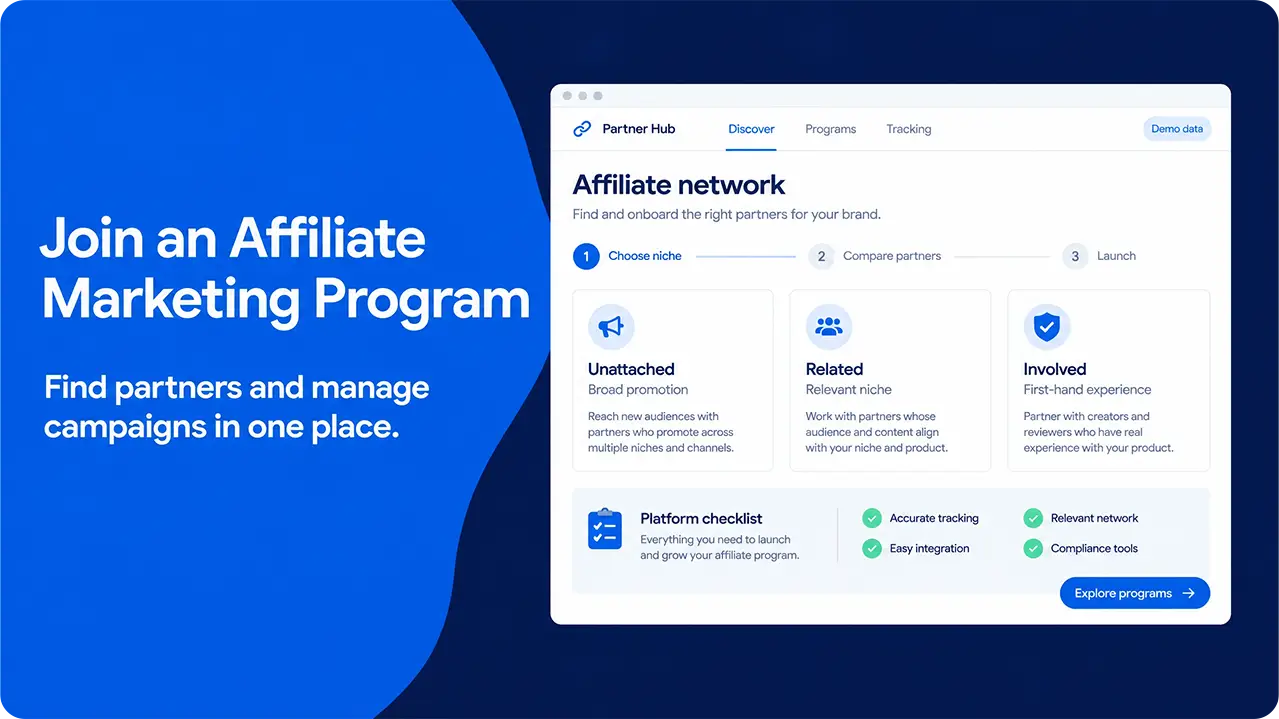
While forging personal relationships with blogs, YouTube channels, influencers and close-by businesses might work for some websites, it takes a lot of time and management to make the best of these options. The alternative is joining an affiliate marketing platform and letting them do the heavy lifting.
Basically, people who are interested in earning a passive income from their online presence sign up and are matched with businesses who want to attract more web traffic. There are various forms that this can take:
Basically, people who are interested in earning a passive income from their online presence sign up and are matched with businesses who want to attract more web traffic. There are various forms that this can take:
- Unattached: the affiliate doesn’t claim to have any particular knowledge of the product- they’re simply relaying information. This is the most common form, but also the least targeted and really could promote anything. Ultimately, this is a form of paid advertising. It’s quick, easy and relatively cheap, but offers little to no real control over targeting.
- Related: the affiliate already occupies a given niche and wants to promote products and pages related to it. They don’t necessarily have any knowledge of the particular products, but their audience is likely interested in them. Think cleaning channels promoting a specific cleaner or miniature painting blogs offering a discount on a partner’s brushes. It’s a bit riskier when it comes to building trust (products have to be genuinely great or you could damage both your own and your partner’s brand), but it’s a good way of building engagement for you both.
- Involved: the affiliate knows about and uses the product themselves. They offer reviews based on their own experience, producing particularly persuasive content. You may have to supply them with the product you’re trying to promote to ensure that their reviews are honest and open. This is by far the most involved form of affiliate marketing, but the results can be impressive.
There are various platforms out there that you could join, each with their own set of tools and covering a variety of niches. The core things to consider when choosing which works best for you are: tracking accuracy, integration with your existing platforms, network size and compliance with advertising rules.
3. Ensure Your Partner’s Content Provides Real Value
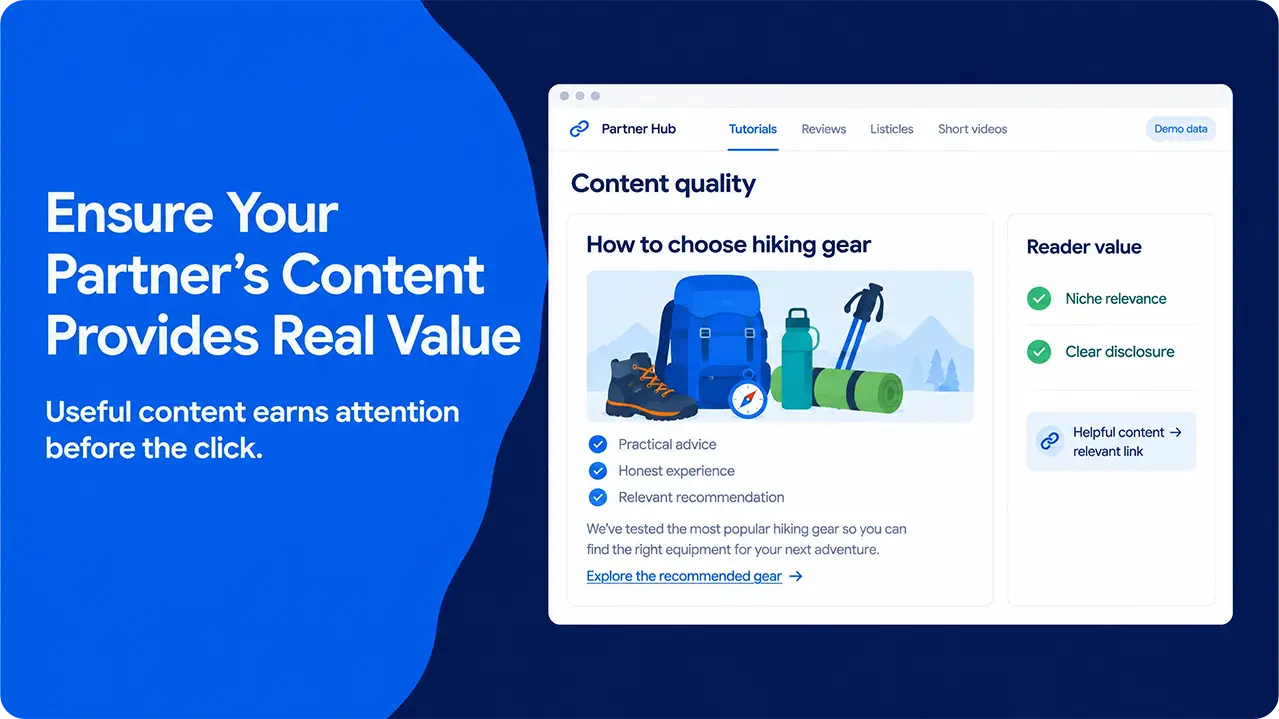
Spam sites do not attract a lot of attention online and might even cause penalties to be applied. Focus on partners who provide real value with their content for the best results.
Somewhere between half and two-thirds (it’s hard to find solid numbers) of the internet is thought to be marketing-related in some way. That being said, people don’t generally come online to be advertised at- they come with a specific purpose in mind, like being entertained, informed, or educated.
This means you should choose partners that offer more than an easy place to drop a link. For affiliate linking to be effective, those links have to be located alongside content that people actually want.
There are almost unlimited ways that this could apply, but a few tried-and-true content types include things like:
Somewhere between half and two-thirds (it’s hard to find solid numbers) of the internet is thought to be marketing-related in some way. That being said, people don’t generally come online to be advertised at- they come with a specific purpose in mind, like being entertained, informed, or educated.
This means you should choose partners that offer more than an easy place to drop a link. For affiliate linking to be effective, those links have to be located alongside content that people actually want.
There are almost unlimited ways that this could apply, but a few tried-and-true content types include things like:
- Tutorials - People who are looking to learn how to complete a project might turn to YouTube or blogs for a guide. These are the ideal places for affiliate links relating to the project in some way.
- Reviews - While reviews should always be fair and honest, they can absolutely be turned toward affiliate marketing. If you’re offering a discount on a certain product, this provides a natural place for your partner to insert their link.
- Listicles - Articles such as “the 5 best tools for X task” are great for your partner’s SEO (increasing their audience and your potential to turn their visitors into yours) and are likely to attract people who are in the middle of researching a product.
- Short videos- while click-through rates from video description links are generally quite low (between 0.5%-4.5%, depending on platform), they can be seen by a lot of people.
While you might get the odd click from asking your partner to include your link at the end of their articles, having them scattered throughout in relevant places is most likely to see people actually click them. Think of it as offering the link at the time someone is most likely to be thinking “oh, that’s a cool idea”.
4. Create Customized Offers To Target Parts of Their Audience
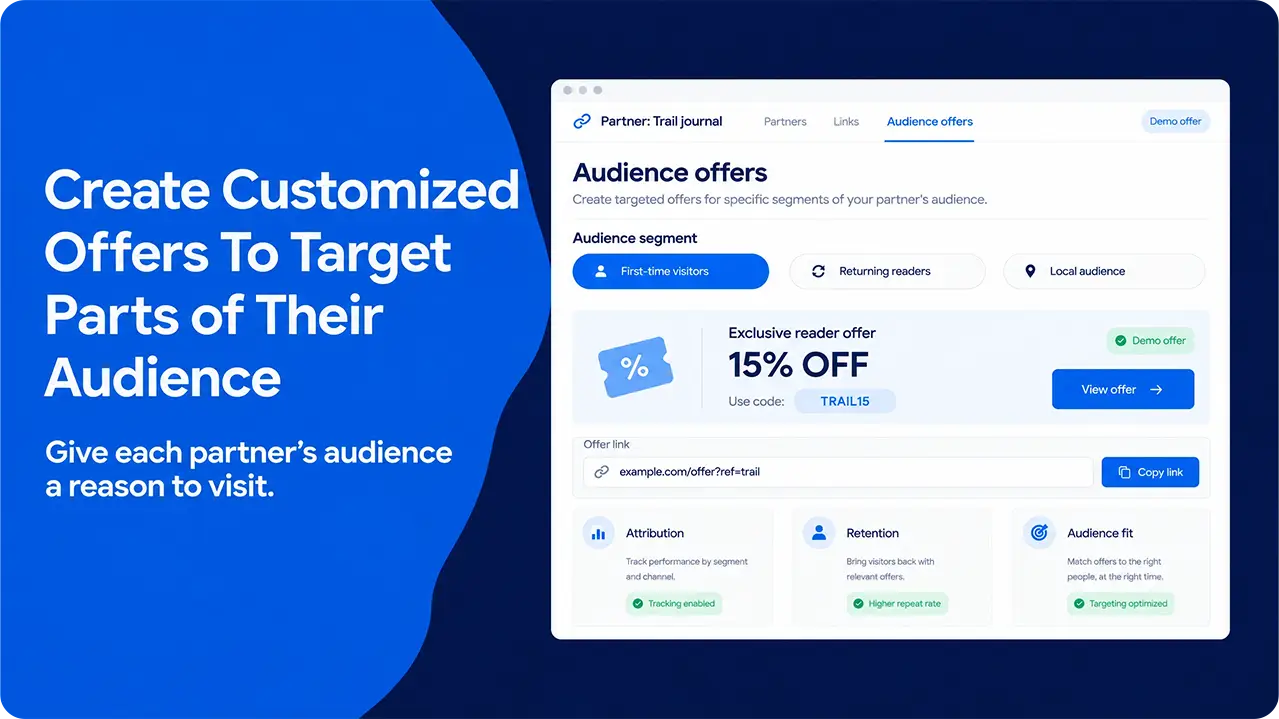
Customized offers can attract more visits from a specific partner’s audience and create a sense of exclusivity.
Affiliate links are customized to each partner that you work with, and this presents some interesting opportunities for you both. The most obvious way that you can both benefit from your partnership is by creating a unique offer- say, a discount- that’s only available to people who navigate to your site by following that specific link.
This has a few benefits:
Affiliate links are customized to each partner that you work with, and this presents some interesting opportunities for you both. The most obvious way that you can both benefit from your partnership is by creating a unique offer- say, a discount- that’s only available to people who navigate to your site by following that specific link.
This has a few benefits:
- Easy attribution - because your visitors found your site from a very specific link that was only available through your affiliate partner, you can easily attribute a sale or another action to that particular partner, allowing you to make better judgments about future efforts.
- Audience retention - an affiliate is only as good as their audience. Regular discounts help keep people engaged, and an engaged audience is more likely to revisit your site as well as keep consuming your partner’s content.
- Audience targeting - while affiliate links aren’t the most accurately targetable way of generating web traffic, creating offers to appeal to certain segments of your partner’s audience can help your links stand out to them.
5. Partner With A Range Of Affiliates
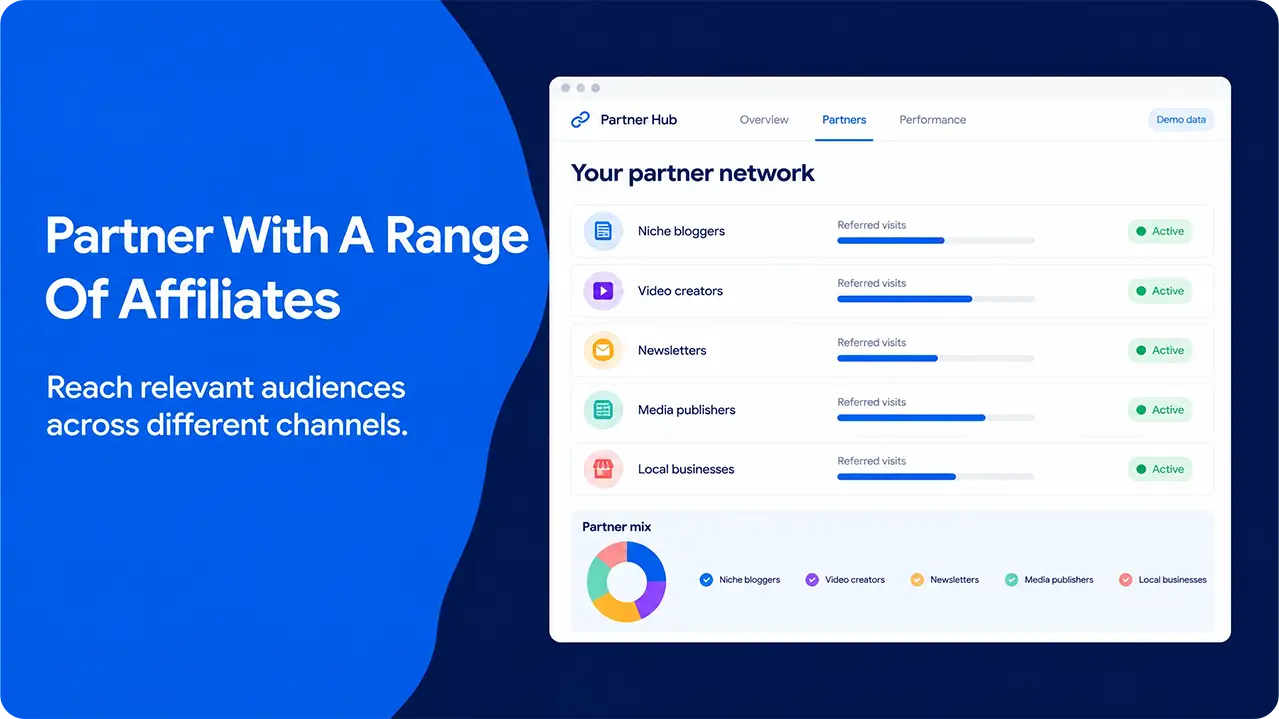
Reach out to all kinds of content creators to share your links and reach as many audiences as possible.
While the most common people to partner with for affiliate link marketing are bloggers and influencers, almost anyone with an audience is a potential partner. Other businesses might be willing to host your link in return for you doing the same for them (particularly useful for local businesses), allowing you to recommend each other’s services to your customers.
Another, often neglected, source of affiliate partnerships is email newsletters. These are served up directly into people’s inboxes. You can sponsor the newsletter or have them include your link more naturally to appeal to their readership.
Likewise, affiliate links don’t have to be limited to smaller organisations. It’s not uncommon for major news networks, such as the Independent’s IndyBest reviews section, to include affiliate links to the products that they’re reviewing. While this is obviously going to be more expensive than working with a micro-niche influencer, increased audience size can more than make up for it.
Effectively, anyone who offers reviews or regularly mentions products related to your website’s niche is a potential place for an affiliate link. The only way to find out whether they’ll host yours is to reach out and ask them.
While the most common people to partner with for affiliate link marketing are bloggers and influencers, almost anyone with an audience is a potential partner. Other businesses might be willing to host your link in return for you doing the same for them (particularly useful for local businesses), allowing you to recommend each other’s services to your customers.
Another, often neglected, source of affiliate partnerships is email newsletters. These are served up directly into people’s inboxes. You can sponsor the newsletter or have them include your link more naturally to appeal to their readership.
Likewise, affiliate links don’t have to be limited to smaller organisations. It’s not uncommon for major news networks, such as the Independent’s IndyBest reviews section, to include affiliate links to the products that they’re reviewing. While this is obviously going to be more expensive than working with a micro-niche influencer, increased audience size can more than make up for it.
Effectively, anyone who offers reviews or regularly mentions products related to your website’s niche is a potential place for an affiliate link. The only way to find out whether they’ll host yours is to reach out and ask them.
6. Supply Your Partner With Ready-to-Use Material
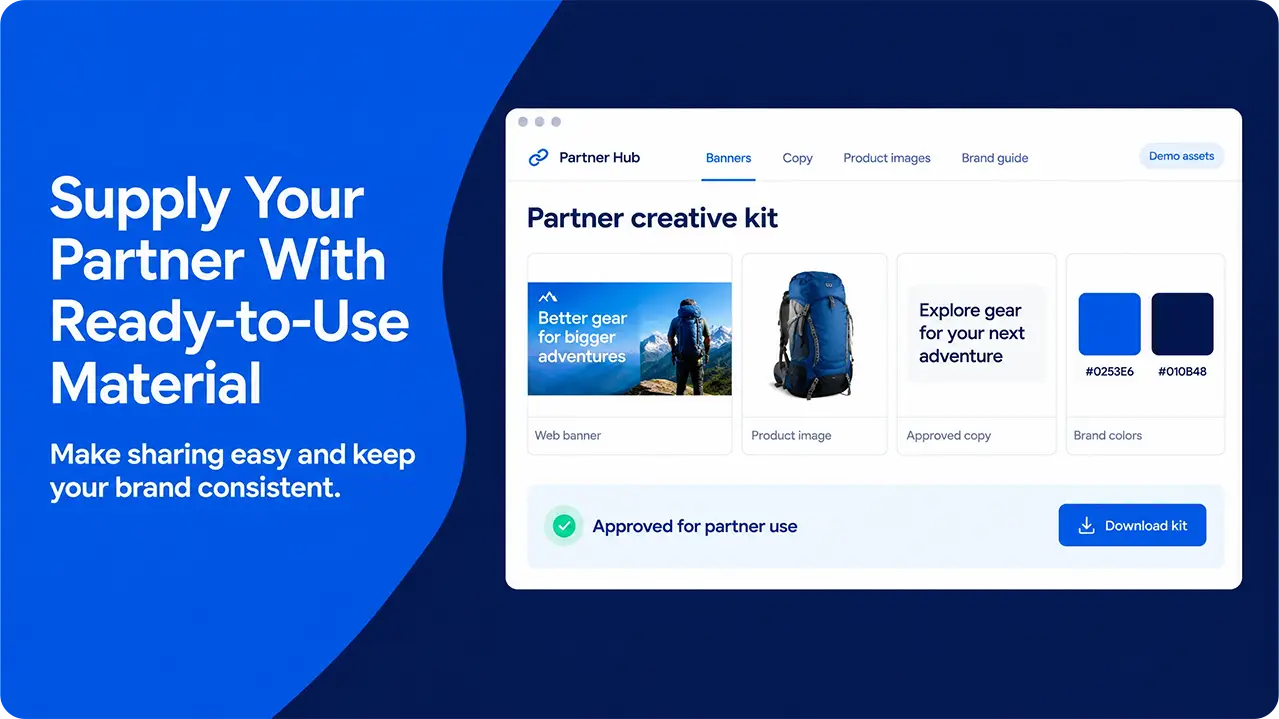
Protect your brand identity and increase recognition by supplying copy-and-paste text, high-quality images and other materials for your partners to use.
While there is absolutely value in letting your partners include your links in a way that feels natural to them and their audiences, sometimes you might want a little more control. In this case, you can supply ready-to-go creatives, such as banners, copy-and-paste text, and high-res photos of your products.
While most partners will be all too happy to include your links in their content, and allowing them to do so lets you borrow some of the good feeling they’ve earned from their audiences, there’s always the risk that they’ll dilute your brand identity. Offering them ready-made creatives cuts down on this risk.
This gives you more power over how your brand is represented online and ensures that you’re presented in the best light possible. While it’s not always suitable for every single affiliate, the boost supplying material can give to your brand recognition is often significant enough that any slightly jarring positioning can be forgiven.
It’s also a great way to make life that little bit easier for your partner, keeping them happy and ensuring that the relationship you’re building works both ways. Like most forms of marketing, working with affiliates generally gets better over time, so keeping them happy to be working with you is in both your interests.
While there is absolutely value in letting your partners include your links in a way that feels natural to them and their audiences, sometimes you might want a little more control. In this case, you can supply ready-to-go creatives, such as banners, copy-and-paste text, and high-res photos of your products.
While most partners will be all too happy to include your links in their content, and allowing them to do so lets you borrow some of the good feeling they’ve earned from their audiences, there’s always the risk that they’ll dilute your brand identity. Offering them ready-made creatives cuts down on this risk.
This gives you more power over how your brand is represented online and ensures that you’re presented in the best light possible. While it’s not always suitable for every single affiliate, the boost supplying material can give to your brand recognition is often significant enough that any slightly jarring positioning can be forgiven.
It’s also a great way to make life that little bit easier for your partner, keeping them happy and ensuring that the relationship you’re building works both ways. Like most forms of marketing, working with affiliates generally gets better over time, so keeping them happy to be working with you is in both your interests.
7. Offer Your Partners Tiered Commissions
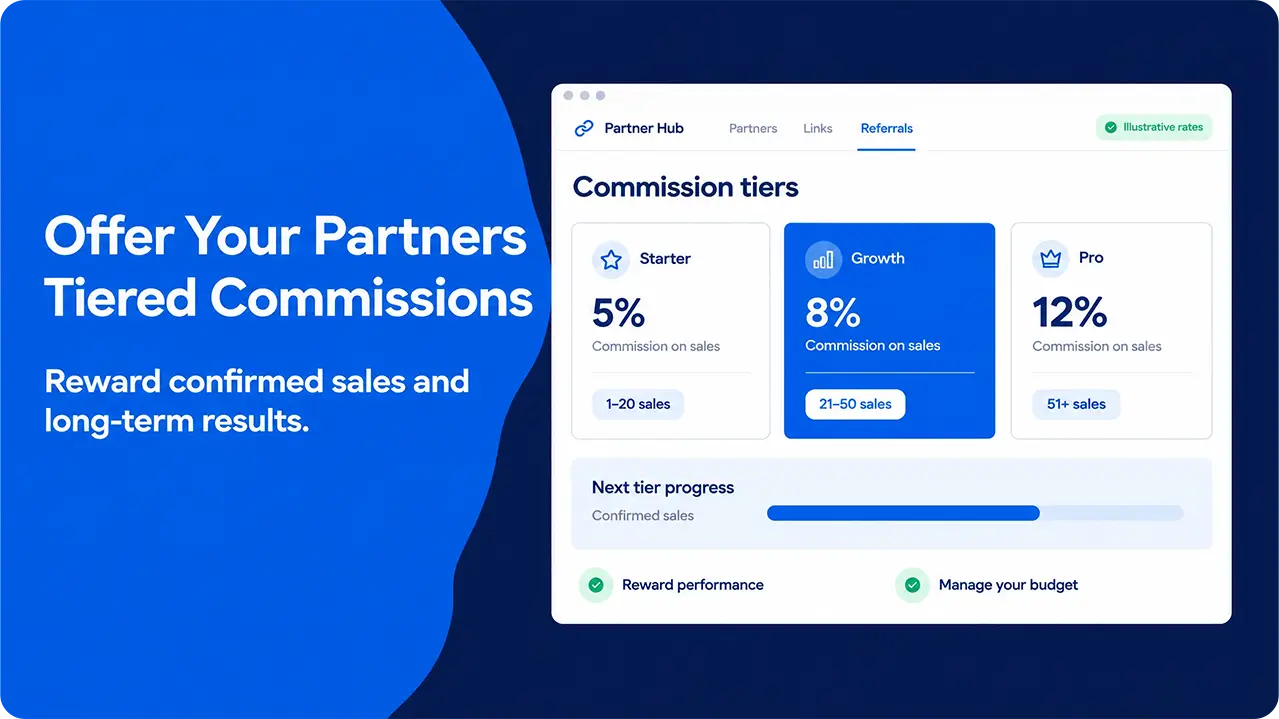
Reward success to keep your partners engaged and motivated while keeping your spend under control.
While there’s no such thing as a bad affiliate link (thanks to the fact that you usually pay commission on sales, rather than per-link), some are bound to perform better than others. There are a few things that your partners can do to increase the amount of traffic that they send your way, and if they do them well, they should be rewarded.
One simple way of rewarding your most useful partners is to offer a clearly demarcated tiered commission structure for hitting certain milestones. This way, as they attract more traffic (and more sales) to your site, they are rewarded for their efforts.
This has a few advantages for you (as well as the obvious bonus for them):
While there’s no such thing as a bad affiliate link (thanks to the fact that you usually pay commission on sales, rather than per-link), some are bound to perform better than others. There are a few things that your partners can do to increase the amount of traffic that they send your way, and if they do them well, they should be rewarded.
One simple way of rewarding your most useful partners is to offer a clearly demarcated tiered commission structure for hitting certain milestones. This way, as they attract more traffic (and more sales) to your site, they are rewarded for their efforts.
This has a few advantages for you (as well as the obvious bonus for them):
- Aids retention - there are a lot of brands out there that are happy to partner with your affiliates. A clear, progressive structure that rewards loyalty can help you keep them working with you rather than your competitors.
- Motivates your partner - a clear, laddered system will encourage your partner to keep refining their efforts until you reach a level of traffic that you’re both happy with.
- Protects your spend - with a tiered system, a new, unproven partner has to prove that they can attract traffic before they earn the right to higher levels of commission. At the same time, mature relationships are rewarded fairly, keeping your best sources of traffic on your side.
8. Use Unique Tracking Links To Monitor Your Partner’s Success
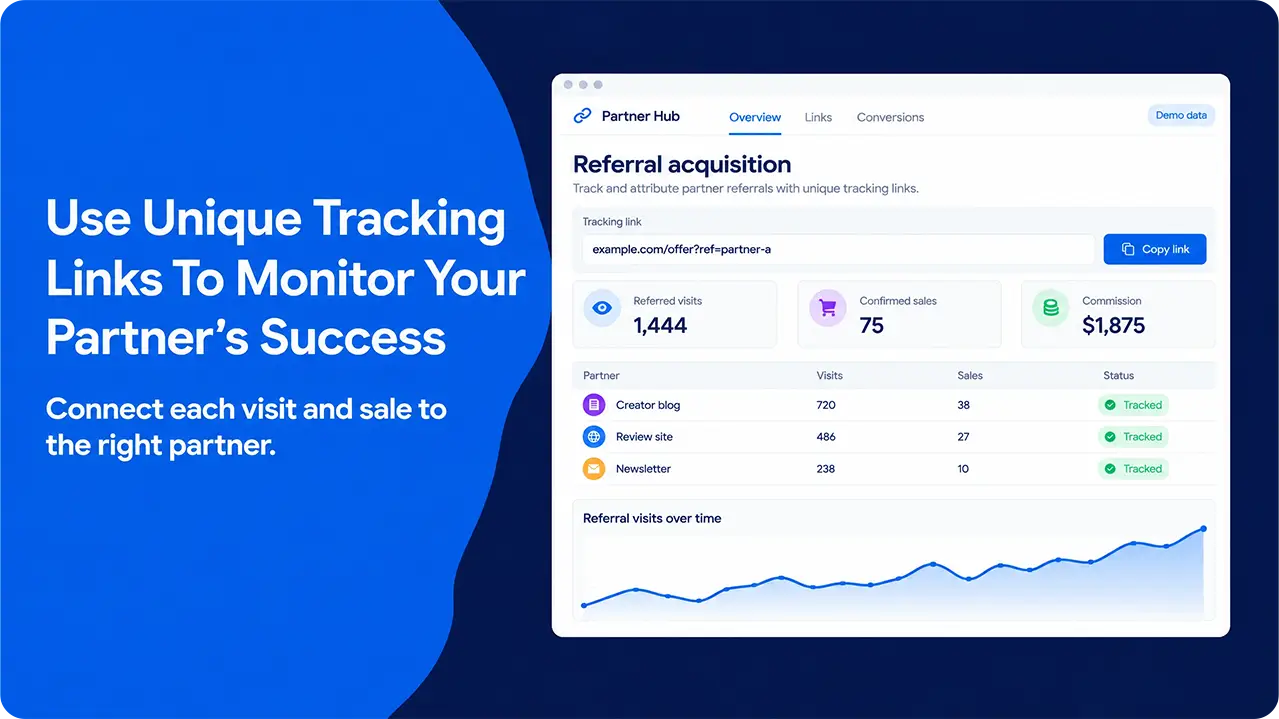
Tracking your results closely lets you make better choices about your campaign.
While ultimately, affiliate links are really a type of content marketing, they do have one standout feature that separates them from general backlinks: personalised URLs and cookies.
These allow you to track exactly which partners are supplying each visit and mean that you can make informed choices about which partners are and are not worth continuing to work with. They also ensure that your payment structure is balanced and fair, ensuring that your partners are paid for their work and that you’re not spending your budget on visits that don’t actually convert.
Partnered with a tiered commission structure, personalized URLs also help keep your affiliates motivated. Knowing that they will be rewarded fairly for their efforts and that their results will be fairly attributed encourages them to do everything they can to help your traffic convert from visitor to sale.
While ultimately, affiliate links are really a type of content marketing, they do have one standout feature that separates them from general backlinks: personalised URLs and cookies.
These allow you to track exactly which partners are supplying each visit and mean that you can make informed choices about which partners are and are not worth continuing to work with. They also ensure that your payment structure is balanced and fair, ensuring that your partners are paid for their work and that you’re not spending your budget on visits that don’t actually convert.
Partnered with a tiered commission structure, personalized URLs also help keep your affiliates motivated. Knowing that they will be rewarded fairly for their efforts and that their results will be fairly attributed encourages them to do everything they can to help your traffic convert from visitor to sale.
Common Problems With Affiliate Links
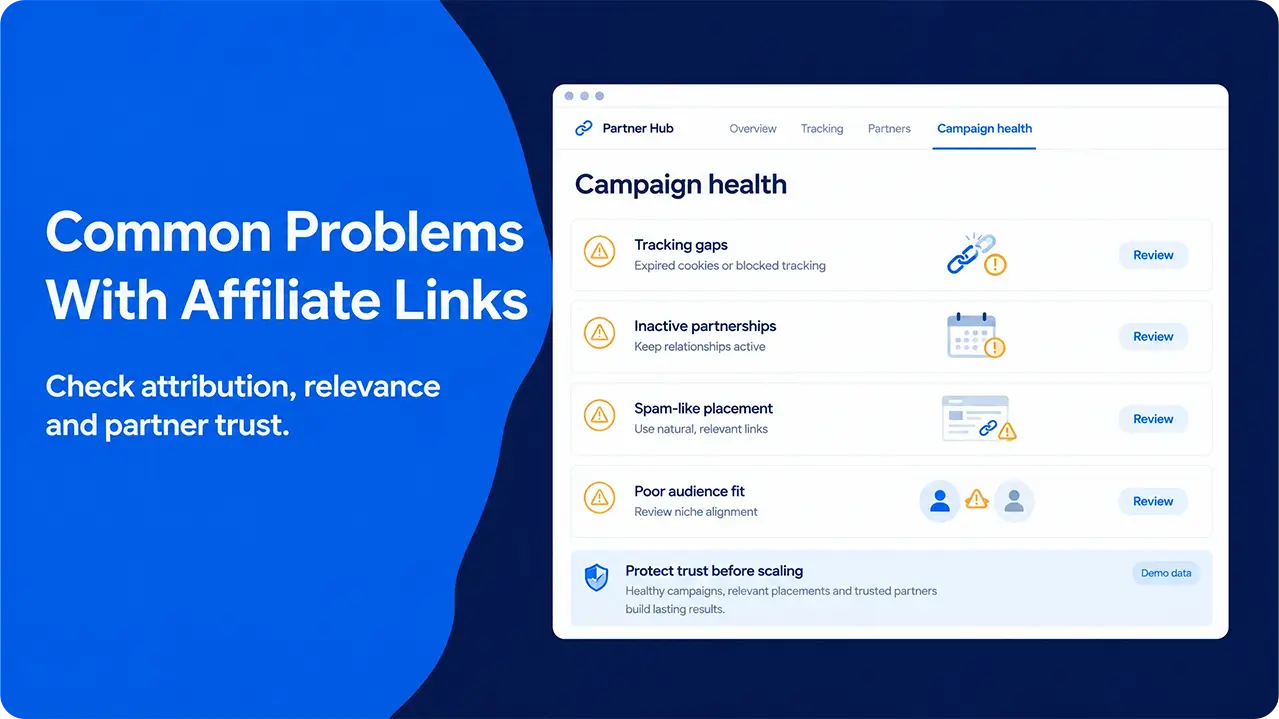
While the pay-per-conversion model that most affiliate links work under means that they can be a very cost-effective source of traffic for your website, there are a few common problems that people run into.
Firstly, tracking systems are not foolproof. Sometimes cookies expire, and a sale can’t be accurately attributed to a partner. Likewise, adblockers, incognito browsing and general tech-savviness amongst your visitors can play havoc with your tracking efforts. This has the potential to create bad feelings and could cost you a potentially fruitful relationship.
Affiliate programmes are not a “one-and-done” strategy either, though they’re often treated as such. A single link is unlikely to bring in much traffic at all, so cultivating relationships with your affiliates is a must for a successful campaign. You want them to include your link as often as possible, without ever crossing the line into being “spammy”, to ensure that it is seen by as many people as possible.
This brings us neatly on to another potential pitfall of affiliate marketing- the risk of appearing like spam. Search engines and AIs are well tuned to weed out spam sites, and audiences are also alert to this problem. A link that doesn’t fit in naturally will damage trust and could impact your other marketing efforts.
Finally, there’s always the risk of misjudging the suitability of a partner. For an effective relationship to flourish, you need to find affiliates whose audience is interested in your products already, at least tangentially. Partnering with the wrong people can dilute your brand and create confusion.
Firstly, tracking systems are not foolproof. Sometimes cookies expire, and a sale can’t be accurately attributed to a partner. Likewise, adblockers, incognito browsing and general tech-savviness amongst your visitors can play havoc with your tracking efforts. This has the potential to create bad feelings and could cost you a potentially fruitful relationship.
Affiliate programmes are not a “one-and-done” strategy either, though they’re often treated as such. A single link is unlikely to bring in much traffic at all, so cultivating relationships with your affiliates is a must for a successful campaign. You want them to include your link as often as possible, without ever crossing the line into being “spammy”, to ensure that it is seen by as many people as possible.
This brings us neatly on to another potential pitfall of affiliate marketing- the risk of appearing like spam. Search engines and AIs are well tuned to weed out spam sites, and audiences are also alert to this problem. A link that doesn’t fit in naturally will damage trust and could impact your other marketing efforts.
Finally, there’s always the risk of misjudging the suitability of a partner. For an effective relationship to flourish, you need to find affiliates whose audience is interested in your products already, at least tangentially. Partnering with the wrong people can dilute your brand and create confusion.
How To Use Affiliate Links To Increase Your Website Traffic
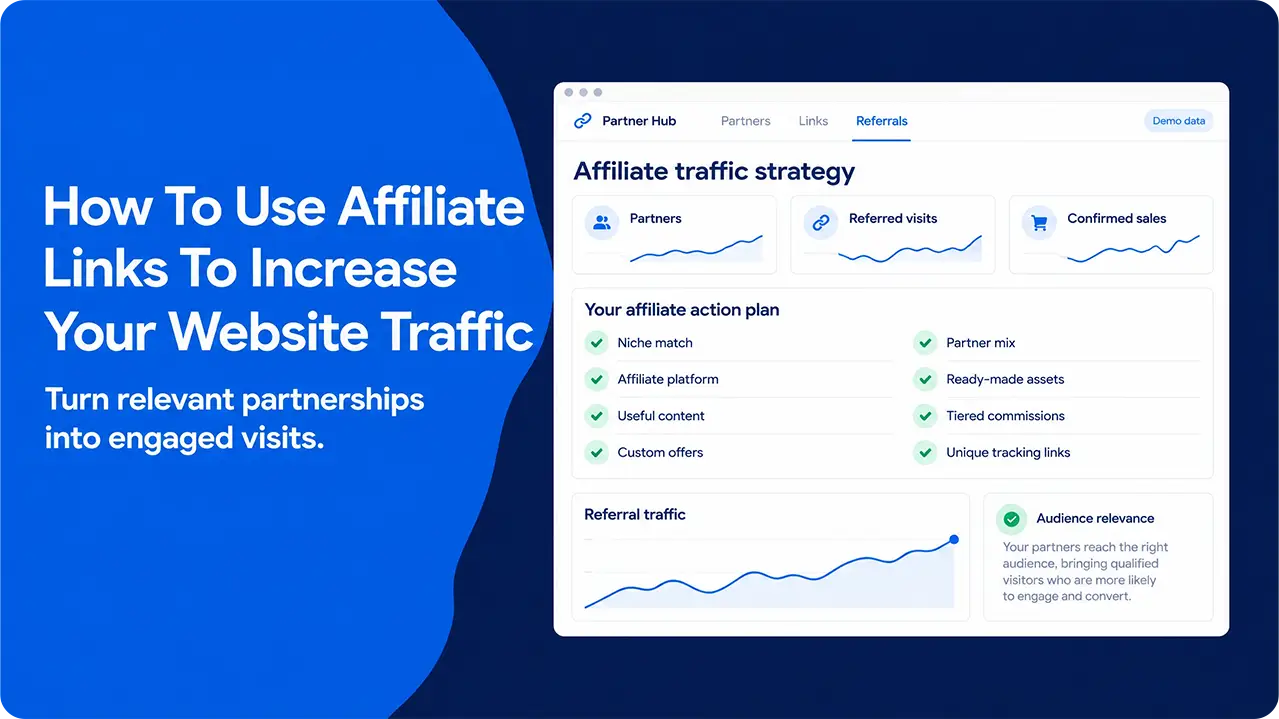
Borrowing an audience from an already established content producer of whatever type can be a handy way of attracting motivated traffic that’s ready to convert, even before they’ve clicked your link.
The core ways to do this are:
The core ways to do this are:
- Work with partners who match your niche closely. Their audience is the most likely to become your customers.
- If you don’t want to spend time building personal relationships with your affiliates, consider joining an affiliate marketing platform.
- Find partners whose content people actually want to consume. Content that provides real value will be seen by more people and ultimately earn you more visits.
- Create customized offers to tempt people to click your links.
- Don’t limit yourself to a single type of content creator. Work with bloggers, email newsletters, influencers and the media- anyone who sits within your niche is a potential partner.
- Offer to supply materials to keep your brand identity clear. It won’t always be suitable, but when it is, you can use this to enhance your brand recognition as well as earn some visits.
- Reward your partners for their hard work with a tiered commission structure. This keeps budgets low at the start of a relationship and rewards those who get results.
- Track your partners’ results with personalised links. These let you stay on top of commission and evaluate your results.
Collaborating closely with your affiliate partners can provide both of you with some tangible benefits. They get content and commission; you get traffic that’s ready to convert. Everyone’s a winner.