.webp)


.svg)


.svg)
.svg)
Wenn Sie rund um Ihr Unternehmen etwas Aufmerksamkeit erzeugen, Ihre Kunden auf ihrer Reise begleiten und auf natürliche Weise interessierten Traffic auf Ihre Website lenken möchten, ohne die mit PPC-Anzeigen verbundenen Ausgaben oder fragwürdige Praktiken in Kauf zu nehmen, ist Content-Marketing der richtige Weg.
Wir alle konsumieren Online-Inhalte im Terabyte-Bereich – sehen jedes Jahr online zig Millionen Wörter und verbringen durchschnittlich 4 Stunden täglich mit Scrollen, Lesen, Zuhören und Ansehen. Das bietet Unternehmen eine fantastische Gelegenheit, ihren potenziellen Kunden echten Mehrwert zu bieten, indem sie ihnen interessante, unterhaltsame und ansprechende Inhalte bereitstellen und dabei ganz nebenbei auch ein wenig Marketing platzieren.
Wir alle konsumieren Online-Inhalte im Terabyte-Bereich – sehen jedes Jahr online zig Millionen Wörter und verbringen durchschnittlich 4 Stunden täglich mit Scrollen, Lesen, Zuhören und Ansehen. Das bietet Unternehmen eine fantastische Gelegenheit, ihren potenziellen Kunden echten Mehrwert zu bieten, indem sie ihnen interessante, unterhaltsame und ansprechende Inhalte bereitstellen und dabei ganz nebenbei auch ein wenig Marketing platzieren.
Schritt 1: Vorbereitung auf Content-Marketing
Praktisch jede Form des digitalen Marketings umfasst die Erstellung von Inhalten in irgendeiner Form. Blogs, Webseiten und soziale Medien sind für die meisten Unternehmen praktisch ein Muss, doch eine bewusste Content-Marketing-Strategie erfordert etwas mehr Überlegung und Aufwand. Wir unterteilen es in Phasen:
Identifying The Problem
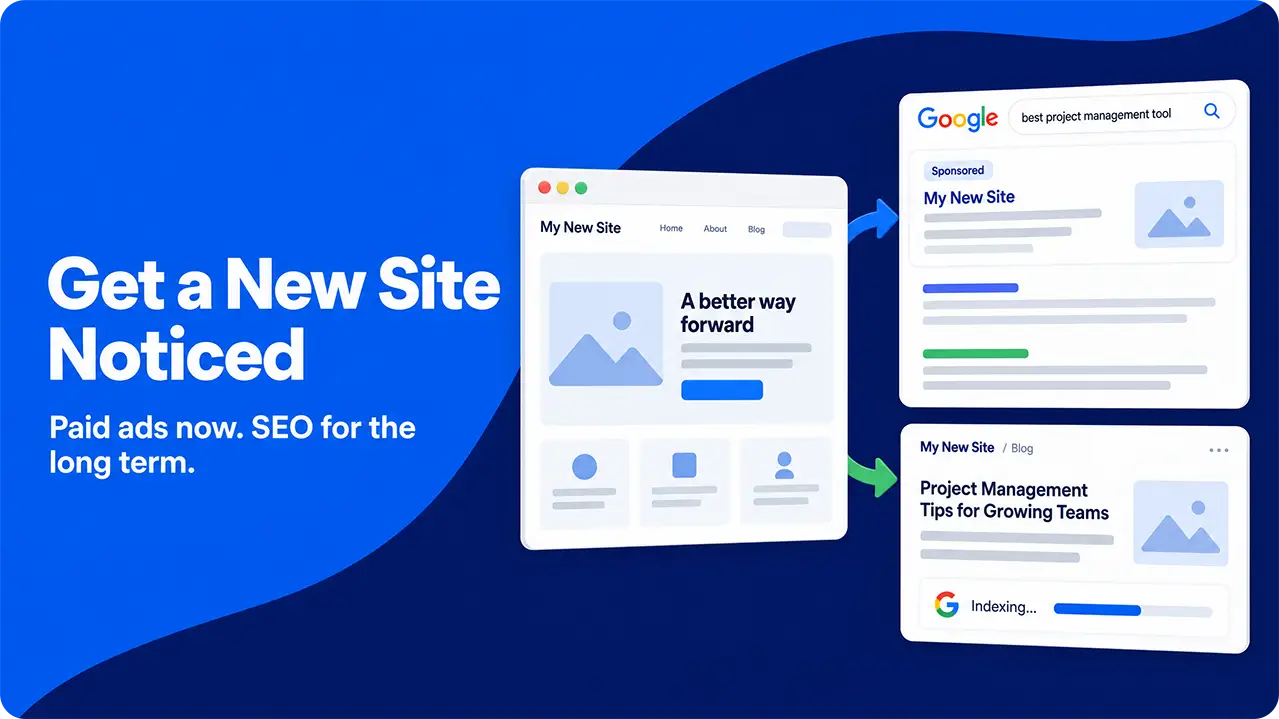
This is the simplest problem to identify- a new website is unlikely to get much traffic at all until you start marketing it and letting people know that it exists.
How To Fix It
A new website is an exciting time for a marketer- it brings a lot of potential and a chance to really set the direction. The honest (if simple) answer to this problem is that you really could try anything at this point and start generating a few more visits. That being said, there are a couple of strategies that make the most sense at this early stage.
You can approach this problem in two ways: a long-term solution or a quicker fix.
You can approach this problem in two ways: a long-term solution or a quicker fix.
SEO: The Long-Term Solution
In the long term, getting started on your SEO strategies (both traditional and generative) right away will bring results, though it will take time for them to really show. In fact, it could take anywhere from 3 to 9 months for your blogs and landing pages to start gaining traction.
That being said, SEO is cheap, effective, and long-lasting as a source of traffic for websites, and, as it’s a long process to get the best results, getting started as soon as possible is advisable.
The basics of SEO are fairly simple: write and produce content that answers the questions people turn to search engines to answer, back up your points with relevant links and write in an accessible, human-centric manner that makes the information you’re offering easy to digest for people and bots alike. For more nuance and detail on exactly what might help you rank, our guide has some pointers to get you started.
That being said, SEO is cheap, effective, and long-lasting as a source of traffic for websites, and, as it’s a long process to get the best results, getting started as soon as possible is advisable.
The basics of SEO are fairly simple: write and produce content that answers the questions people turn to search engines to answer, back up your points with relevant links and write in an accessible, human-centric manner that makes the information you’re offering easy to digest for people and bots alike. For more nuance and detail on exactly what might help you rank, our guide has some pointers to get you started.
Paid Ads: The Quicker Solution
While SEO is often held up as the best source of traffic for websites, with Google alone driving nearly 63% of all visits, it is not a quick process, and as a new website owner, you want measurable results now.
This is where paid advertising comes in. Unlike the slow, steady pace of growth that comes from blogging, paid adverts can, with the right budget and targeting, bring in an almost instant wave of visits.
You can run adverts on social media, in search results, or as the traditional banner ads that we all think of when we hear the phrase “online advertising”. These can be crafted and targeted incredibly closely by all kinds of criteria, turning almost anyone into a potential website visitor.
Each has its own ideal use:
This is where paid advertising comes in. Unlike the slow, steady pace of growth that comes from blogging, paid adverts can, with the right budget and targeting, bring in an almost instant wave of visits.
You can run adverts on social media, in search results, or as the traditional banner ads that we all think of when we hear the phrase “online advertising”. These can be crafted and targeted incredibly closely by all kinds of criteria, turning almost anyone into a potential website visitor.
Each has its own ideal use:
- Search ads: best for targeting urgency and for services that people are unlikely to explore on a whim.
- Display ads and videos: more general. Great for getting the word out about a particular offer, targeting interests and building brand recognition.
- Social media: best for targeting “lookalike” customers that share interests with your existing traffic.
Setting up a campaign is fairly simple: just make the image, video, or text you want people to see using whichever software suits, tell the ad networks who you want to show it to, and set your budget on whichever platform you’re using.
Within a few moments, you might start to see your first visits appearing from your ad. There’s a ton of nuance and refinement that you could engage in, which we cover in our full guide, but the general rule is the bigger the budget, the more clicks you’ll get.
The downsides to all this flexibility and speed are the cost and the amount of monitoring and testing that you have to do for the best results. As you generally pay per click generated, a successful campaign can quickly become expensive. If your campaign doesn’t seem to be generating many clicks, testing and refining can be quite time-consuming.
Within a few moments, you might start to see your first visits appearing from your ad. There’s a ton of nuance and refinement that you could engage in, which we cover in our full guide, but the general rule is the bigger the budget, the more clicks you’ll get.
The downsides to all this flexibility and speed are the cost and the amount of monitoring and testing that you have to do for the best results. As you generally pay per click generated, a successful campaign can quickly become expensive. If your campaign doesn’t seem to be generating many clicks, testing and refining can be quite time-consuming.
2. Nutzen Sie alle Link-Arten
Auch wenn wir bereits erwähnt haben, dass direkte Klicks über Links in Ihren Videos und Beschreibungen in der Regel recht gering sind (sie liegen im Durchschnitt bei etwa 1 %), sind Links ein wichtiger Bestandteil dieses Prozesses, wenn Ihr Hauptziel im Marketing darin besteht, über Ihre Videos Besuche auf Ihrer Website zu generieren.
Tatsächlich kann man sagen, dass diese Links im Hinblick auf messbare Ergebnisse der wichtigste Weg sind, auf dem ein Video direkt Traffic erzeugen kann.
Es gibt 4 Hauptarten von Links, die Sie in Ihren Videos verwenden können:
Identifying the Problem
We can usually identify that the traffic that we’re getting is “relevant” by comparing visitor numbers to the number of people who follow through and do whatever we’re asking them to do. This might be making a purchase, signing up to a newsletter or simply browsing through our blogs- whatever it is, the closer these two numbers are together, the more relevant the traffic is. Your analytics tools can be used to find these.
If we find that the traffic is relevant but lower than we’d like, we can look at where it’s coming from and start thinking about building a strategy to get more.
If we find that the traffic is relevant but lower than we’d like, we can look at where it’s coming from and start thinking about building a strategy to get more.
How To Fix It
If your website is already established and bringing in visits from relevant people but you want more traffic, you have options. In fact, this is another situation where you could potentially engage in almost any form of digital marketing and see some results.
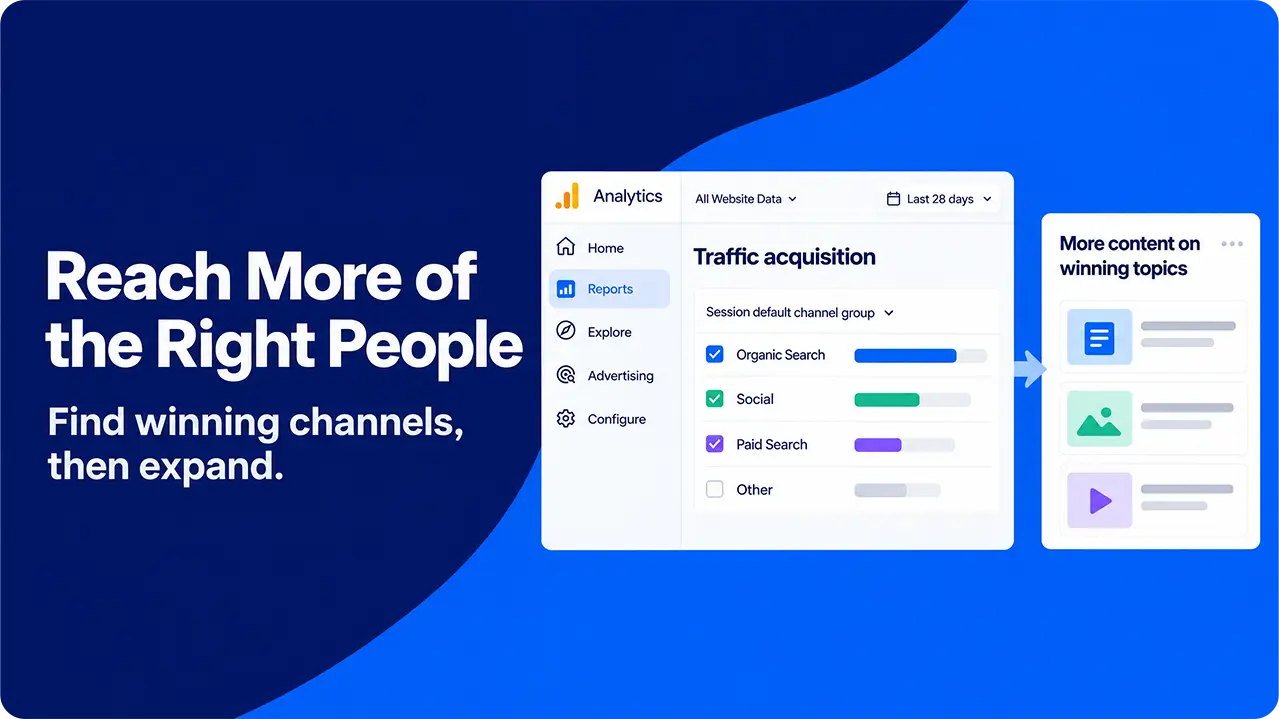
To work out the most appropriate strategy in this situation, the first place to turn is to your analytics package. From here, you should be able to work out how people are finding your site and which of your marketing channels is drawing them in- the reports that it generates are packed with insights like where people are finding your site from, how long they’re staying once they find it and which pages they’re browsing.
The most relevant information here is going to be where they’re clicking your link from. Armed with this data, you can decide whether you want to branch out or double down on your most successful channel. Our guide to using analytics tools to inform your decision-making and ultimately multiply your marketing efforts can help you work out where to focus.
Let’s say that most of your traffic is finding you via Google searches. This would suggest that your SEO game is on point, but because you want more of this traffic, you’re going to have to produce more content- that means looking at your successful pages (as marked out in your analytics) and trying to replicate the elements which made them successful in terms of topics and structure. If blogs seem to attract more attention, write more, expanding on your previous offerings. If it’s your landing pages that are getting results, think about how you can write more to target similar but slightly different searches.
This means examining the topics and structure of your successful content and then applying it to more content, branching out a little each time to avoid repeating yourself. Make sure that the main keywords are related to your successful pages but not exactly the same to avoid cannibalising your own results.
Alternatively, sources like social media and affiliate linking, both of which focus on the relevance of the traffic they generate over bulk, might be the better choice for expanding your reach. Both come with a certain level of audience built-in and allow you to target people who “look like” your current traffic. This gives you access to a market that shares something in common with your current customers. We have guides to using social media and affiliate marketing to boost your traffic flows.
And, of course, there’s always the option of simply running more ads, targeting people by location or interests, to increase the amount of relevant traffic that finds its way to your site.
To work out the most appropriate strategy in this situation, the first place to turn is to your analytics package. From here, you should be able to work out how people are finding your site and which of your marketing channels is drawing them in- the reports that it generates are packed with insights like where people are finding your site from, how long they’re staying once they find it and which pages they’re browsing.
The most relevant information here is going to be where they’re clicking your link from. Armed with this data, you can decide whether you want to branch out or double down on your most successful channel. Our guide to using analytics tools to inform your decision-making and ultimately multiply your marketing efforts can help you work out where to focus.
Let’s say that most of your traffic is finding you via Google searches. This would suggest that your SEO game is on point, but because you want more of this traffic, you’re going to have to produce more content- that means looking at your successful pages (as marked out in your analytics) and trying to replicate the elements which made them successful in terms of topics and structure. If blogs seem to attract more attention, write more, expanding on your previous offerings. If it’s your landing pages that are getting results, think about how you can write more to target similar but slightly different searches.
This means examining the topics and structure of your successful content and then applying it to more content, branching out a little each time to avoid repeating yourself. Make sure that the main keywords are related to your successful pages but not exactly the same to avoid cannibalising your own results.
Alternatively, sources like social media and affiliate linking, both of which focus on the relevance of the traffic they generate over bulk, might be the better choice for expanding your reach. Both come with a certain level of audience built-in and allow you to target people who “look like” your current traffic. This gives you access to a market that shares something in common with your current customers. We have guides to using social media and affiliate marketing to boost your traffic flows.
And, of course, there’s always the option of simply running more ads, targeting people by location or interests, to increase the amount of relevant traffic that finds its way to your site.
3. Gestalten Sie Ihren Call-to-Action
Es ist mittlerweile ein bisschen ein Klischee, aber Menschen dazu aufzufordern, „zu liken und zu teilen“, funktioniert immer noch. Wir nennen das den Call To Action, und tatsächlich ist es der Teil eines Videos, der am direktesten mit Marketing zu tun hat. Im Grunde ist das der Abschnitt, normalerweise gegen Ende des Videos, in dem Sie das Publikum auffordern, die gewünschte Handlung auszuführen.
Wenn der wichtigste Marketingzweck darin besteht, direkte Klicks auf Links zu erzeugen, können Sie mit etwas wie „Klicken Sie auf den Link in der Beschreibung unten“ abschließen oder, je nach Ton und Stil Ihres Videos, etwas Subtileres wählen.
Unabhängig von der genauen Formulierung Ihres Call To Action gibt es ein paar Dinge, die Sie beachten sollten und die dabei helfen können, Ergebnisse zu erzielen:
Identifying the Problem
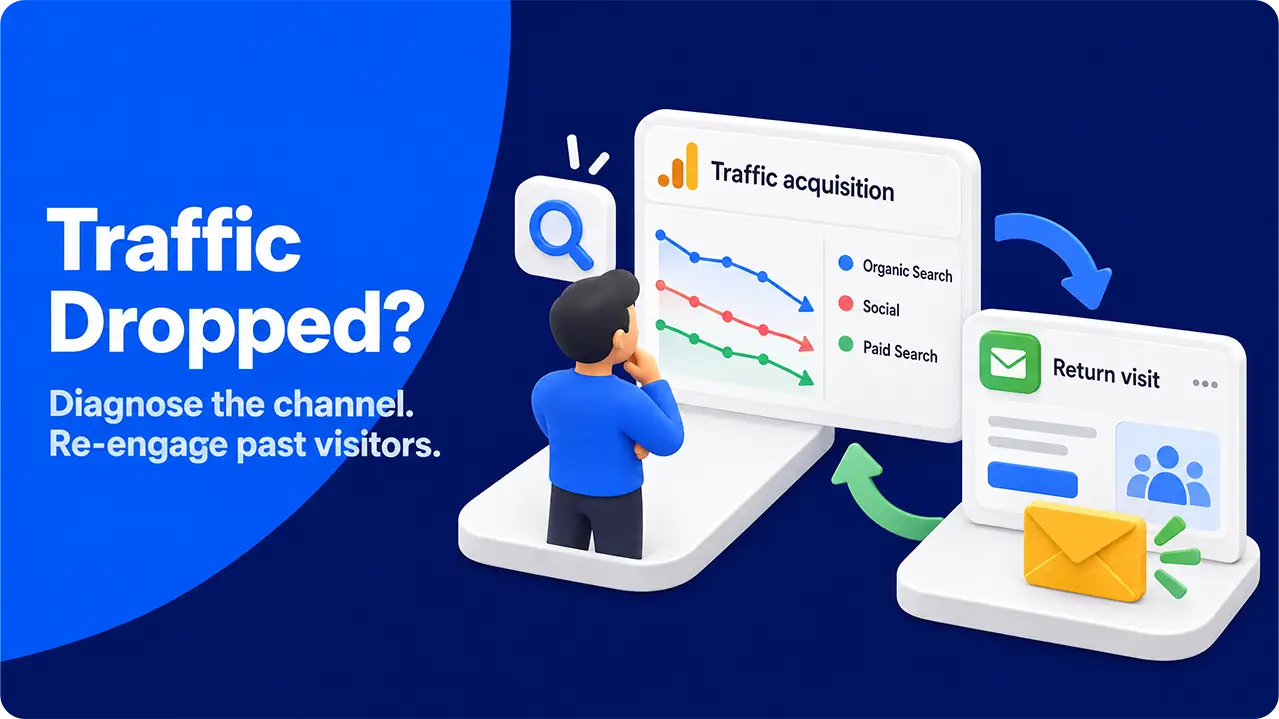
A drop in website traffic will show up on your analytics dashboard. The reports that you find there should let you know exactly which flows have changed and from here, you can start to piece together why they’ve changed.
How to Fix It
Sometimes, what has been working seems to stop, and your website traffic will drop. There could be countless reasons behind it; the most common being:
- Algorithm Changes: Search engines, social media and AIs update themselves regularly, changing what they prioritize. Your content that once ranked well might now be lower down the listings.
- Tracking Problems: Occasionally, updating your website might cause issues with your analytics software. Load up your page yourself and see if your visit is logged.
- Competitors outranking you: SEO doesn’t stand still and, if you’ve been successful, your competitors have likely taken note and started to copy your strategy.
- Actions and Penalties: Search engines and ad networks will apply penalties when they think you’ve gone against their rules. This could result in lower rankings or even having your site totally delisted.
- Keyword cannibalism: If you’ve created too much content focusing on the same keywords, you might have accidentally set up a situation where your own blogs are competing against each other.
Of course, it could be down to any number of other factors- there are simply too many to list here. Your analytics reports should help you identify the problem and set about fixing it, as it will allow you to compare your traffic sources week on week and find what has changed.
But what you really want is a solution that will get traffic flowing back to your site quickly.
If you’ve previously had a good flow of traffic and it seems to have dried up, the easiest answer to the immediate problem is a retargeting campaign, aiming to bring previous visitors flooding back. There are two main tools that allow us to do this: email marketing and retargeting via ads. It won’t solve the core problem, but it will get traffic flowing again while you work on it.
Email marketing focuses entirely on people who have already connected with your website in some way. You need their email addresses and their consent to form your mailing list, but once armed with this, you can lead them back to your site directly from their inbox. We’ve prepared a basic guide with lots of actionable tips to get you started.
Retargeting via ads can be done in a couple of different ways. You could use cookies to target people who have already visited your site, or upload your mailing list to a platform like Facebook to remind them that you’re still here.
In fact, retargeting is worth considering even when your traffic flows are going well. Some research suggests that returning visitors are 97% more likely to spend money than people who have only just found you, offering a potentially great ROI.
But what you really want is a solution that will get traffic flowing back to your site quickly.
If you’ve previously had a good flow of traffic and it seems to have dried up, the easiest answer to the immediate problem is a retargeting campaign, aiming to bring previous visitors flooding back. There are two main tools that allow us to do this: email marketing and retargeting via ads. It won’t solve the core problem, but it will get traffic flowing again while you work on it.
Email marketing focuses entirely on people who have already connected with your website in some way. You need their email addresses and their consent to form your mailing list, but once armed with this, you can lead them back to your site directly from their inbox. We’ve prepared a basic guide with lots of actionable tips to get you started.
Retargeting via ads can be done in a couple of different ways. You could use cookies to target people who have already visited your site, or upload your mailing list to a platform like Facebook to remind them that you’re still here.
In fact, retargeting is worth considering even when your traffic flows are going well. Some research suggests that returning visitors are 97% more likely to spend money than people who have only just found you, offering a potentially great ROI.
4. Konzentrieren Sie sich auf SEO, damit mehr Menschen Ihre Videos sehen
Da die Klickraten relativ niedrig sind, erzielen Sie die besten Ergebnisse, wenn Sie sicherstellen, dass Ihre Videos von möglichst vielen Menschen gesehen werden. Das Grundprinzip ist: Je mehr Menschen zuschauen, desto mehr Menschen sehen Ihren CTA und Ihre Links.
SEO für Videos folgt weitgehend denselben Regeln, die Sie auch anwenden würden, wenn Sie Ihre Blogs und Landingpages ranken lassen möchten. Wir konzentrieren uns weiterhin auf die Keywords, nach denen Menschen wahrscheinlich suchen, wenn Ihre Inhalte am relevantesten sind, und stellen sicher, dass unsere Metadaten, Titel und vor allem Transkripte sie alle enthalten.
Da Suchmaschinen und AIs Ihr Video nicht „ansehen“ können, ist es wichtig sicherzustellen, dass Ihre Transkripte korrekt sind. Die automatische Generierung gibt es, aber jeder, der schon einmal ein YouTube-Video von jemandem mit schottischem oder irischem Akzent gesehen hat, wird Ihnen sagen, dass sie wirklich nicht besonders gut ist. Es lohnt sich auf jeden Fall, etwas Zeit zu investieren, um sie durchzugehen und sicherzustellen, dass dort auch wirklich das steht, was Sie möchten.
How To Identify the Problem
If your analytics show a rising number of visitors but you’re not seeing a corresponding increase in sales and sign-ups, your site may be attracting the wrong people. Once you’ve noticed this problem, you can start to reverse-engineer your marketing efforts and target them more closely to relevant traffic.
How to Fix It
A part of our online behaviour that is often neglected in blogs like this is the urge to click on things to simply see what they are. We’re not always all that interested in actually buying some of the stuff we browse; we’re just satisfying an idle fancy.
This presents a problem for anyone who’s trying to attract relevant traffic. Any traffic is nice to have, but some is worth more than others. We need a reliable way of ensuring that the traffic that we pay for is made up of the people most likely to engage with our content in the way we want them to.
Of course, all the methods of digital marketing aim to do this to one extent or another, but when it comes to control, paid advertising is hard to beat. Every platform and advert type has its own twists on this, but for relevance, there are a few that really stand out:
This presents a problem for anyone who’s trying to attract relevant traffic. Any traffic is nice to have, but some is worth more than others. We need a reliable way of ensuring that the traffic that we pay for is made up of the people most likely to engage with our content in the way we want them to.
Of course, all the methods of digital marketing aim to do this to one extent or another, but when it comes to control, paid advertising is hard to beat. Every platform and advert type has its own twists on this, but for relevance, there are a few that really stand out:
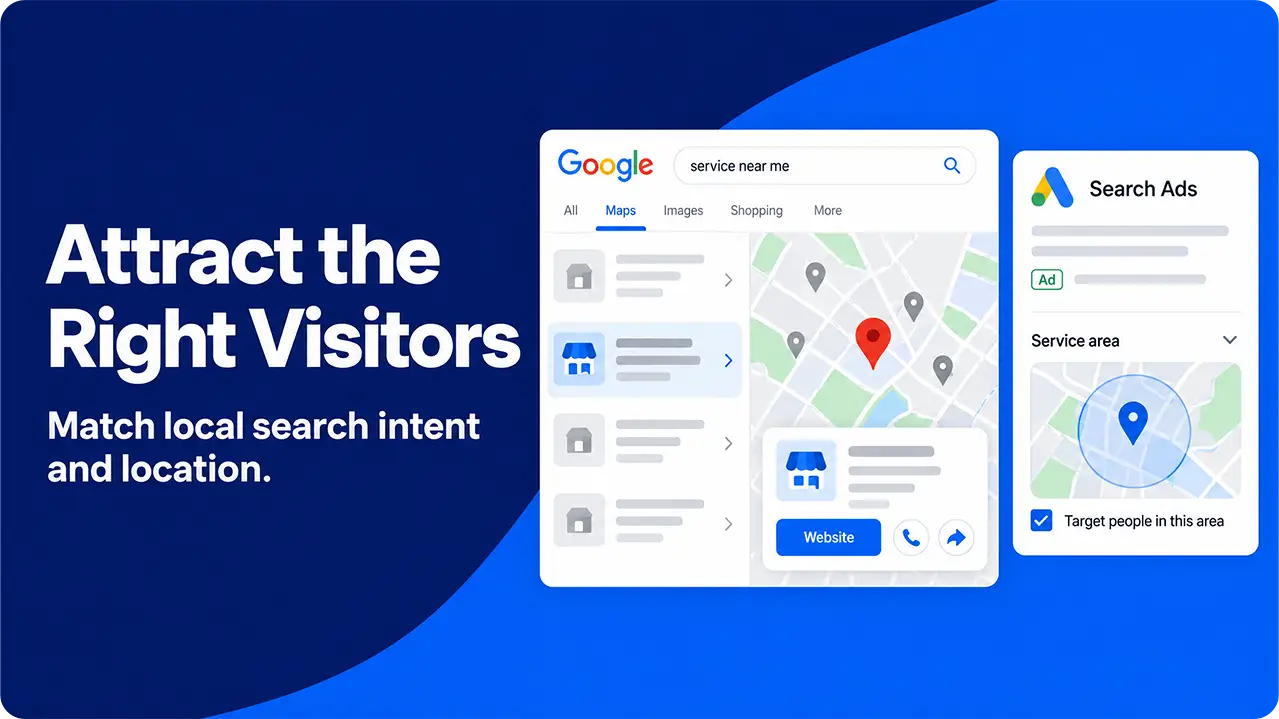
- Search Ads: People turn to Google and other search engines when they have problems that they want to solve. Search ads match your advert to their search intent, so when someone is looking for “leak repair”, your roofing business is presented to them.
- Social media: Social media platforms hold a lot of information on their users and, with a little careful thought, you can turn this to your advantage. By profiling your ideal visitor, you should be able to ensure that your social ads are shown to people who match pretty closely.
- Geo-targeting: Around 90% of businesses are focused on their local area. Paid ads allow you to target by location from full countries all the way down to individual buildings- it’s hard to get more relevant than that.
Another way of ensuring that your traffic-generation efforts are attracting relevant traffic is focusing on local SEO and Maps.
Google Business Profile is the gateway to this hyper-relevant traffic, setting you up as a presence in your physical location. It allows you to appear in Maps searches, build a reputation with your customers via reviews and posts and stand out to AIs- all fantastic sources of relevant traffic if your business is focused on a specific area. Our guide has been designed to walk you through the ins and outs of getting set up.
The best thing about focusing on local searches is that the people who find your site are more likely to be actively looking to engage with you.
Google Business Profile is the gateway to this hyper-relevant traffic, setting you up as a presence in your physical location. It allows you to appear in Maps searches, build a reputation with your customers via reviews and posts and stand out to AIs- all fantastic sources of relevant traffic if your business is focused on a specific area. Our guide has been designed to walk you through the ins and outs of getting set up.
The best thing about focusing on local searches is that the people who find your site are more likely to be actively looking to engage with you.
5. Bringen Sie AIs dazu, Ihre Videos und Links zu empfehlen
Es ist erwähnenswert, dass Videos im Zeitalter der KI-Suche und von ChatGPT-Empfehlungen auf völlig neue Weise Traffic generieren können. KIs verweisen Menschen gerne auf Videoinhalte und stützen ihre Antworten auf Ihre Transkripte, und einige von ihnen fassen Ihre Inhalte sogar zusammen und leiten Menschen für weitere Informationen direkt auf Ihre Website weiter.
Im Allgemeinen ist es ziemlich einfach, sich diese Eigenschaft von KIs zunutze zu machen – sie mögen dieselben Dinge wie Menschen –, aber es erfordert dennoch ein wenig Nachdenken.
Ein Aspekt, den viele Menschen übersehen, ist, dass Google Summary die Search Generative Experience verwendet und Ergebnisse aus Videos und anderen Inhalten kombiniert. Sie können Google Summary dazu ermutigen, Ihre Inhalte wahrzunehmen, indem Sie Blogs haben, die Ihre Videos unterstützen (und das eröffnet auch einen völlig neuen Traffic-Kanal über traditionelle SEO).
How To Identify The Problem
If you’re getting lots of traffic from people who seem generally interested in what you’re offering, but your sales and sign-ups don’t reflect it, the problem is most likely your Engagement Rate. A low engagement rate (also sometimes called a high bounce rate) suggests that people are finding your site but not staying long enough to carry out the action you want them to.
How to Fix It
All the traffic in the world won’t do you any good (even traffic that exactly matches your target audience) if it doesn’t convert. You might want them to sign up for your mailing list, make a call, buy your products or simply browse around and read your content. If they’re not doing this, all your traffic acquisition efforts have been in vain.
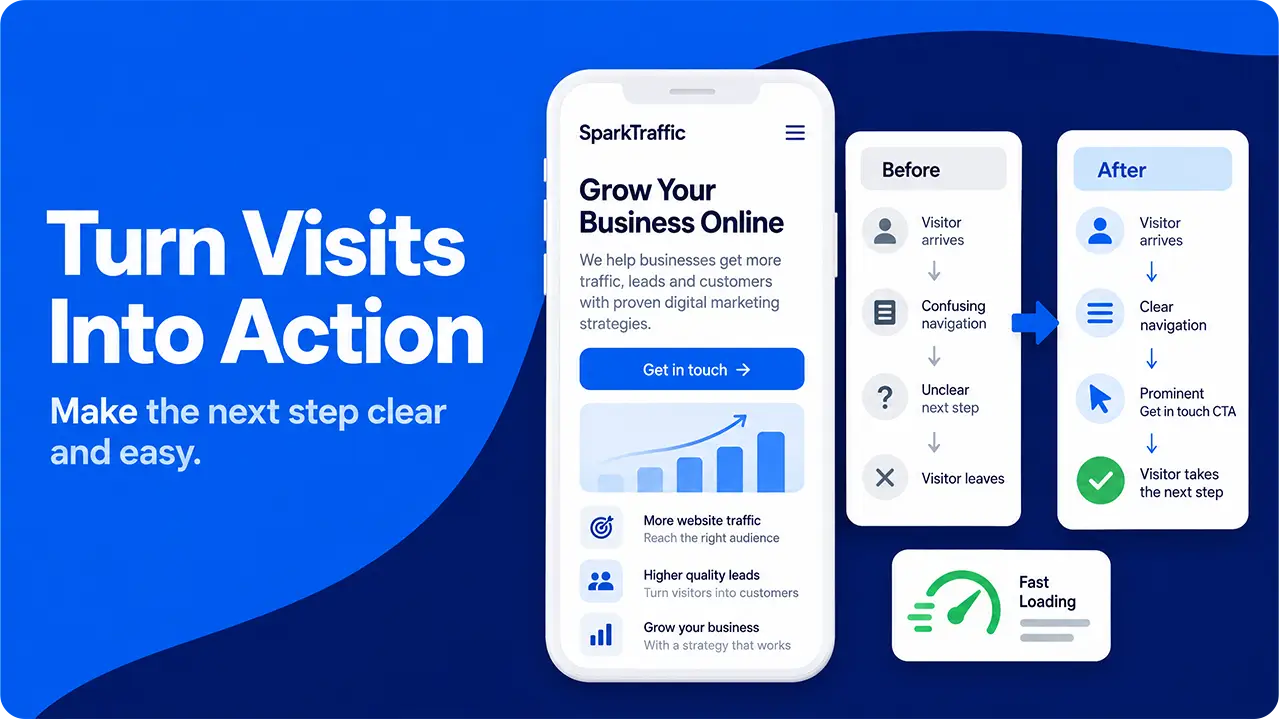
In these cases, the most likely culprit is your UX. Short for “user experience”, UX represents the front-facing bits of your website- the design, how easy it is to navigate and read, how quickly it loads and all the other parts that go into the general experience of visiting your site. Put basically, if your site isn’t pleasant to use, people won’t hang around long enough to take the action you want them to.
The first thing to work on is usually your loading speed. A majority of people won’t wait as long as 10 seconds for a page to fully load, and nearly half won’t even stick around for 3. In fact, how quickly your site loads can have a pretty huge, if indirect, effect on your other traffic-gathering efforts too.
Avoid unnecessary images and ensure that the ones you do use fit their containers; remove redundant code and consider using a CDN- we’re aiming for a 2.5-second loading speed.
Next, think about how people find their way around your site. Navigation should be as simple and clear as possible and, in almost every case, designed with mobile in mind. Big, clear buttons, simple CTAs and plenty of internal links will help people follow through and spend more time browsing.
UX improvements aren’t a source of traffic in and of themselves, but when it comes to turning visits into purchases, they play a huge role. They can also improve your SEO and advertiser score. We’ve prepared a guide that explains it all in a bit more detail and could help you earn those conversions.
In these cases, the most likely culprit is your UX. Short for “user experience”, UX represents the front-facing bits of your website- the design, how easy it is to navigate and read, how quickly it loads and all the other parts that go into the general experience of visiting your site. Put basically, if your site isn’t pleasant to use, people won’t hang around long enough to take the action you want them to.
The first thing to work on is usually your loading speed. A majority of people won’t wait as long as 10 seconds for a page to fully load, and nearly half won’t even stick around for 3. In fact, how quickly your site loads can have a pretty huge, if indirect, effect on your other traffic-gathering efforts too.
Avoid unnecessary images and ensure that the ones you do use fit their containers; remove redundant code and consider using a CDN- we’re aiming for a 2.5-second loading speed.
Next, think about how people find their way around your site. Navigation should be as simple and clear as possible and, in almost every case, designed with mobile in mind. Big, clear buttons, simple CTAs and plenty of internal links will help people follow through and spend more time browsing.
UX improvements aren’t a source of traffic in and of themselves, but when it comes to turning visits into purchases, they play a huge role. They can also improve your SEO and advertiser score. We’ve prepared a guide that explains it all in a bit more detail and could help you earn those conversions.
6. Motivieren Sie die Menschen, bis zum Ende dranzubleiben, um Ihren CTA zu sehen
Wie wir bereits behandelt haben, befinden sich die besten Plätze für Ihre CTAs und Links in der Regel am Ende Ihrer Videos. Das bedeutet, wenn Sie möchten, dass Nutzer auf Ihre Links klicken oder nach Ihrer Website suchen, müssen Sie sie dazu bringen, dranzubleiben und sich das Video bis zum Ende anzusehen.
Ganz gleich, wie gut Ihr Produkt ist: Wenn das Video, mit dem Sie Menschen darüber informieren, nicht fesselnd ist, scrollen sie weiter, bevor sie die Gelegenheit haben, auf Ihren Link zu klicken oder Ihren CTA zu hören. Engagement und Mehrwert für den Zuschauer sind noch wichtiger als eine direkte Möglichkeit einzubauen, auf Ihre Website zu gelangen.
Es gibt viele unterschiedliche Dinge, die Menschen fesselnd finden könnten, und sie alle beginnen mit einem grundlegenden Verständnis der Personen, die Sie erreichen möchten. Sie können Einblicke in Ihre Zielgruppe gewinnen, indem Sie Ihre Social-Media-Analysen prüfen oder sogar Fragebögen versenden. Mit diesem Wissen können Sie Videos skripten, die ihnen gefallen sollten.
Auch wenn es keine festen Regeln dafür gibt, was gute Zahlen liefert und was nicht (und oft hat es auch nichts mit der Produktionsqualität zu tun), gibt es ein paar Dinge, die die meisten erfolgreichen Videos gemeinsam haben:
Identifying The Problem
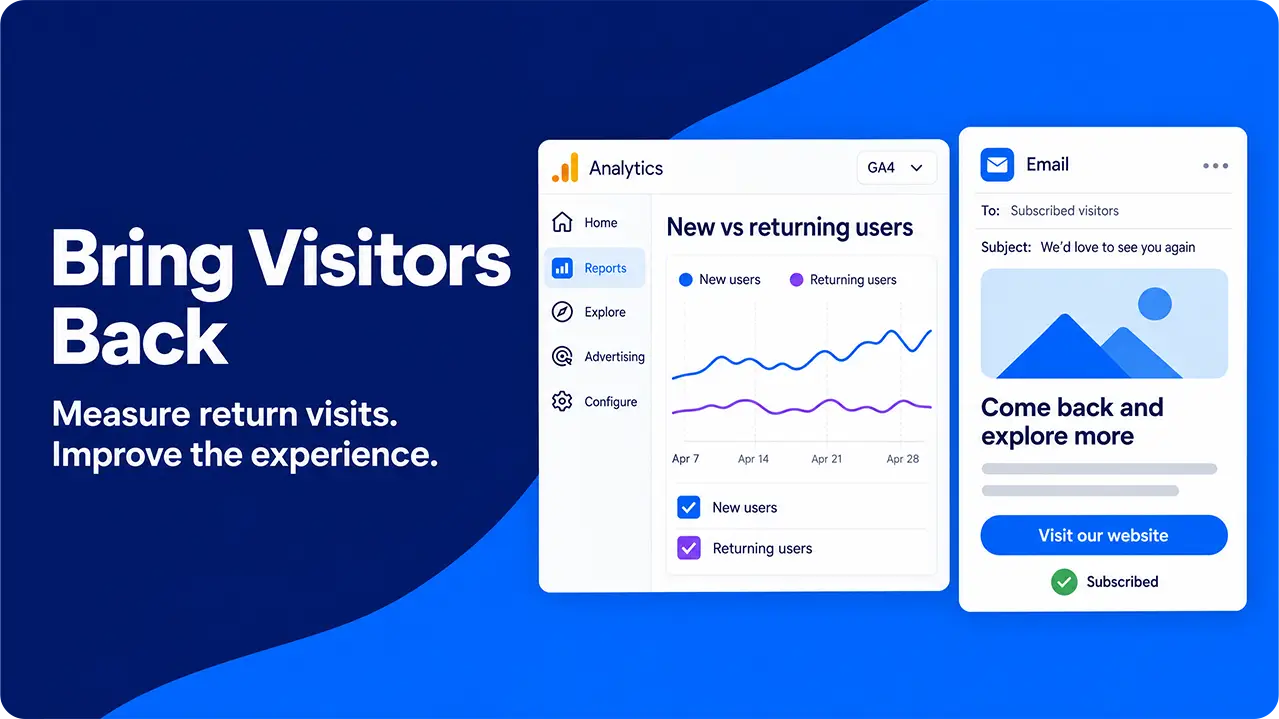
Google Analytics 4 allows you to set customized reporting metrics. One option which is particularly useful is the ability to identify returning visitors via cookies, though you could also get a rough idea via account sign-ins. These allow you to track returning visitors and gauge customer loyalty.
If these numbers are low, it’s likely that people aren’t returning after their first visit.
If these numbers are low, it’s likely that people aren’t returning after their first visit.
How to Fix It
If traffic is flowing onto your site, but you’re finding they only visit once, there could be a few different things at play. Something is clearly putting them off, and you’ll have to work out what. Given that customer acquisition tends to cost significantly more than retention, this should be a priority.
- Your paid ads might be targeted at the wrong people. Occasionally someone might see an ad, be intrigued and click, only to find that it’s not what they thought. Run A/B tests on your campaigns (running two versions at the same time for a set period and comparing the results, then cancelling the less successful and replacing it with another iteration) and refine your ads until you start getting the results you’re looking for.
- There is a body of research which suggests that very few people visit a site for the first time with a solid intention to buy- estimates vary between 1- 5% and 17% of visitors. Instead, they’re browsing, comparing and weighing up their options. Some of these visitors might be able to be brought back via an email campaign (if they’ve signed up to your mailing list) or retargeting through paid ads.
- Your UX might be putting them off returning. Sites that are complicated to use, hard to navigate or slow to load don’t encourage loyalty. Focus on developing clear pathways through your content and a clear, simple but attractive design. 88% of visitors won’t return after a bad experience, so this should be a priority if retention is the goal.
7. Nutzen Sie die Zielgruppen von Influencern
Ob man sie liebt oder hasst, Influencer spielen im Videomarketing eine überproportional große Rolle. Sie haben ein gebundenes Publikum, das ihre Empfehlungen ernst nimmt, und viele von ihnen klicken auf die eingebetteten Links. Tatsächlich hat Influencer-Marketing eine CTR von etwa 2 %, wobei diese je nach Nische und Influencer stark variiert.
Der Hauptvorteil einer Partnerschaft mit einem Influencer besteht darin, dass er bereits ein engagiertes, interessiertes Publikum aufgebaut hat. Das bedeutet, dass Sie etwas sicherer sein können, dass Menschen Ihre Inhalte sehen und mit etwas Glück mehr Menschen auf Ihren Link klicken.
Die Zusammenarbeit mit einem Influencer bedeutet, bei Dingen wie Tonalität und wasserdichter Markenführung ein wenig Kontrolle aufzugeben, aber der ROI und der Zugang zu einem bereits engagierten Publikum können dies mehr als wettmachen. Ein Affiliate-Link in der Beschreibung eines relevanten Influencers kann mehr Traffic generieren, als die meisten Marken allein erreichen könnten.
Was auch immer Ihre Nische ist, es gibt den passenden Influencer dafür. Jede Branche, von Mode bis hin zu den nerdigsten Hobbys, kann ihre Reichweite (und damit ihre Website-Besuche) durch die richtige Partnerschaft erhöhen.
Identifying The Problem
Perhaps the most useful feature of your analytics reports is their ability to tell you not only how many visitors you’re getting, but exactly where they came from and their journey through your site.
These reports should be able to give you fairly detailed insights into which pages are attracting views, appearing in searches and whether your ads are really having the desired effect.
These reports should be able to give you fairly detailed insights into which pages are attracting views, appearing in searches and whether your ads are really having the desired effect.
How to Fix It
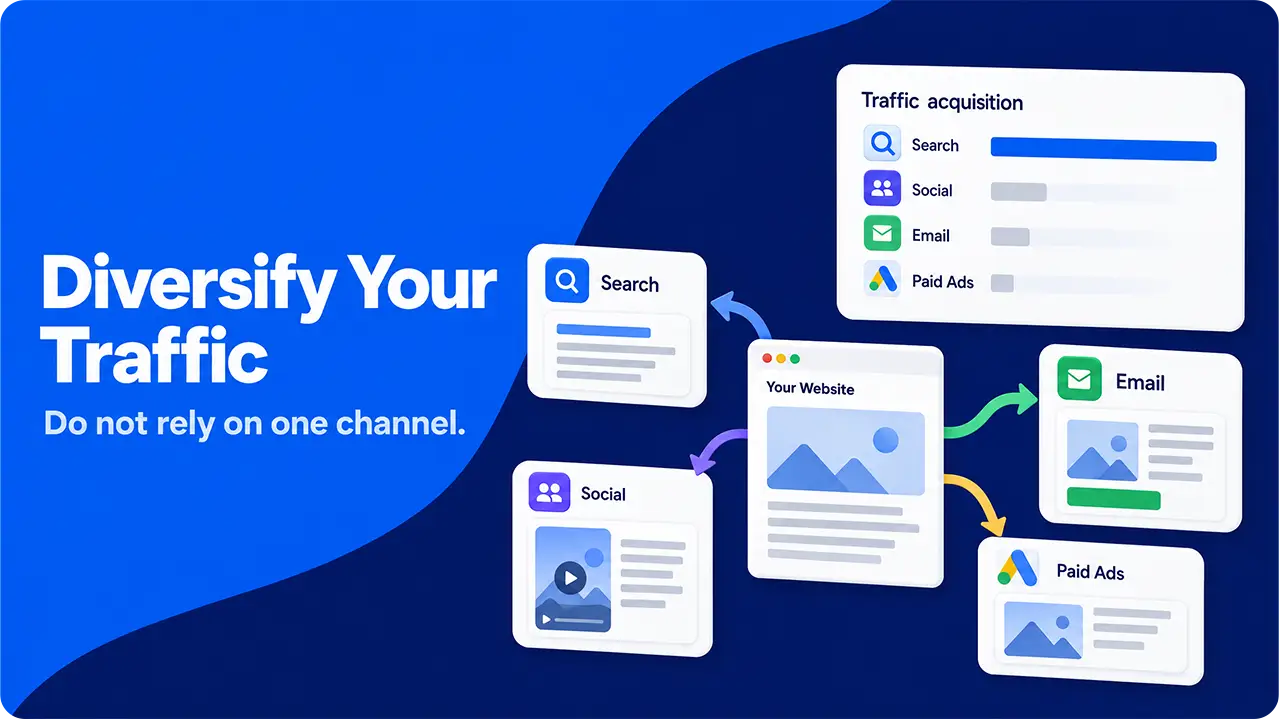
While having a good, strong source of traffic is a good thing, it’s not great to have only one string to your bow. It leaves you at the mercy of an algorithm change or rising ad costs. To secure your traffic flows, you ideally want a few viable sources of visitors, buying you time to adapt to shifts.
The first step is heading to your analytics dashboard to gather as much information about what is working and what isn’t as you can.
While the usual advice might be to double down on what is working now, if there’s only one thing bringing in visits, you really need to diversify and find other streams of traffic. If your visits all come from ads, think about working on your SEO strategy. If search results are what bring in the visits, branch out into social media, etc.
Generally, the easiest and most effective way to break into a new channel is through content marketing of some description. If your main source of traffic is paid ads, this might mean starting a blog on your own site. If you’re already getting a lot of organic traffic, it might mean turning your blogs into videos and posting them on social media or reaching out to other sites and offering guest posts.
Whatever channel you’re trying to expand out into, the aim should always be to provide something of real value. That could be informing people about a related issue, providing guides and tutorials, or simply trying to make them smile a little through entertaining content. Content marketing that is effectively nothing but an ad doesn’t tend to attract much in the way of traffic.
Content marketing really is the most wide-ranging channel, and our guide can help you find a form that works for you. If you’re looking to turn your existing written content into videos, we’ve got a more detailed look at how to go about it too.
The aim should always be to move your traffic towards your email mailing list. As you own this channel, it’s not at the mercy of policy changes or shifts in what social media, AI and search algorithms want to show people. While it’s not a way to increase your total number of unique visitors, it is the best way to keep them coming back.
The first step is heading to your analytics dashboard to gather as much information about what is working and what isn’t as you can.
While the usual advice might be to double down on what is working now, if there’s only one thing bringing in visits, you really need to diversify and find other streams of traffic. If your visits all come from ads, think about working on your SEO strategy. If search results are what bring in the visits, branch out into social media, etc.
Generally, the easiest and most effective way to break into a new channel is through content marketing of some description. If your main source of traffic is paid ads, this might mean starting a blog on your own site. If you’re already getting a lot of organic traffic, it might mean turning your blogs into videos and posting them on social media or reaching out to other sites and offering guest posts.
Whatever channel you’re trying to expand out into, the aim should always be to provide something of real value. That could be informing people about a related issue, providing guides and tutorials, or simply trying to make them smile a little through entertaining content. Content marketing that is effectively nothing but an ad doesn’t tend to attract much in the way of traffic.
Content marketing really is the most wide-ranging channel, and our guide can help you find a form that works for you. If you’re looking to turn your existing written content into videos, we’ve got a more detailed look at how to go about it too.
The aim should always be to move your traffic towards your email mailing list. As you own this channel, it’s not at the mercy of policy changes or shifts in what social media, AI and search algorithms want to show people. While it’s not a way to increase your total number of unique visitors, it is the best way to keep them coming back.
8. Erstellen Sie Shorts, um Aufmerksamkeit zu erregen
Auch wenn längere Videos durchaus ihre Berechtigung haben, besonders wenn Sie möchten, dass Menschen auf Ihren Link klicken, sind Kurzvideos in der Regel das beste Format, um sicherzustellen, dass Zuschauer bis zum Ende dranbleiben und Ihren CTA sehen. Tatsächlich schauen sich etwa 50 % der Zuschauer ein 90-sekündiges Video von Anfang bis Ende an, was Ihnen die beste Chance gibt, Ihren Call-to-Action geschickt unterzubringen.
Auch wenn die CTR für beliebige Links wahrscheinlich niedrig ist, kann der Traffic, den Sie indirekt durch den Aufbau von Markenbekanntheit generieren, dies mehr als ausgleichen. Social-Media-Plattformen wie Facebook und Instagram sowie dedizierte Video-Sharing-Seiten wie YouTube und TikTok zeigen Menschen diese kurzen, scrollbaren Videos besonders gern.
Kurzvideo-Plattformen wie TikTok, Snapchat und sogar Metas Facebook- und Instagram-Reels und Stories geben Ihnen außerdem die Möglichkeit für sofortiges Feedback, sodass Ihre Zuschauer direkt interagieren können, Beziehungen zu Ihrer Marke aufbauen und sich zu Ihrer Website lenken lassen.
Sie eignen sich außerdem hervorragend dazu, Ihre Kreativität zu präsentieren, eine Markenstimme aufzubauen und die sofortige Befriedigung zu nutzen, die aus schnell konsumierbaren Inhalten entsteht. Das gilt besonders dann, wenn Ihre Hauptzielgruppe die Gen Z ist, aber im Grunde konsumiert jeder in gewissem Maße Shorts.
Sie können Ihre längeren Inhalte außerdem wiederverwenden und in ansprechende Shorts aufteilen, wodurch ein Funnel entsteht, der Menschen zu Ihren vollständigen Inhalten und von dort weiter auf Ihre Website führt.
Der wichtigste CTA für diesen Videostil ist in der Regel etwas in der Art von „Link in Bio“ oder etwas Ähnlichem.
Identifying the Problem
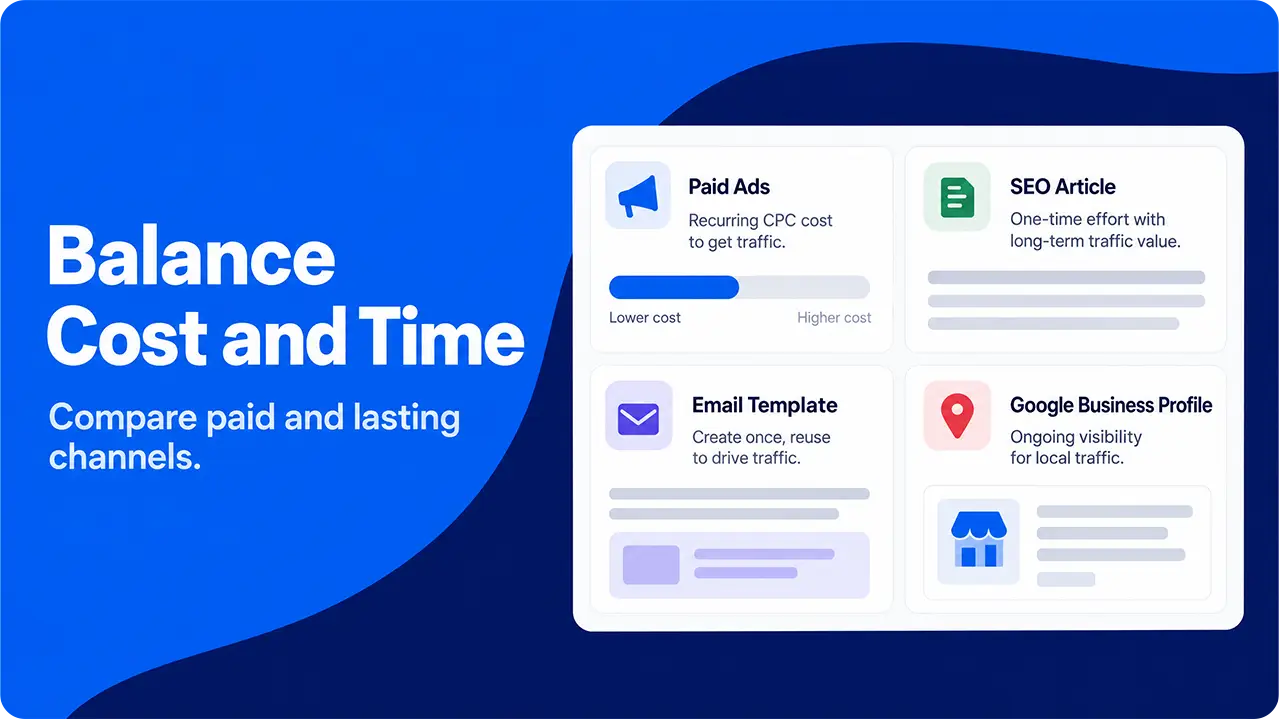
Keeping a close eye on exactly how much your traffic acquisition efforts are costing is an important part of evaluating your success. The cost per click (CPC) is calculated by dividing your total spend by the number of clicks that it earns. If this ratio is not satisfactory, you can shift your efforts to cheaper or less time-consuming methods.
How to Fix It
There’s no getting away from the fact that some sources of traffic can get expensive and time-consuming. The worst culprit for this is usually paid advertising, which, while fantastic for precise targeting and instant results, is not a fire-and-forget strategy and, if successful, can quickly blow through your budget. There are other options out there, though there’s always going to be some compromise.
Social Media
Firstly, let's look at social media. In the pros column, it doesn’t actually have to cost a penny. It’s perfectly possible to create a page or channel which will indirectly funnel traffic towards your site with just your phone and a bit of entertaining banter.
On the downside, the best results come from consistency, and consistency takes time. You might find yourself spending hours every day responding to comments or creating posts. You can somewhat get around this by scheduling a week or month in advance, but it’s still going to take some time. Our guide to using Facebook, X and other platforms can help you get started.
On the downside, the best results come from consistency, and consistency takes time. You might find yourself spending hours every day responding to comments or creating posts. You can somewhat get around this by scheduling a week or month in advance, but it’s still going to take some time. Our guide to using Facebook, X and other platforms can help you get started.
Building your SEO
SEO takes time to show results, but once you’ve written a blog, it can be left to do its thing for as long as you like, meaning that it’s both relatively cheap and long-lasting as a source of traffic.
You can keep costs down by researching and writing your own content (and in fact, for some industries that fall under Google’s Your Money or Your Life guidelines, this is the most effective route). There’s no getting around the initial investment of time, but given that your blog might bring in traffic for months or even years, what’s a couple of hours?
You can keep costs down by researching and writing your own content (and in fact, for some industries that fall under Google’s Your Money or Your Life guidelines, this is the most effective route). There’s no getting around the initial investment of time, but given that your blog might bring in traffic for months or even years, what’s a couple of hours?
Email doesn’t have to cost much or take up much of your time- build a few templates on whatever email marketing platform you use and reuse them with different images and texts. This might be a reasonable investment of time while building your templates, but over the long term it can pay dividends in terms of how quickly you can get a specific email sent.
Some quick pointers for creating successful email templates include:
Some quick pointers for creating successful email templates include:
- Keep layouts simple- a single column reads just as well on a mobile as it does on a laptop.
- Keep your sizes small- a maximum of 600px width should display well on the smallest screen while still being attractive.
- Balance text and images- full-image templates tend to trigger spam filters more often than better-balanced ones.
- Avoid writing in ALL CAPS- this screams “spam”.
- Try not to use words like “free”, “act now” or other overly pushy phrases.
Google Business Profile
If the traffic that you want to visit your site is mostly from people in your physical area, Google Business Profile is the tool for you. It’s free, setting it up takes just a few minutes, and you only really have to check in every couple of weeks.
While it’s only useful for acquiring traffic within a fairly localized geographical area, it simply can’t be beaten for cost and low time investment.
While it’s only useful for acquiring traffic within a fairly localized geographical area, it simply can’t be beaten for cost and low time investment.
Häufige Herausforderungen für Video-Marketer
Auch wenn Videos inzwischen den Großteil des gesamten Web-Traffics ausmachen, bedeutet das nicht, dass sie ein fehlerfreies Mittel sind, wenn es darum geht, Traffic auf Ihre Website zu bringen. Es gibt einige häufige Probleme, mit denen viele Menschen konfrontiert sind:
Erstens kann es, weil die CTRs im Allgemeinen niedrig sind, schwierig sein, einen Besuch direkt einem bestimmten Video zuzuordnen. Es ist gut möglich, dass Menschen Ihr Video sehen und dann nach Ihrer Marke suchen, oder dass eine KI-Zusammenfassung Ihr Transkript aufgreift und in ihren Antworten präsentiert. Das kann bedeuten, dass es schwierig ist, einen exakten ROI zu ermitteln, aber wenn Sie Ihre Daten zusammensetzen, können Sie in der Regel einen ungefähren Wert bestimmen.
Zweitens sind Sie darin eingeschränkt, die Handlungen Ihrer Zuschauer zu beeinflussen. Auch wenn Ihr CTA perfekt sein mag und Ihre Markenbekanntheit mit jedem Beitrag steigen mag, können Sie nicht kontrollieren, was Menschen nach dem Ansehen Ihrer Videos tun. Der beste Weg, dies zu umgehen, besteht darin, Links einzubinden und Menschen so gut wie möglich dazu zu ermutigen, ihnen zu folgen, ohne Ihre Inhalte mit ungeschickten CTAs zu überladen.
Ein weiterer wichtiger Aspekt ist, dass Sie oft den Algorithmen Ihrer Zuschauer ausgeliefert sind. Das gilt besonders für YouTube und die Kurzvideo-Plattformen. Jede hat ihre eigenen Kriterien, die sie belohnt, aber letztlich hängt es von der Art der Inhalte ab, die jemand bereits angesehen hat, was wem angezeigt wird. Auch wenn das eine Stärke sein kann, kann es ebenso eine Schwäche sein – die meisten Menschen sehen sich wahrscheinlich keine Tutorials dazu an, wie man dieselbe DIY-Aufgabe erledigt, wenn die Arbeit bereits abgeschlossen ist.
Identifying the Problem
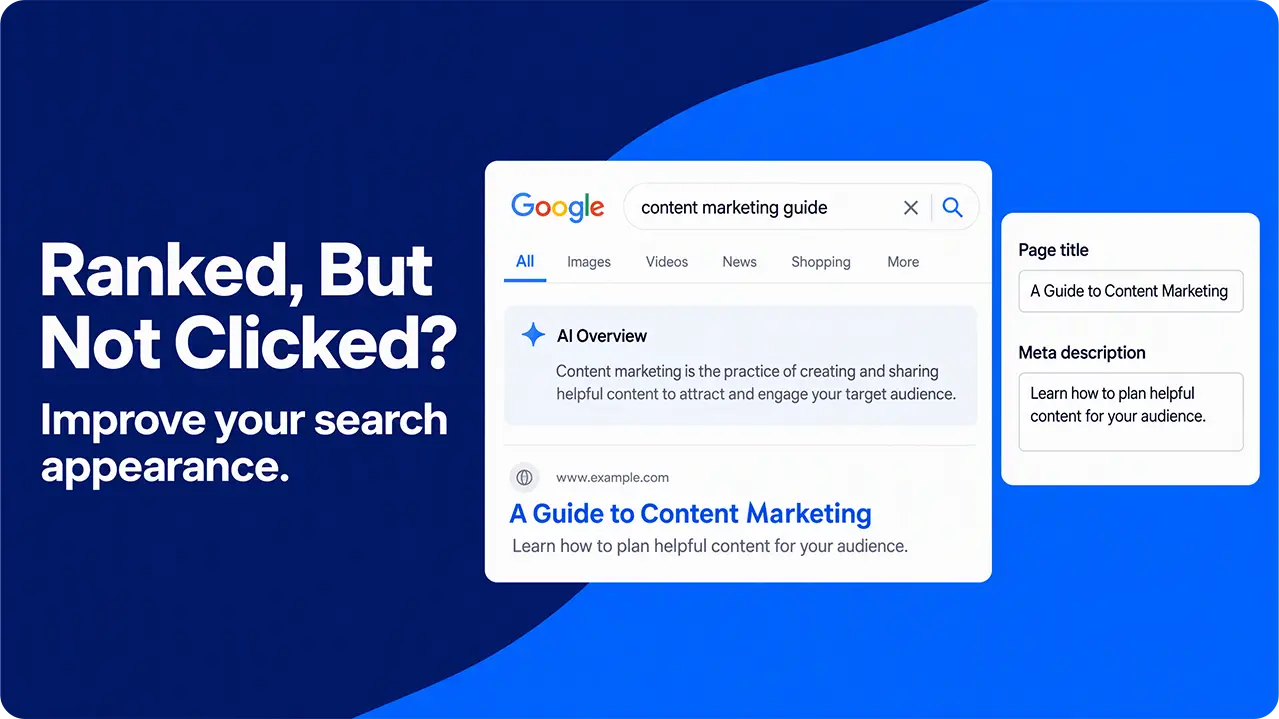
If you search for your keywords and appear near the top of the results pages but are not receiving the expected boost to your visitor numbers, two things might be at play- either AI search is giving people the information they’re looking for and they’re not following through, or your listing on the results page is putting people off.
How to Fix It
Most of the focus in SEO guides tends to be around getting your content to rank at or near the top of the search results page (SERP), but this isn’t the whole battle. While we’re not downplaying the importance of ranking (the top spot gets around 30% of all clicks), it’s not the whole battle. If you rank but no one clicks, it’s not really doing you any good.
There are two possible things at play here: your SERP listings are putting people off, or your SEO strategy hasn’t taken the rise of AI into account.
There are two possible things at play here: your SERP listings are putting people off, or your SEO strategy hasn’t taken the rise of AI into account.
Fixing Your SERP Listings
Firstly, how you appear in the SERPs plays a huge role in how likely someone is to click on you. There are three ways we can exert some influence over these:
- Meta-Titles: these are what form the blue hyperlink text on your result. You can control them, so ensure that they’re appealing by using them to explain what people will actually find if they click the link. Keep them short and keyword-rich, but try to avoid crossing into “spam” territory. They should be similar but slightly different from your H1.
- Meta-Descriptions: these are usually what Google and other search engines use to create the snippet (the explanatory text under the hyperlink). The same basic principles apply here as they do to Meta-titles, but there’s more space to play.
- Rich Snippets: including structured data such as Schema Markup allows Google to create what is called a “rich snippet”. These contain more information and features like call buttons, aggregate reviews and opening hours. They can often earn as much as 50% more clicks than standard results.
The other factor that might be at play is the rise of generative search. On Google, for example, 68% of searches are now what is termed “zero-click”. This means that someone is finding the answers they’re looking for from the AI-generated results rather than navigating to your page.
Other impacts have changed the importance of ranking order. Where the first position used to be by far the most important, people who scroll past the AI results are now more likely to find their way to results between number 3 and 6 than they previously were. Top ranking is still important, but its stranglehold is dropping.
Dealing with generative search means crafting your content to appeal to AIs as much as humans. Luckily, they tend to like much the same stuff- facts and data, backed up via authoritative links, written naturally, like you’re speaking to someone directly. AI often lifts answers directly from blogs, so providing something that’s ready to go and easy to parse, thanks to clearly defined sections and structured data, can really help your content stand out.
Keywords still play a role in generative SEO, but actually answering questions is more important than it is in traditional SEO. A good way of appealing to search engines, AIs and your human readership alike is to use your header tags to ask the questions you’re about to answer. This is particularly effective in the form of FAQs at the end of your articles, where it can offer a direct response without messing up your flow or cluttering up your page design too much.
Other impacts have changed the importance of ranking order. Where the first position used to be by far the most important, people who scroll past the AI results are now more likely to find their way to results between number 3 and 6 than they previously were. Top ranking is still important, but its stranglehold is dropping.
Dealing with generative search means crafting your content to appeal to AIs as much as humans. Luckily, they tend to like much the same stuff- facts and data, backed up via authoritative links, written naturally, like you’re speaking to someone directly. AI often lifts answers directly from blogs, so providing something that’s ready to go and easy to parse, thanks to clearly defined sections and structured data, can really help your content stand out.
Keywords still play a role in generative SEO, but actually answering questions is more important than it is in traditional SEO. A good way of appealing to search engines, AIs and your human readership alike is to use your header tags to ask the questions you’re about to answer. This is particularly effective in the form of FAQs at the end of your articles, where it can offer a direct response without messing up your flow or cluttering up your page design too much.
Conclusion: How To Find The Right Traffic Acquisition Strategy For Your Situation
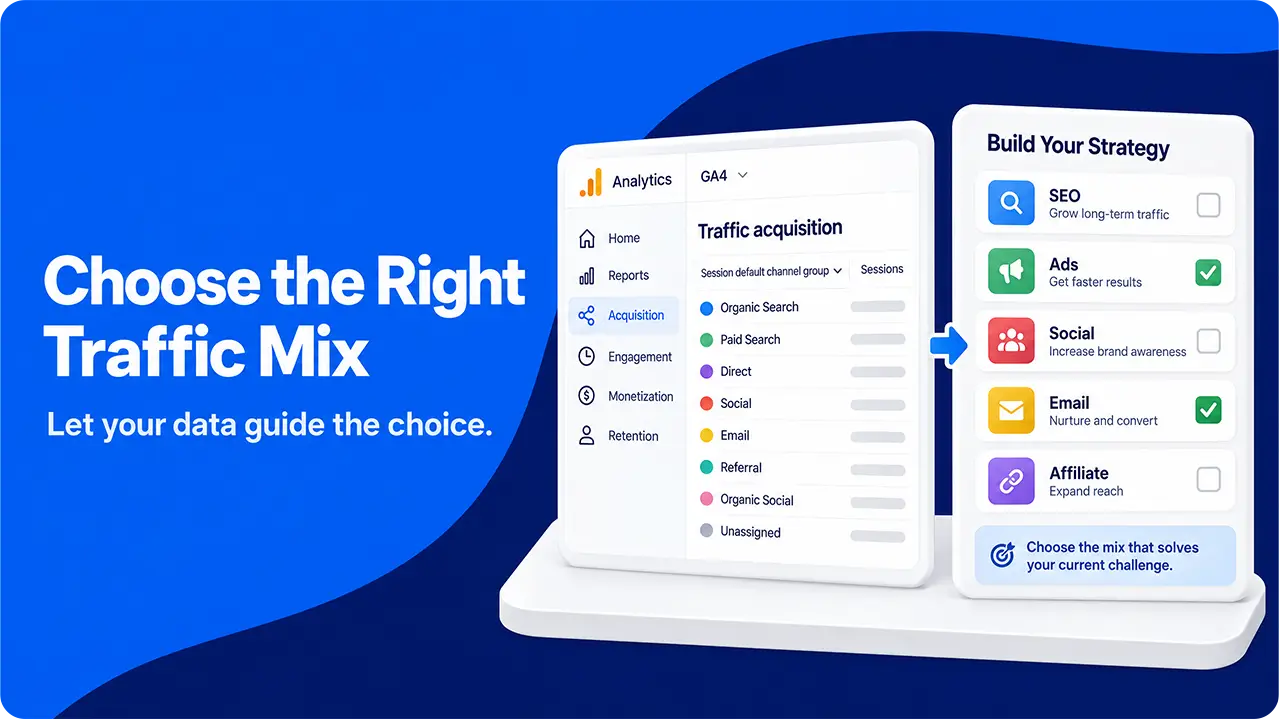
There’s no one-size-fits-all answer to persuading people to come and browse your site. It’s a matter of finding the right tools that work for you. Some sites might get great results from search ads, whereas others might find their traffic through search results, and yet more might do numbers by partnering with affiliates for their main marketing efforts.
The real key is careful monitoring of where your traffic comes from. Armed with this data, you can start to think about what might be getting in the way of your other streams and coming up with a plan.
The real key is careful monitoring of where your traffic comes from. Armed with this data, you can start to think about what might be getting in the way of your other streams and coming up with a plan.