.webp)


.svg)


.svg)
.svg)
Though the internet technically offers businesses an almost infinite market, reality says that most businesses (around 90%, globally) are actually pretty local affairs. Most of us have an area that we serve- be that a neighborhood, a city, a state, or even a country- and we want most of the traffic that finds our site to come from within that area. Those are our customers, after all.
Luckily, there’s a whole range of options available for marketing your website to a local audience. In fact, it would be fair to say that most channels can be tuned to target local visits.
Here’s how:
Luckily, there’s a whole range of options available for marketing your website to a local audience. In fact, it would be fair to say that most channels can be tuned to target local visits.
Here’s how:
1. Claim and Use Your Google Business Profile
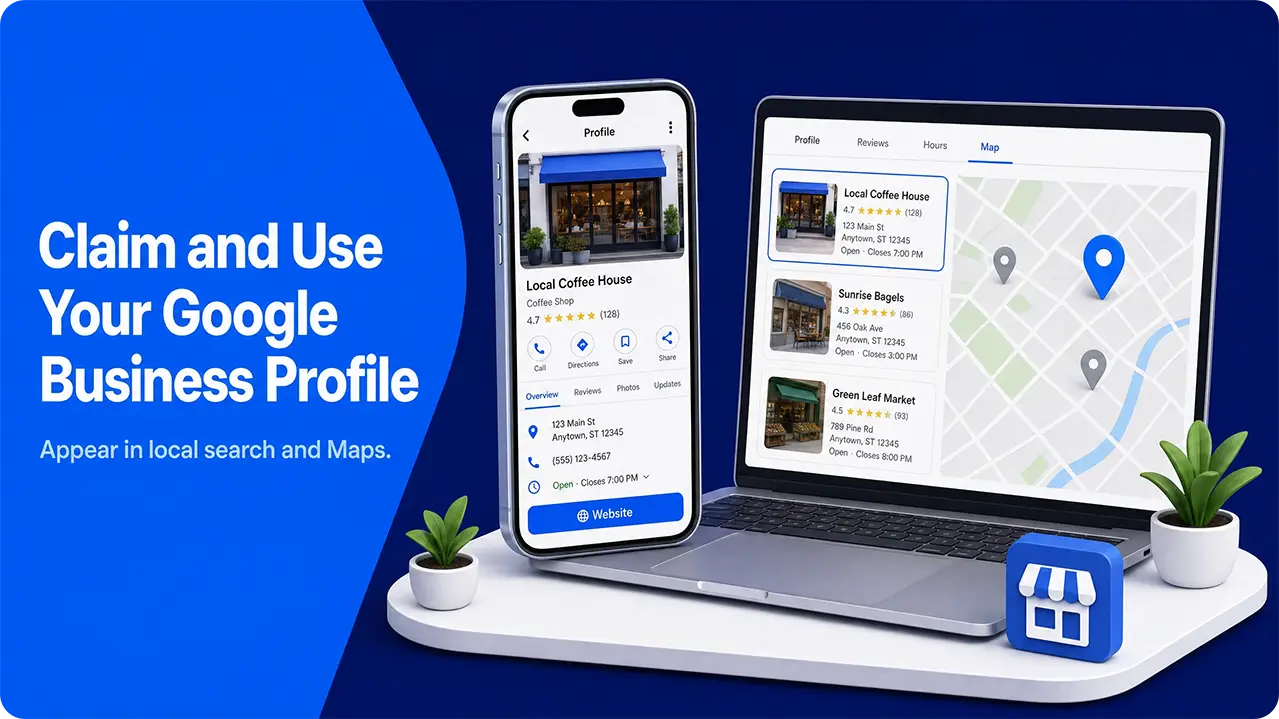
Your Google Business profile allows your site to start appearing in local and Maps searches and can have strong impacts on your other local traffic generating efforts.
The first, simplest, and probably most effective way to generate local traffic is to claim and optimise your Google Business Profile. These profiles allow you to start appearing in local searches and Maps. They also form a primary source for AIs, who love to use your profile and reviews to form their recommendations.
It’s fair to say that a well-optimized GBP is the most useful tool if local traffic is your goal. Sites that make it into the Map Pack (the top 3 results in local searches on Google) tend to get around 44% of the clicks, meaning that they get significantly more web traffic than their competitors.
The first step is easy- sign in with your Google account and either claim or set up your profile. Enter your business name, contact info, select the most suitable categories, and set your location. Include a few high-quality photos too- profiles with pictures get around 35% more website visits than those without.
Once you’re up and running, you should start appearing in local searches and the relevant Maps requests. Unlike other forms of SEO, there’s no number 1 spot, and the “Map Pack” (the top 3 results) is generated for each individual search by 3 criteria:
The first, simplest, and probably most effective way to generate local traffic is to claim and optimise your Google Business Profile. These profiles allow you to start appearing in local searches and Maps. They also form a primary source for AIs, who love to use your profile and reviews to form their recommendations.
It’s fair to say that a well-optimized GBP is the most useful tool if local traffic is your goal. Sites that make it into the Map Pack (the top 3 results in local searches on Google) tend to get around 44% of the clicks, meaning that they get significantly more web traffic than their competitors.
The first step is easy- sign in with your Google account and either claim or set up your profile. Enter your business name, contact info, select the most suitable categories, and set your location. Include a few high-quality photos too- profiles with pictures get around 35% more website visits than those without.
Once you’re up and running, you should start appearing in local searches and the relevant Maps requests. Unlike other forms of SEO, there’s no number 1 spot, and the “Map Pack” (the top 3 results) is generated for each individual search by 3 criteria:
- Relevance- based on the search terms and how well they match or relate to the keywords in your profile
- Distance- how close to your premises or service area the search was done
- Prominence- a combined metric made up of the number of reviews on your profile and their ranking, how often your business is mentioned elsewhere, and your domain authority
These top few results get around 44% of all the clicks generated by GBPs, meaning that focusing on these metrics can help you increase local traffic to your website significantly.
There’s not a lot we can do to influence the distance metric beyond setting our service area, but the other two we have at least some control over.
There’s not a lot we can do to influence the distance metric beyond setting our service area, but the other two we have at least some control over.
2. Optimize Your Profile For Search Relevance
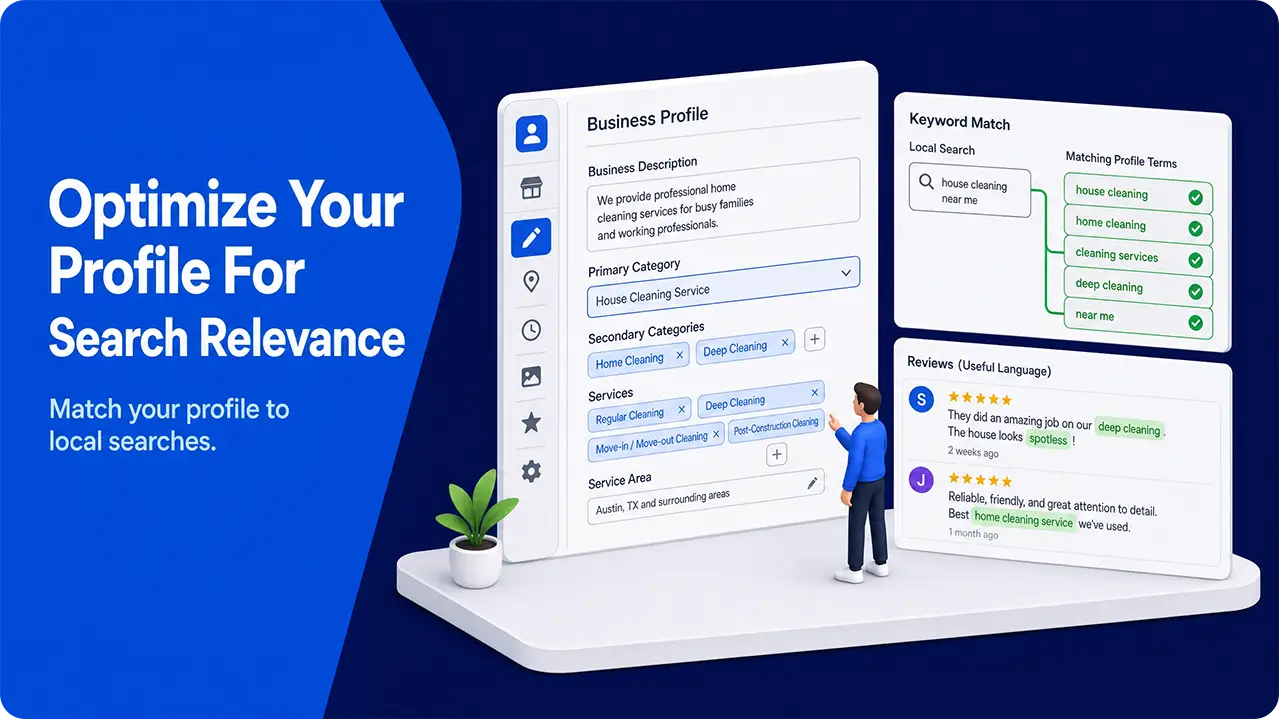
Ensuring your Google Business Profile is optimized for relevant local searches helps you appear higher in the rankings, earning more traffic.
Relevance is basically how well your profile matches up to what Google thinks its users are really looking for- and needless to say, the more relevant your profile is, the more likely they are to click or make contact. Put simply, the better your relevance score for a given search, the more traffic will visit your site.
You can improve how many searches you appear near the top in by being quite specific in how you write your business description and which services you list. Your main business category and any secondary categories that you choose will have a huge impact here, but it’s the keywords you include in your description that can really increase your range.
You don’t have to match search terms exactly, and it’s often best to include a variety of phrasings, but avoid the temptation of just stuffing them in- it looks bad to people browsing your profile, and Google might well decide to drop your ranking.
The content of your reviews is another great source of keywords. Don’t be afraid to ask your customers to get quite specific when they’re leaving you positive feedback, and always remember to respond. Estimates say that 81% of users actually read these reviews, so they play a huge role in earning you more traffic beyond their impact on your SEO.
Relevance is basically how well your profile matches up to what Google thinks its users are really looking for- and needless to say, the more relevant your profile is, the more likely they are to click or make contact. Put simply, the better your relevance score for a given search, the more traffic will visit your site.
You can improve how many searches you appear near the top in by being quite specific in how you write your business description and which services you list. Your main business category and any secondary categories that you choose will have a huge impact here, but it’s the keywords you include in your description that can really increase your range.
You don’t have to match search terms exactly, and it’s often best to include a variety of phrasings, but avoid the temptation of just stuffing them in- it looks bad to people browsing your profile, and Google might well decide to drop your ranking.
The content of your reviews is another great source of keywords. Don’t be afraid to ask your customers to get quite specific when they’re leaving you positive feedback, and always remember to respond. Estimates say that 81% of users actually read these reviews, so they play a huge role in earning you more traffic beyond their impact on your SEO.
3. Build Prominence
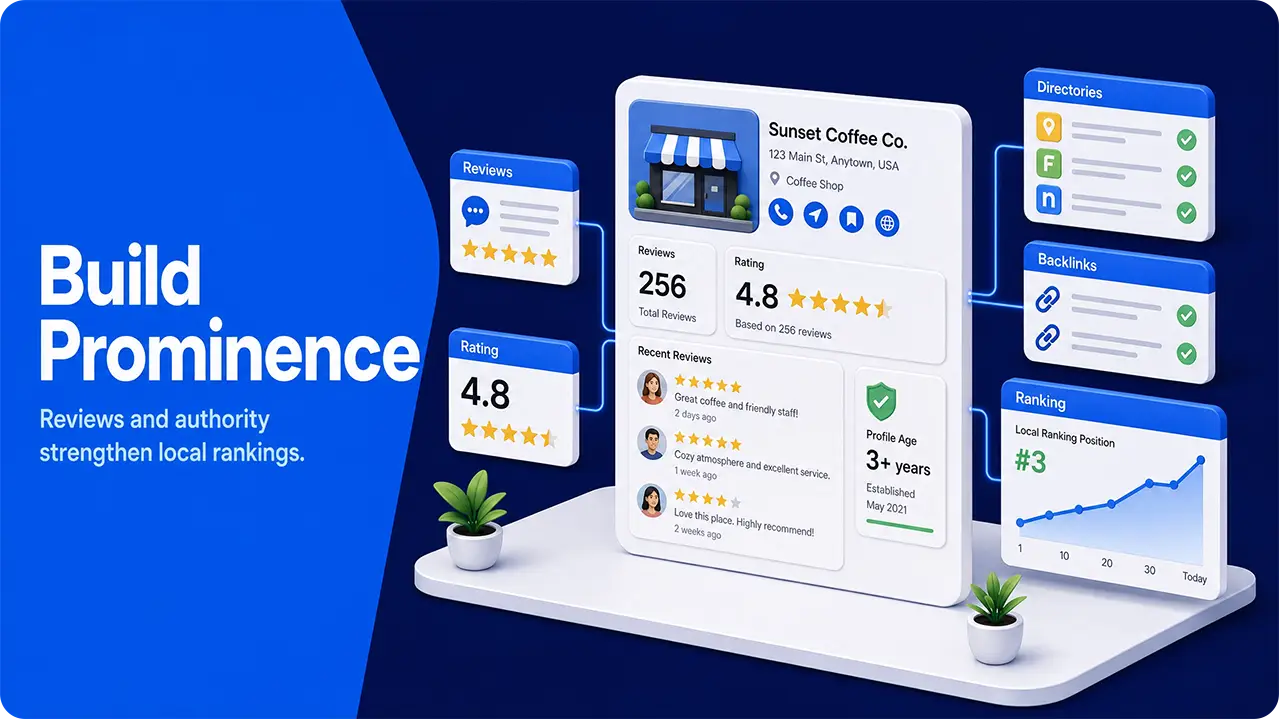
Google places a premium on business prominence in local searches. The better this metric, the higher you will appear and the more traffic should visit your site.
Prominence is basically Google’s best guess at how popular your business is with people like the person currently searching. The more prominent your profile is, the higher it will rank in the relevant searches and the more traffic you will generate from your GBP.
The main things that it takes into account are:
Prominence is basically Google’s best guess at how popular your business is with people like the person currently searching. The more prominent your profile is, the higher it will rank in the relevant searches and the more traffic you will generate from your GBP.
The main things that it takes into account are:
- The number of reviews
- The proportion of 4-star-plus reviews
- How long your profile has been in service
- Backlinks pointing towards your connected site
While we can’t make people leave positive reviews, we can ask them. Include a request on receipts, follow-up emails, and other interactions. Not only will these help build prominence, but they can be a great way to reinforce keywords and help grow your relevance score.
These reviews don’t only contribute to earning you traffic through increased rankings in local searches and Maps, but they also serve as a powerful form of social proof, tempting people to click your link. If you’re presented with two options, one having 100 5-star reviews and the other just having a few 3-stars, which would you click on?
You can also build prominence through backlinks from local directories (and other local sources-more on that in a minute). Make sure your contact details (NAP- name, address, phone number) match precisely with your GBP to avoid confusing AIs, search engines, or, even worse, people who might want to visit you.
These reviews don’t only contribute to earning you traffic through increased rankings in local searches and Maps, but they also serve as a powerful form of social proof, tempting people to click your link. If you’re presented with two options, one having 100 5-star reviews and the other just having a few 3-stars, which would you click on?
You can also build prominence through backlinks from local directories (and other local sources-more on that in a minute). Make sure your contact details (NAP- name, address, phone number) match precisely with your GBP to avoid confusing AIs, search engines, or, even worse, people who might want to visit you.
4. Work With Local Sites To Earn Backlinks
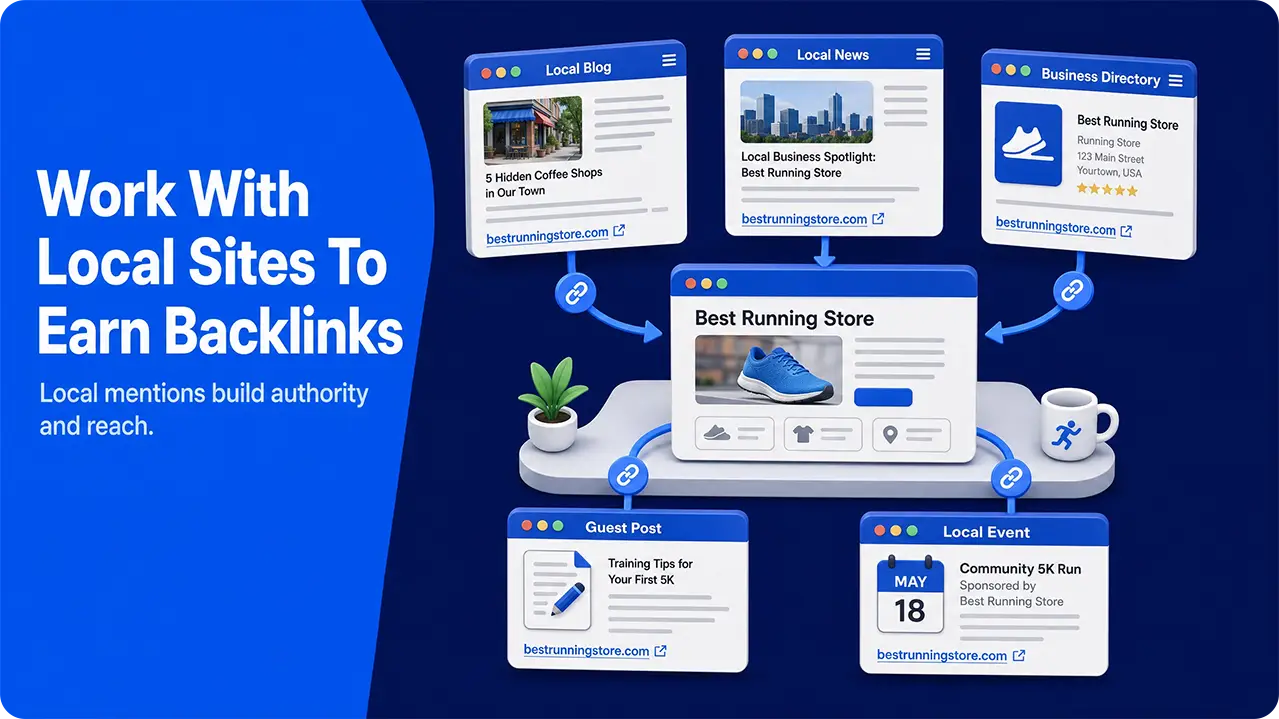
Backlinks provide authority, signaling that your content is good enough that people want to share it. Locally based sites help Google understand where your business is.
When it comes to generating local traffic, it, unsurprisingly, pays to think locally. There’s already a community of local sources out there who love your target area and want to help local businesses reach their readers. This is probably as close to word-of-mouth advertising as the digital age really gets.
Recommendations from bloggers, mentions on local news websites, and even appearing on local authority pages listing approved traders can bring in a surprising amount of traffic in and of themselves, as well as providing a huge boost to your local SEO and prominence for your GBP, both of which are potentially massive sources of traffic as your site is presented higher up the SERPs.
You can reach out to local bloggers, sponsor events, and work with your local press to earn a lot of links that place your business firmly within your community. These backlinks will help you build domain authority for traditional searches, place you in a local context for AI recommendations, and help with your prominence score.
You can also offer to guest post, providing relevant websites with a piece of content in return for a link pointing towards your site. This obviously provides a backlink, great for your local SEO, but it also gives you access to a whole new audience directly.
There’s basically no such thing as a bad legitimate backlink, but working with local sites will yield the best results for anyone whose main focus is increasing their local traffic.
It’s worth noting that if you’re chasing local traffic from AI recommendations, backlinks are amongst your most powerful weapons. AIs place more emphasis on the context of a link and how it fits into the content around it, meaning that a link from a positive review in a local paper will be worth more than a simple listing somewhere. Think of the link as drawing their attention and the details of the piece giving them the information they want.
When it comes to generating local traffic, it, unsurprisingly, pays to think locally. There’s already a community of local sources out there who love your target area and want to help local businesses reach their readers. This is probably as close to word-of-mouth advertising as the digital age really gets.
Recommendations from bloggers, mentions on local news websites, and even appearing on local authority pages listing approved traders can bring in a surprising amount of traffic in and of themselves, as well as providing a huge boost to your local SEO and prominence for your GBP, both of which are potentially massive sources of traffic as your site is presented higher up the SERPs.
You can reach out to local bloggers, sponsor events, and work with your local press to earn a lot of links that place your business firmly within your community. These backlinks will help you build domain authority for traditional searches, place you in a local context for AI recommendations, and help with your prominence score.
You can also offer to guest post, providing relevant websites with a piece of content in return for a link pointing towards your site. This obviously provides a backlink, great for your local SEO, but it also gives you access to a whole new audience directly.
There’s basically no such thing as a bad legitimate backlink, but working with local sites will yield the best results for anyone whose main focus is increasing their local traffic.
It’s worth noting that if you’re chasing local traffic from AI recommendations, backlinks are amongst your most powerful weapons. AIs place more emphasis on the context of a link and how it fits into the content around it, meaning that a link from a positive review in a local paper will be worth more than a simple listing somewhere. Think of the link as drawing their attention and the details of the piece giving them the information they want.
5. Localize Your Content
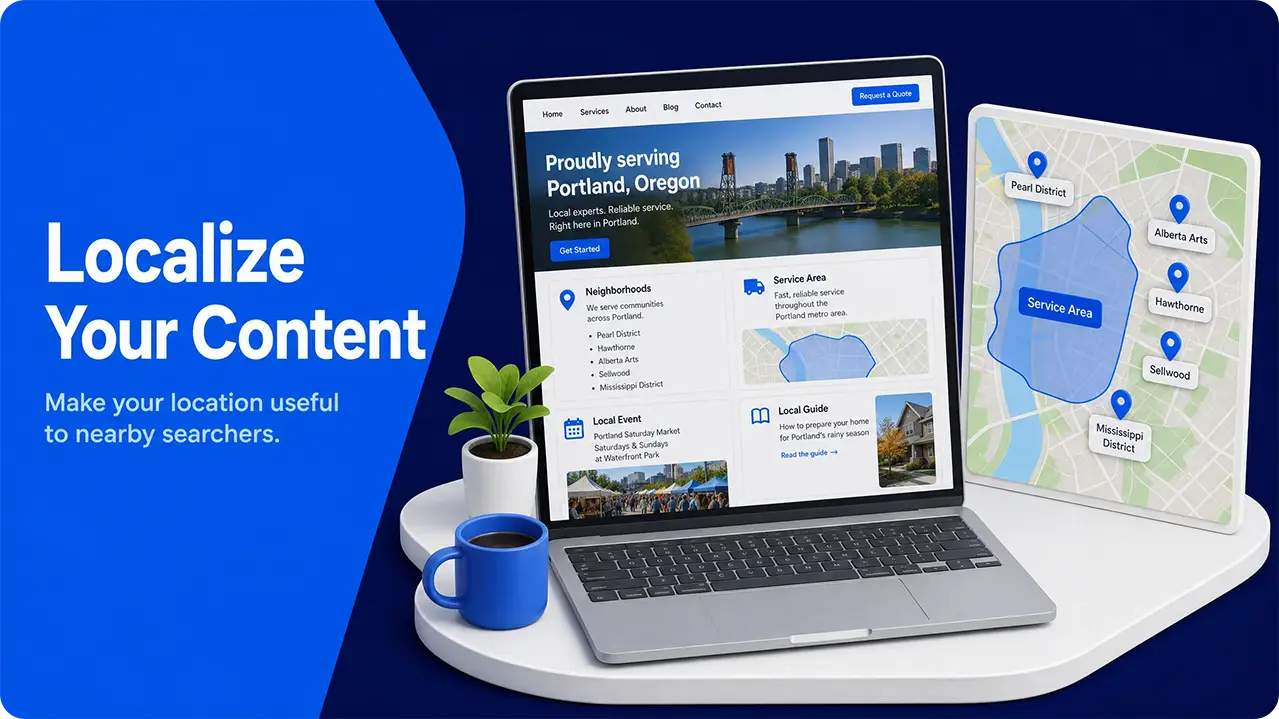
Localizing Your Content means that location keywords such as city or neighborhood names can help you rank for specific searches. This means when someone searches for your services nearby, you have a better chance of ranking.
It should come as no surprise that content that addresses local needs tends to rank best for localized searches. Everything on your site, but especially your homepage, landing pages, and blogs, should mention your location naturally. This will help your page rank for those searches like “takeaway near me” or “emergency callout” and can generate a lot of local traffic.
The obvious way to do this is simply by naming the location you serve (and you should absolutely do this). If you sell pizza in Dundee, mention the city and your delivery area, calling out the major neighborhoods you serve. When people search for “pizza delivery, Blackness” the site that specifically mentions the area is likely to rank highly.
You can take this even further by addressing things that are common to your service area. A plumber serving North London might start their blog with something like “Hard water areas like Enfield, Barnet and North London in general often suffer from problems related to limescale.” This places your content locally, meaning that when someone searches for “Limescale remedy, North London” you’ll be front and centre.
Other great sources of localized content might be any events that you’re involved with in the local community (“Can’t wait to see you all at the community cookout tonight!”) or local organizations you partner with. Locally relevant content helps search engines understand the areas you serve and can help you increase organic traffic from nearby customers.
Localization means that your content will rank higher for searches that specify your location (even if that location is “near me”). This is an incredibly valuable source of high-intent traffic.
It should come as no surprise that content that addresses local needs tends to rank best for localized searches. Everything on your site, but especially your homepage, landing pages, and blogs, should mention your location naturally. This will help your page rank for those searches like “takeaway near me” or “emergency callout” and can generate a lot of local traffic.
The obvious way to do this is simply by naming the location you serve (and you should absolutely do this). If you sell pizza in Dundee, mention the city and your delivery area, calling out the major neighborhoods you serve. When people search for “pizza delivery, Blackness” the site that specifically mentions the area is likely to rank highly.
You can take this even further by addressing things that are common to your service area. A plumber serving North London might start their blog with something like “Hard water areas like Enfield, Barnet and North London in general often suffer from problems related to limescale.” This places your content locally, meaning that when someone searches for “Limescale remedy, North London” you’ll be front and centre.
Other great sources of localized content might be any events that you’re involved with in the local community (“Can’t wait to see you all at the community cookout tonight!”) or local organizations you partner with. Locally relevant content helps search engines understand the areas you serve and can help you increase organic traffic from nearby customers.
Localization means that your content will rank higher for searches that specify your location (even if that location is “near me”). This is an incredibly valuable source of high-intent traffic.
6. Advertise Locally
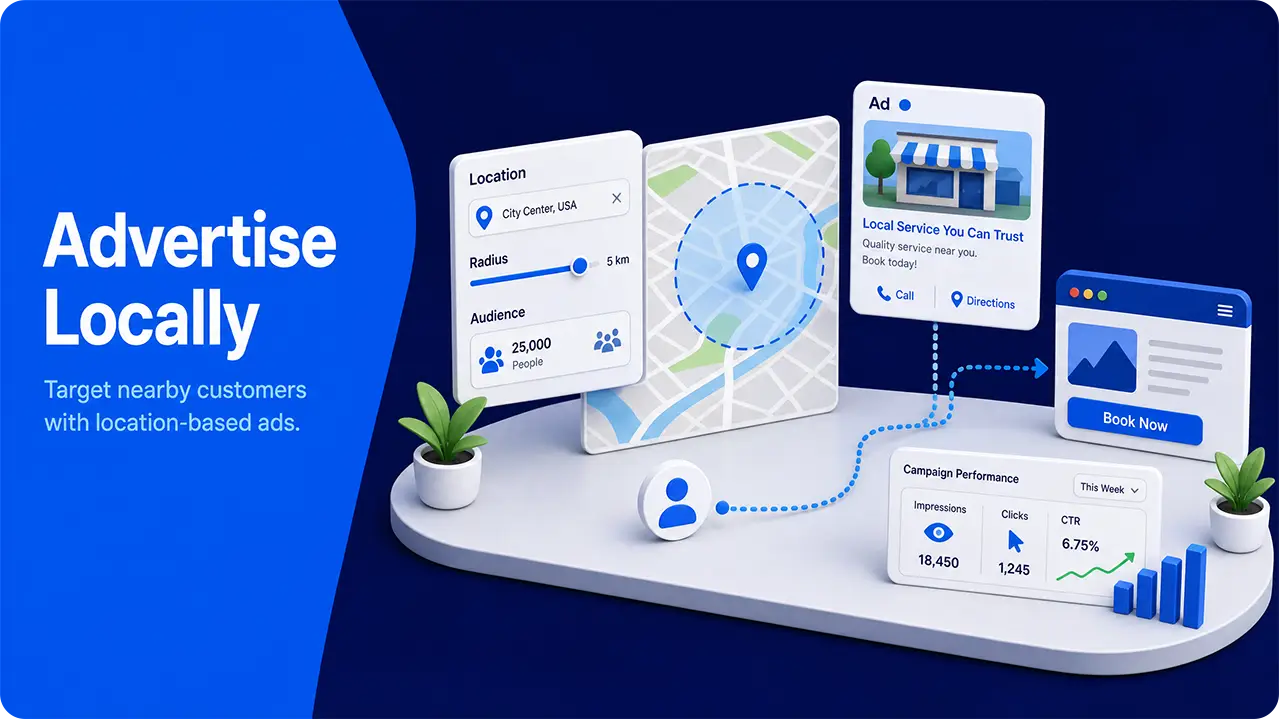
Paid ads allow you to target by location, providing a good source of geographically targeted local traffic without the risk of irrelevant visits.
Paid ads can be targeted incredibly locally. In fact, it’s possible to geofence your location settings to a single building, targeting traffic as they literally browse your shelves, should you wish.
More generally, it makes sense to target your ads to your service area and the surrounding regions. This will ensure that your ads reach the people who are most likely to be your desired traffic. Geotargeting means that all of the clicks that you’re paying for should come from local people.
The potential for traffic generation here is huge. Local ads tend to be more relevant and enjoy better click-through rates. In fact, for search ads, locally targeted ads are nearly twice as likely to be clicked on (so generate twice as much traffic) compared to less focused ads.
While any business can make use of search ads to boost their local traffic, they can be particularly useful for anyone who offers home services. Things like “Emergency electrician” are likely to be searched for by people with some sense of urgency, so they’ll want someone local who can come round and fix their problem straight away.
Paid ads can be targeted incredibly locally. In fact, it’s possible to geofence your location settings to a single building, targeting traffic as they literally browse your shelves, should you wish.
More generally, it makes sense to target your ads to your service area and the surrounding regions. This will ensure that your ads reach the people who are most likely to be your desired traffic. Geotargeting means that all of the clicks that you’re paying for should come from local people.
The potential for traffic generation here is huge. Local ads tend to be more relevant and enjoy better click-through rates. In fact, for search ads, locally targeted ads are nearly twice as likely to be clicked on (so generate twice as much traffic) compared to less focused ads.
While any business can make use of search ads to boost their local traffic, they can be particularly useful for anyone who offers home services. Things like “Emergency electrician” are likely to be searched for by people with some sense of urgency, so they’ll want someone local who can come round and fix their problem straight away.
7. Get Social
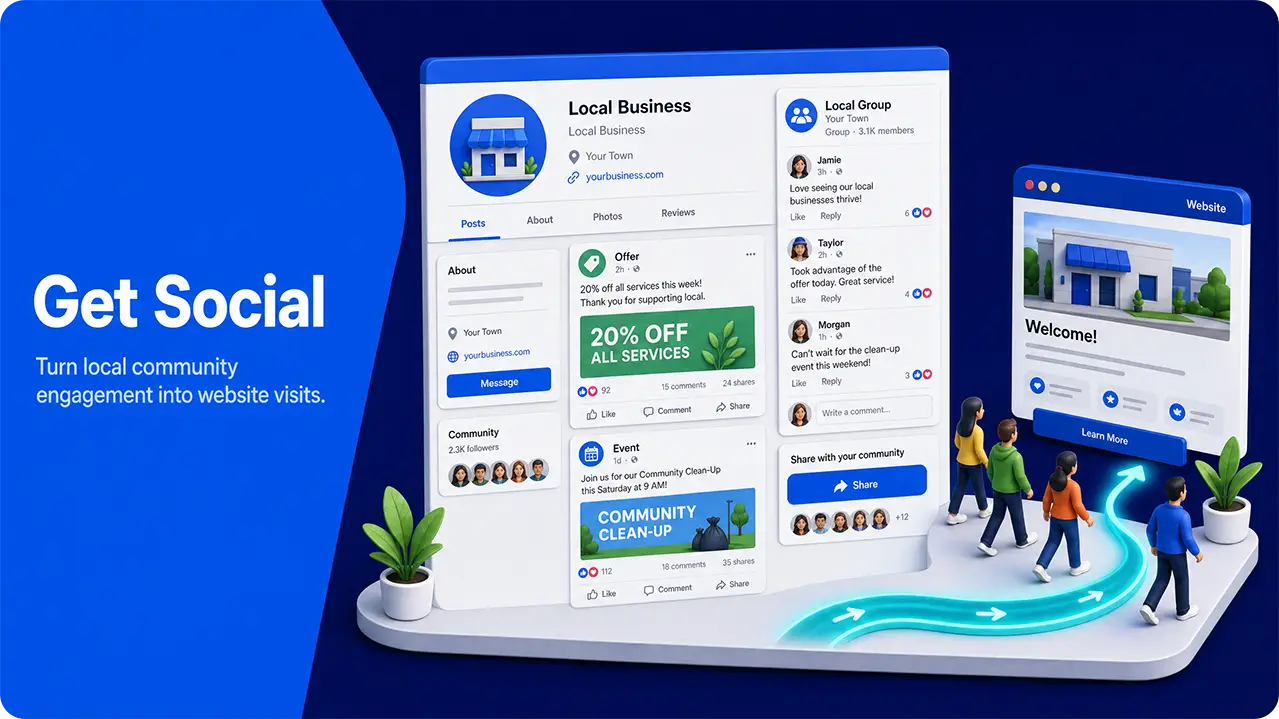
Social media can be used to attract traffic to your site by letting you talk directly to your local community.
Social media can be a great tool for generating local traffic. It gives you a chance to build out a profile, listing your location (and links), and allows your customers to do a little of the heavy lifting of marketing your site for you.
There are a few ways you can leverage your profile into website visits.
Social media can be a great tool for generating local traffic. It gives you a chance to build out a profile, listing your location (and links), and allows your customers to do a little of the heavy lifting of marketing your site for you.
There are a few ways you can leverage your profile into website visits.
- Encourage website visits directly: talk about offers, encourage membership signups, etc.
- Reach out to local groups: create visibility by commenting on local pages under your business name. From here, you can offer your links and services.
- Build community: people can often see what their friends interact with, so every comment that you reply to is another potential visit to your site.
All social media platforms reward engagement, so creating content that earns likes and shares, provokes comments, or otherwise grabs attention is the key to using it to attract local traffic. Get involved with local events to open up new audiences and direct them towards your website.
It’s also a great way to amplify your content, bringing it to local audiences and other websites that may choose to backlink to it, indirectly helping your SEO efforts.
If you’re willing to spend a little money, it’s also a fantastic place to engage in some paid advertising. With detailed location and interest data, social media ads can potentially bring in a lot of local traffic.
It’s also a great way to amplify your content, bringing it to local audiences and other websites that may choose to backlink to it, indirectly helping your SEO efforts.
If you’re willing to spend a little money, it’s also a fantastic place to engage in some paid advertising. With detailed location and interest data, social media ads can potentially bring in a lot of local traffic.
8. Design Your Site For Mobile
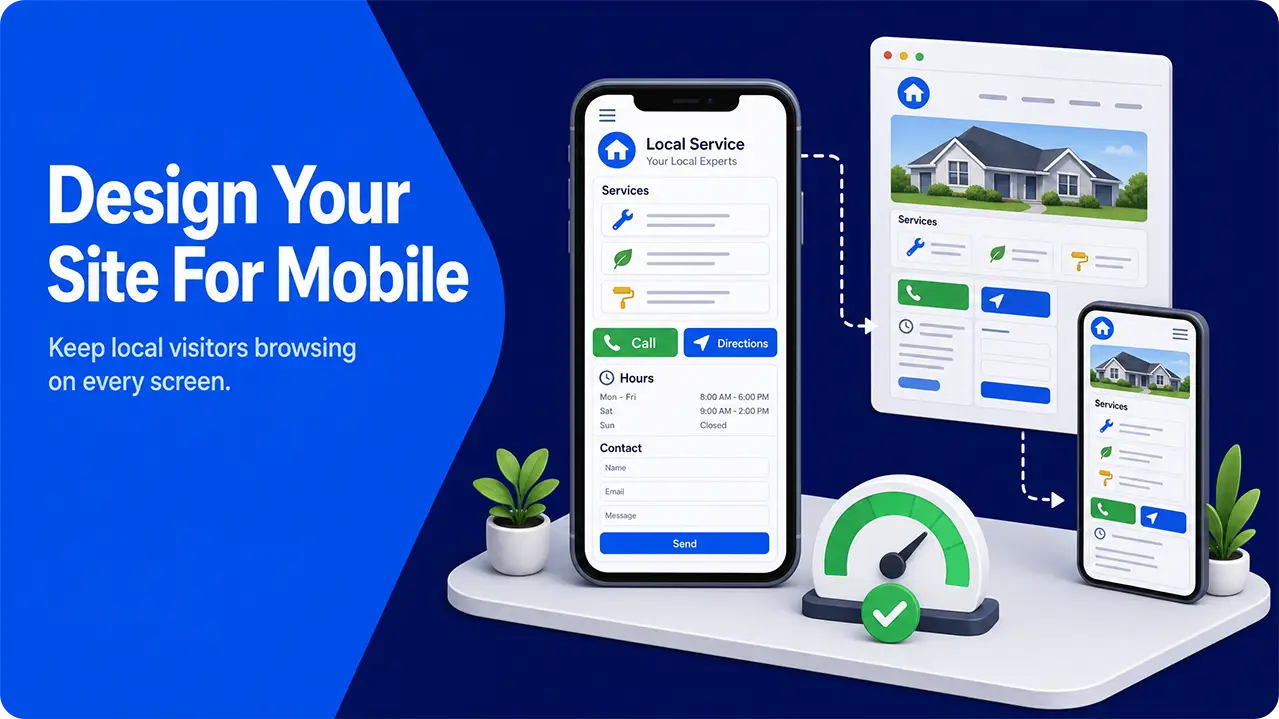
A site that’s easy to browse from a smartphone encourages people to stay longer, improving your bounce rate and helping your SEO rankings, attracting more traffic.
While this might be more general SEO advice, it applies equally to anyone who wants to rise up the local rankings and attract traffic from their community.
57% of all local searches are done via someone’s mobile phone. This means that making it a pleasant experience to view your site on a small screen is a must- not only does Google prefer to index mobile-friendly sites, it’s fantastic for your bounce rate, helping boost your SEO significantly and, as we all know, the better your ranking, the more traffic you’ll earn.
Keep loading times quick (3 seconds or less, ideally, to stop people from navigating away), designs simple and easily accessible, and images to a minimum while using a single-column, vertically scrolling design for the best effect.
While it’s not a direct source of local traffic in and of itself, a mobile-first website is a powerful tool for boosting your other efforts.
While this might be more general SEO advice, it applies equally to anyone who wants to rise up the local rankings and attract traffic from their community.
57% of all local searches are done via someone’s mobile phone. This means that making it a pleasant experience to view your site on a small screen is a must- not only does Google prefer to index mobile-friendly sites, it’s fantastic for your bounce rate, helping boost your SEO significantly and, as we all know, the better your ranking, the more traffic you’ll earn.
Keep loading times quick (3 seconds or less, ideally, to stop people from navigating away), designs simple and easily accessible, and images to a minimum while using a single-column, vertically scrolling design for the best effect.
While it’s not a direct source of local traffic in and of itself, a mobile-first website is a powerful tool for boosting your other efforts.
9. Deploy Structured Data
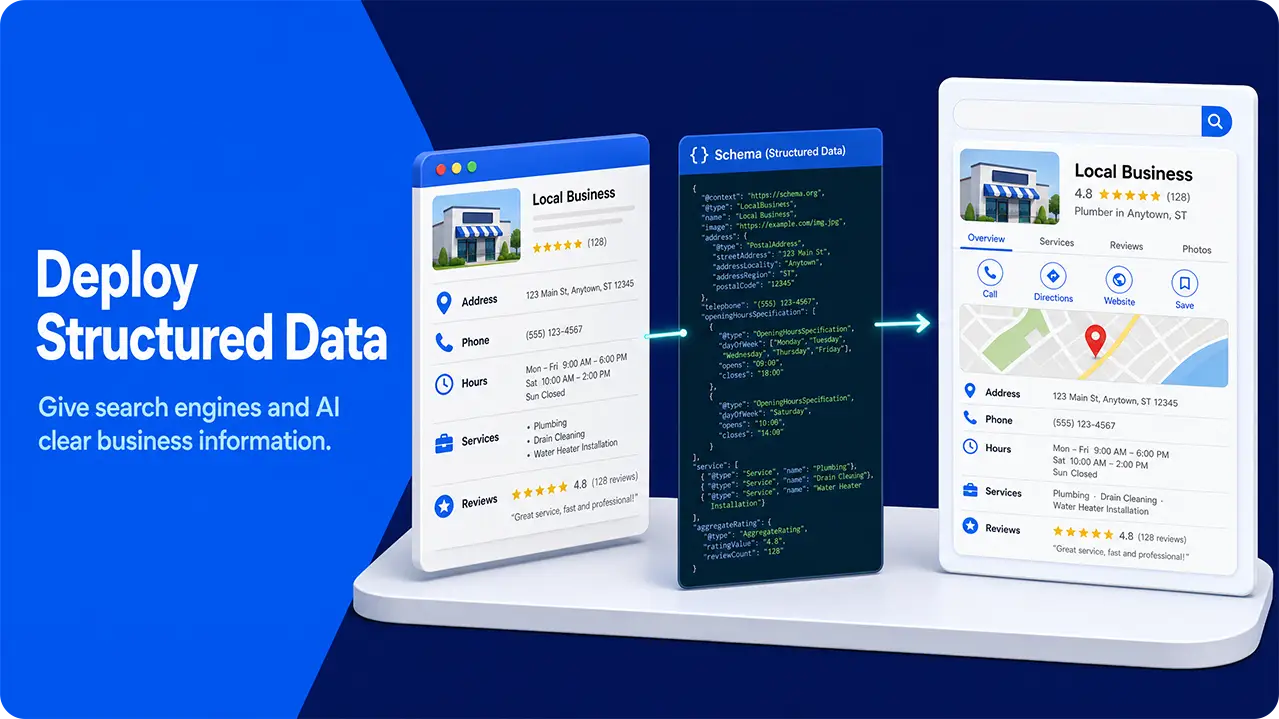
Structured data makes your site attractive to AIs and allows you to use Rich Snippets in search results, which attract significantly more traffic on average.
Structured data, particularly things like Schema Markup, is a fantastic way of marking your site out as relevant to local searchers, and it can help you break through the noise of the search results page too.
Google uses these simple bits of code to understand your site, what you offer, and your location. It then uses these bits of information to build what we call “rich snippets” that can include things like your location, price range, opening hours, and even include things like “call now” buttons alongside your usual SERP links.
Top-ranking listings that include rich snippets have a click-through rate of around 58% compared to 41% for a standard “blue link” result, meaning that implementing Schema Markup can have a direct impact on how much traffic comes to your site via search results. If you want to increase your web traffic, this is a remarkably easy way to do it.
The most obvious of these markup types to include is LocalBusiness. Here, you’ll find all the things that mark you out as a useful thing to offer to local searchers, including:
Structured data, particularly things like Schema Markup, is a fantastic way of marking your site out as relevant to local searchers, and it can help you break through the noise of the search results page too.
Google uses these simple bits of code to understand your site, what you offer, and your location. It then uses these bits of information to build what we call “rich snippets” that can include things like your location, price range, opening hours, and even include things like “call now” buttons alongside your usual SERP links.
Top-ranking listings that include rich snippets have a click-through rate of around 58% compared to 41% for a standard “blue link” result, meaning that implementing Schema Markup can have a direct impact on how much traffic comes to your site via search results. If you want to increase your web traffic, this is a remarkably easy way to do it.
The most obvious of these markup types to include is LocalBusiness. Here, you’ll find all the things that mark you out as a useful thing to offer to local searchers, including:
- Address
- Contact information
- Opening hours
- Make it easy for people to share your content
- Services offered
- Areas served
- Review aggregates
Schema Markup also makes your site stand out to AIs. By structuring detailed data in an easy-to-parse manner, AIs can quickly and reliably gather the correct information, making it a tempting thing for them to offer up in their answers. At the moment, AI recommendations account for about 1% of all website visits, but this number is quickly rising.
Problems With Generating Local Traffic
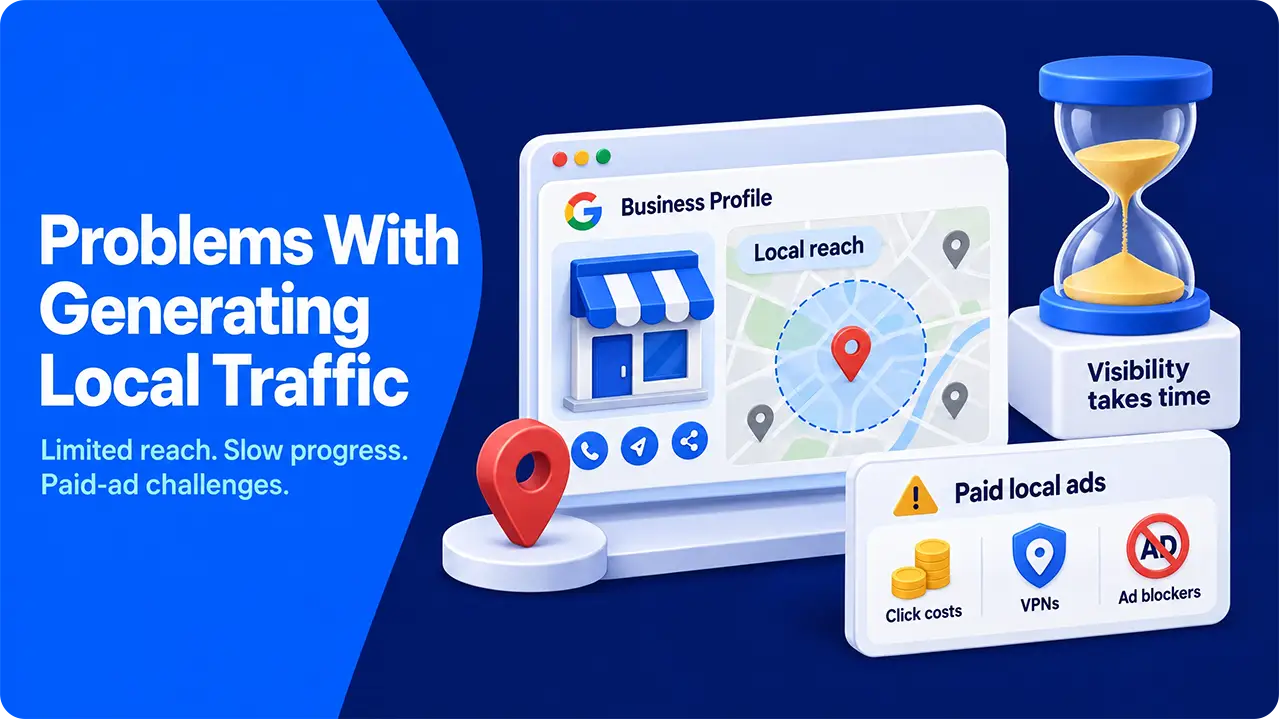
While almost every business should be paying attention to how they appear in Maps and local searches and trying to reach out to the customers on their doorsteps, focusing on local traffic isn’t without its drawbacks.
Firstly and most obviously, while reaching people close by is generally great, it does mean that you’re not focusing on expanding outwards. While getting your neighbors to visit will be the bread-and-butter for many businesses, others will want to cast their nets further afield and reach a national or even international audience.
Secondly, anything relating to Google Business Profile or how you appear in search results is not a quick process. It can take weeks or months for your efforts to start to pay off. It’s not unusual to have to wait 3-9 months for solid, measurable results. It takes time to build authority and relevance.
Finally, should you be impatient for results, paid advertising isn’t without its attendant issues. Paying per click can, should your campaign be successful, end up being quite expensive quite quickly. The rise of VPNs and ad blockers is quickly changing the landscape around advertising online, and this is hitting local advertising even harder as people mask their locations.
There are no shortcuts when it comes to generating local traffic, and you should be wary of anyone who offers them. Google places heavy penalties on anyone they suspect of gaming their systems, so what seems like the easy route may actually be counterproductive.
Firstly and most obviously, while reaching people close by is generally great, it does mean that you’re not focusing on expanding outwards. While getting your neighbors to visit will be the bread-and-butter for many businesses, others will want to cast their nets further afield and reach a national or even international audience.
Secondly, anything relating to Google Business Profile or how you appear in search results is not a quick process. It can take weeks or months for your efforts to start to pay off. It’s not unusual to have to wait 3-9 months for solid, measurable results. It takes time to build authority and relevance.
Finally, should you be impatient for results, paid advertising isn’t without its attendant issues. Paying per click can, should your campaign be successful, end up being quite expensive quite quickly. The rise of VPNs and ad blockers is quickly changing the landscape around advertising online, and this is hitting local advertising even harder as people mask their locations.
There are no shortcuts when it comes to generating local traffic, and you should be wary of anyone who offers them. Google places heavy penalties on anyone they suspect of gaming their systems, so what seems like the easy route may actually be counterproductive.
How To Generate Local Traffic
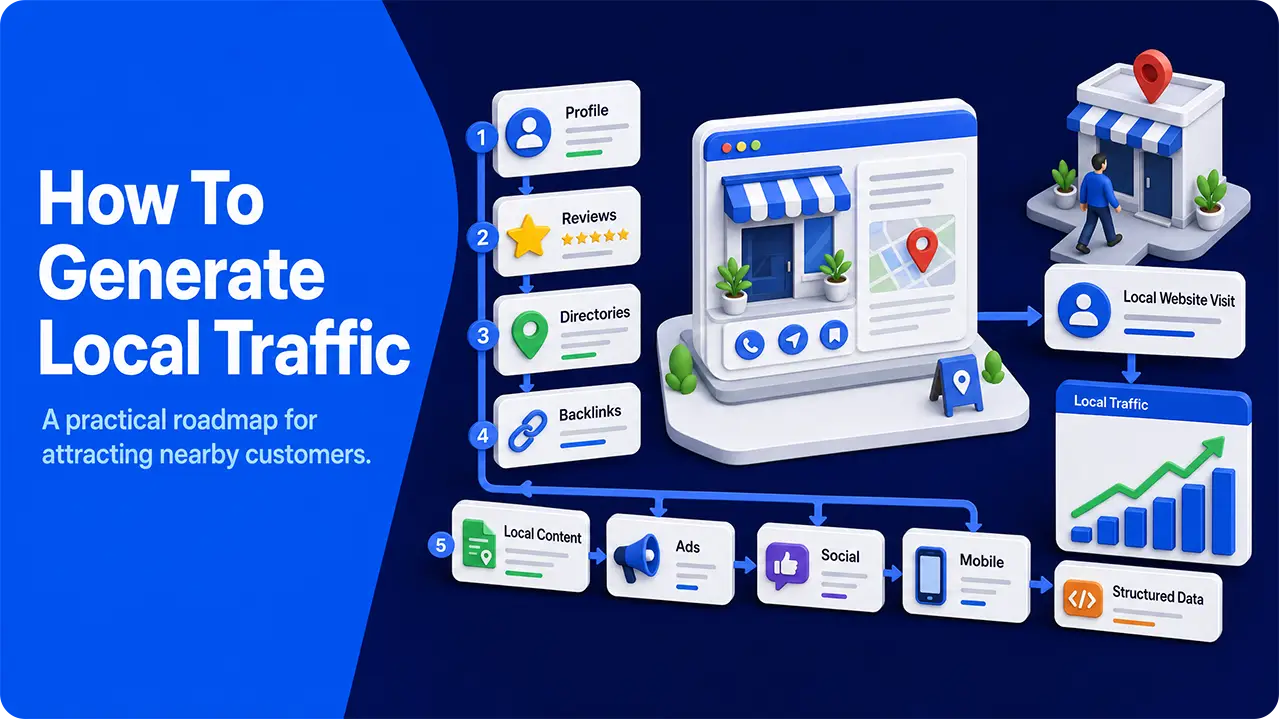
Getting local people to visit your site should be a primary goal for almost every public-facing business. If you have a local beat, physical premises, or simply don’t want to have to deal with sending parcels halfway around the world, this is the traffic that really matters.
Getting website visits from your local area is relatively simple:
Getting website visits from your local area is relatively simple:
- Set up your Google Business Profile for access to Maps and Local searches
- Reach out to your customers for reviews and build relevance through your business description
- List your business on local directories. It won’t bring in much traffic alone, but it works wonders for your local SEO and prominence
- Work with local sites to build backlinks. Reach out to bloggers, journalists, and local groups, or offer established sites a guest post
- Localize your content- name your location frequently and address local concerns
- Use social media to get noticed in your community. Don’t just stick to your own page, but join groups and get involved.
- Capture more local searches with a mobile-first site
- Make sure your site is using structured data to stand out to AIs and search engines and provide useful information to your visitors before they click.
While it’s always nice to get a visit from further afield, for many businesses it’s local traffic that will sustain you best.