AI referral traffic is the visit that occurs after an AI assistant or AI search answer cites your page and a person chooses to open it. It is easy to overvalue this channel because an answer can mention many sources while sending very few visitors. A Pew Research Center analysis found that people clicked a link inside a Google AI summary in just 1% of visits where a summary appeared. The same research found an 8% traditional-result click rate with a summary, versus 15% without one.
That pattern changes the job of content marketing. Your aim is not to make every AI answer produce a click. Your aim is to become the source a reader needs when they want proof, context, a calculation, or an answer they can act on. This guide explains how to earn more valuable AI referral traffic by building pages that reward that verification click.
That pattern changes the job of content marketing. Your aim is not to make every AI answer produce a click. Your aim is to become the source a reader needs when they want proof, context, a calculation, or an answer they can act on. This guide explains how to earn more valuable AI referral traffic by building pages that reward that verification click.
Why AI referral traffic is rare, and why its intent can be strong
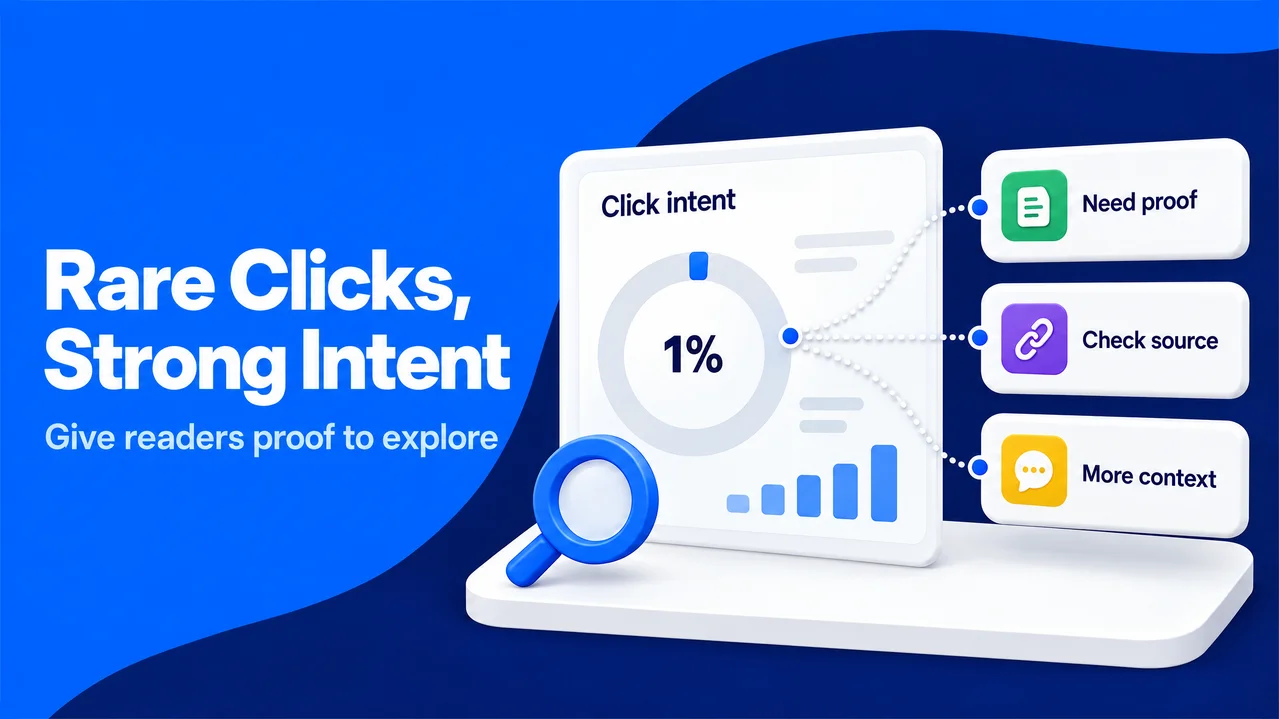
An AI answer can resolve a simple question on the results page or inside a chat. That makes AI referral traffic, LLM traffic, and AI search traffic different from a conventional visit that begins with a list of blue links. The reader has often already received a summary before your page loads, so a generic rewrite of common advice gives them little reason to leave the answer.
The low click rate is real, but it does not mean that AI-referred visitors lack value. In the Reuters Institute's 2026 survey across 27 markets, only 4% said they always or often clicked through from AI assistants to original news sources. Yet the people who did click were comparatively more likely to say they wanted to verify information or learn about the source, according to the Reuters Institute research. That is a useful model for any publisher: the referral is often a trust check, not a casual browse.
This evidence gives LLM referral traffic a practical definition. It is a smaller, high-intent stream from a person who has a specific unresolved question. They may need to check the date of a claim, see the original table, understand a method, compare an option, or assess whether the cited author has real expertise.
A practical move is to review the pages that already receive referrals, direct visits, or long sessions after question-based searches. For each page, you can ask: what could a reader verify here that an answer alone cannot show? The answer becomes the page's click reason. A guide that says “use consent-based analytics” needs an implementation example. A pricing claim needs its scope and date. A recommendation needs the evidence and the trade-off.
Build pages that reward a verification click
A verification click is earned after the answer has done the basic explaining. The landing page must therefore offer something the summary cannot reproduce well: primary data, a transparent method, a named expert's judgment, a current calculation, or an asset the visitor can use. This is the core difference between writing for citation and writing for a real person who has arrived with doubts.
SparkTraffic, an advertising platform that provides real, geo-targeted human visits through a vetted publisher network, helps marketers validate analytics and test landing-page hypotheses as they prepare for AI-referred users, and its overview of AI traffic maps where those users come from. Paid visits do not affect rankings, so they are not the point here. The useful question is whether a page gives the intended audience a clear next step when a high-intent referral eventually arrives.
The research behind generative engine optimization, often shortened to GEO, supports this human-first approach. In their KDD 2024 paper, Aggarwal and colleagues reported visibility gains of up to 40% in generative-engine responses, with outcomes varying by domain. Their tested methods included citing reliable sources, adding credible quotations, and adding relevant statistics, as described in the GEO research paper. That result is a visibility finding from a benchmark, not a promise of traffic or revenue. It is still useful because these additions also give a skeptical reader reasons to open and trust the source.
Put evidence where a reader expects it
A page can make verification easy with a compact evidence block near the claim it supports. You can name the organization or author, link to the original independent source, state the collection date, and explain any material limitation in plain language. Hiding this work behind an undated “research shows” phrase makes verification harder.
Original evidence is especially persuasive. A useful option is to publish a small dataset with a method note, a calculation worksheet, screenshots that document a process, or a first-party survey with its sample description. If original research is not available, you can use a source comparison that separates direct evidence from opinion. The page then gives a person a reason to visit even if the assistant has already summarized its conclusion.
Original evidence is especially persuasive. A useful option is to publish a small dataset with a method note, a calculation worksheet, screenshots that document a process, or a first-party survey with its sample description. If original research is not available, you can use a source comparison that separates direct evidence from opinion. The page then gives a person a reason to visit even if the assistant has already summarized its conclusion.
Add useful depth after the answer
Readers who arrive from a citation need orientation before they need a pitch. A practical approach is to open the page with a direct answer, then offer the detail that supports it. A decision tree, calculator, checklist, downloadable template, or worked example can do this well because each requires interaction and creates a concrete outcome.
For example, an article about analytics consent can include a simple scenario for a visitor from France, a U.S. visitor, and an unclassified visitor. The reader can see how the rule changes their own next step. That is much more useful than repeating the phrase “privacy compliant” several times.
For example, an article about analytics consent can include a simple scenario for a visitor from France, a U.S. visitor, and an unclassified visitor. The reader can see how the rule changes their own next step. That is much more useful than repeating the phrase “privacy compliant” several times.
Establish entity presence where AI systems find context
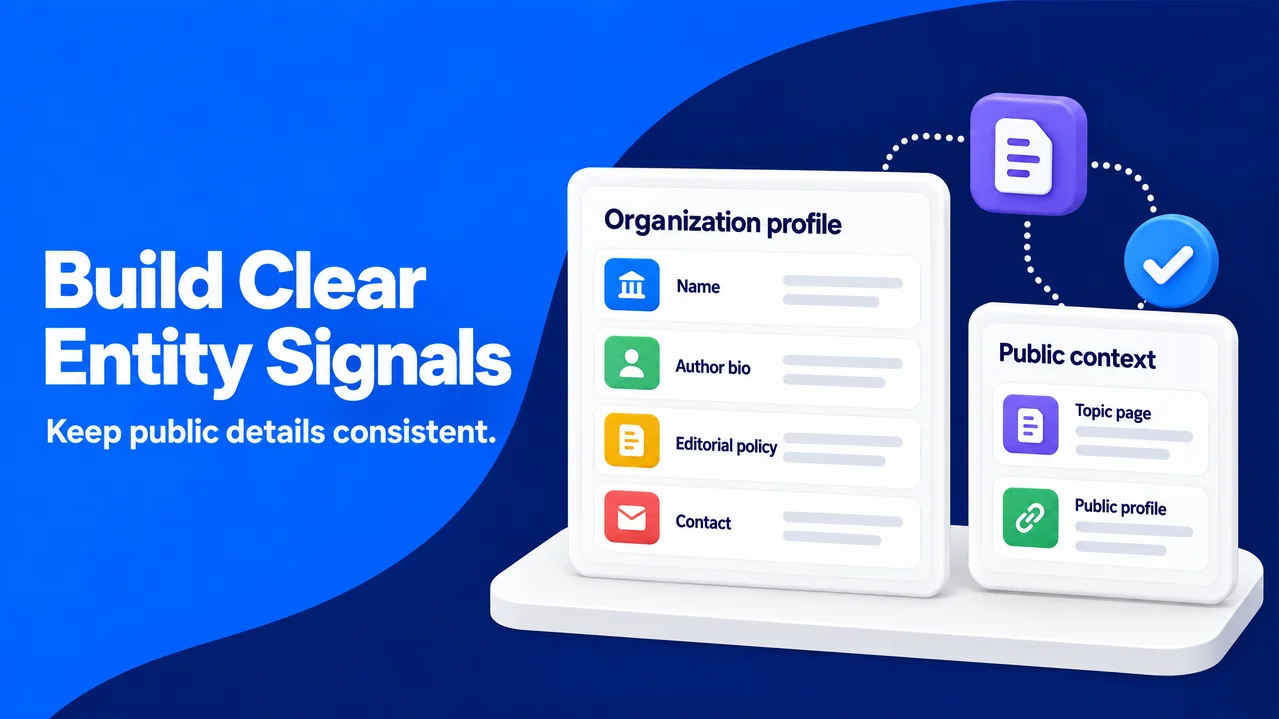
AI systems learn about organizations and topics from material that is publicly accessible, consistently named, and connected to credible sources. A brand can publish excellent articles and still be difficult to identify if its author names, product descriptions, locations, and supporting references change from one page to another. This is an entity problem: the system has weak signals that separate your organization, people, and subject expertise from similar names.
The source mix in AI answers also matters. Pew found that Wikipedia, YouTube, and Reddit together made up 15% of the sources listed in the AI summaries it studied, and they were the three most frequently cited sources. The Pew findings on cited sources do not mean every business should publish everywhere. They show why clear, public, useful information outside your own domain can strengthen source discovery.
A sensible presence plan starts with places your audience already uses. A company can publish named expert videos with a transcript, participate helpfully in relevant community threads, and maintain accurate encyclopedic or public-profile information only where it meets the platform's rules and independent sourcing standard. The point is contribution, not repetition of promotional copy.
On your own site, it pays to keep the organization name, author bios, editorial policy, contact details, dates, and relevant credentials easy to find. Each author can have a stable profile page that explains their experience and links to their work. These details help a reader assess provenance, which directly supports the verification behavior behind AI referral traffic.
Measure LLM traffic without confusing it with every AI visit

Measurement can make this channel look larger or smaller than it is. Some assistants pass a referrer, some add campaign parameters, and some hand off through apps or browsers that do not preserve referral information. As a result, visits can appear in an AI Assistant channel, Referral, Organic Search, or Direct. Google AI Overviews and AI Mode can remain within Organic Search, so they should not be counted as assistant referrals simply because an AI system was involved.
A referrer is HTTP information that can identify the page that sent a browser to yours. It is useful but incomplete. The HTTP referer overview explains why the header is part of web requests, while real browser and privacy settings can limit what analytics receives. A channel label is best treated as evidence, not a verdict.
The practical baseline is a small reporting view of AI traffic sources that separates known assistant domains, campaign-tagged visits, referrals, organic search, and Direct. In GA4, you can review source, medium, landing page, engaged sessions, conversions, and time period together. It also pays to keep a change log of content updates and citations, since a sudden increase may follow a new mention rather than a sitewide improvement.
For a detailed setup, the guide on tracking ChatGPT traffic in GA4 can help you define a repeatable reporting process. Reporting should protect personal data and follow consent requirements that apply to your market. Analytics should clarify user behavior, not become a reason to collect more data than the visitor expects.
Design for people who land mid-journey on a deep page
AI referrals often land on a specific article, product comparison, or documentation page rather than your home page. The visitor may know the question but not your organization, and they may have no idea how the cited page fits into your wider content. A technically correct page can still lose the visit if it begins with a long company story, buries its answer, or assumes the reader has read three earlier articles.
The first screen should state what the page answers, who wrote it, when it was updated, and what evidence supports the main claim. A short “why this matters” sentence gives context without forcing a reader to scan the entire page. The next step is to provide a clear route to the next useful action, such as a related implementation guide, a method note, a product detail page, or a contact option that matches the topic.
Before AI referrals scale, testing landing pages with real, geo-targeted visits can reveal whether copy, form language, page speed, and local expectations work for the audience you expect. You can use noindex test copies for A/B headline tests, and label campaigns with UTM parameters so you can separate the test traffic from earned visits. This approach supports analytics QA and user-experience learning without representing paid visits as organic demand or a ranking signal.
Trust matters more in areas that affect money, health, safety, or legal outcomes. In those categories, it pays to show qualified authorship, dates, source links, review details, and a way to report an error. A generic disclaimer cannot replace the evidence a cautious visitor needs.
Reject shortcuts that weaken AI visibility and reader trust
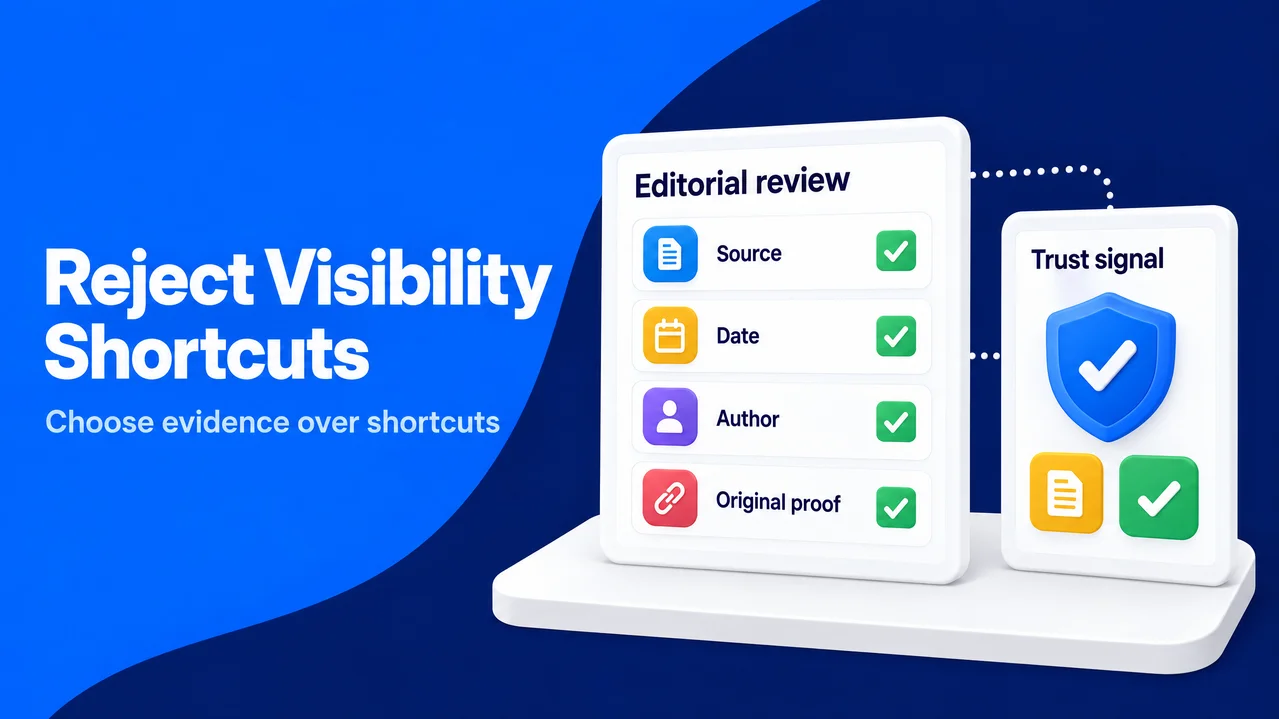
The pressure to gain generative AI traffic can make shortcuts seem tempting. Hidden prompt-injection text, copied “expert” quotes, and large batches of thin AI-written pages all create the same problem: they give systems and readers signals that do not match the page's real value. Even if a tactic gets a temporary mention, it leaves the verification visitor with little reason to trust or convert.
The GEO paper offers a helpful warning here. Its experiments found that keyword stuffing offered little to no improvement, while source citations, quotations, and statistics performed better in its benchmark. That is consistent with common sense: a page becomes easier to cite when it supplies clear, supported information, not when it repeats a phrase.
A practical editorial review can catch most problems. A useful check is to confirm that every statistic has a source and date, every testimonial is authentic and permitted, every author is real and accountable, and each generated draft adds a distinct human review or original contribution. If a paragraph would look weak without the target keyword, it probably does not deserve to remain.
Use a repeatable plan for more qualified AI referral traffic
AI referral traffic is a quality challenge before it is a volume challenge. The reader who clicks has often decided that an answer needs checking, and your page has only a short time to prove that decision right. A disciplined plan helps your team improve the source and the landing experience together.
You can work through this sequence for one high-value page each month:
You can work through this sequence for one high-value page each month:
- You can choose the verification question. A useful start is to identify the claim, comparison, calculation, or method that readers are most likely to check, then write the answer near the top of the page.
- The next step is to strengthen the proof. You can add a named author, date, original evidence where possible, source links, and one useful asset such as a calculator or example. It helps to explain why the evidence applies and where it does not.
- You can improve public context. It pays to keep entity details consistent on your site and contribute useful, factual material in audience-relevant public spaces. The focus should be on accuracy and platform rules rather than promotional volume.
- A practical move is to prepare the arrival. You can check the deep-page headline, speed, source context, mobile layout, and next step. Testing a noindex variation can help if you need evidence before changing a published page.
- You can measure and learn. A useful comparison is known AI referrals with similar organic, referral, and Direct visits. You can review engagement and conversion quality, then record what the visitor found useful.
This process is also a practical answer to how to get traffic from ChatGPT: publish information worth citing, then give the source-curious reader a better experience than the answer can provide by itself. The same logic applies to generative AI traffic from other assistants. Earned visibility can vary, but transparent evidence, clear authorship, useful tools, and a human-centered page give every qualified visitor a reason to stay.