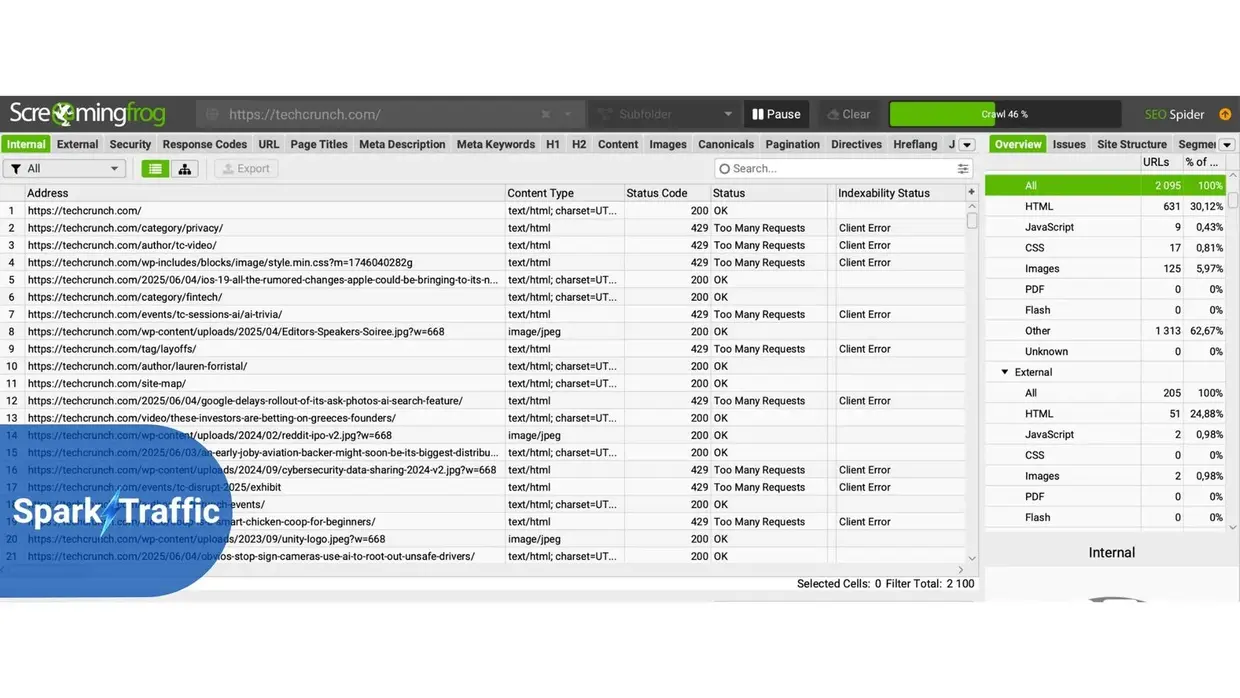
SEO traffic refers to people who visit your website through search engine results following a search query or question.
Organic search results are automatically generated by search engines to match user queries with the most relevant results. When using paid ads, you have to pay to feature in the sponsored search results on the Google search page to make yourself visible to your target audience.In contrast, SEO traffic relies on search engine optimization to optimize your site to help search engines understand what your site is all about. This, in turn, allows the algorithms to present your site in the top search results for a given query. The more SEO-friendly your page, the higher the chances that it will rank higher in search results pages and hence
drive more traffic to your site.
How SEO traffic affects turning visitors into customers and sales
SEO traffic can really help turn online window shoppers into actual buyers and boost sales because it brings in people who are already looking for what you have. Here’s the deal:
Right People: With SEO, you fix your content to match what people search for. This means the people landing on your site are actually interested in your stuff, so they're way more likely to buy, sign up, or ask questions.
People Trust It More: When your site pops up high in the search results without someone paying for it, folks trust you more. Seeing you at the top tells people you’re a real deal, which makes them more likely to open their wallets.
Site is User-Friendly: SEO isn’t just about keywords. It’s also about making your site fast, easy to use on phones, and full of good stuff. If people have a good time on your site, they’ll stick around and maybe buy something.
Saves Money: The cool thing about SEO is that once you get your site ranking, the traffic is basically free. That means you can spend your cash on other things and still get people coming to your site and buying stuff.
Keeps Working: Good SEO keeps bringing in people over the long haul. The more people find you through search, the more chances you have to make a sale.Some studies say that SEO-driven traffic can have conversion rates 2-3 times higher than other channels (e.g., social media or paid ads), with top-ranking pages capturing 20-30% of clicks for high-intent keywords. For e-commerce, a 1% increase in organic traffic can lead to a 0.1-0.2% uplift in sales, depending on the industry and optimization quality.
- BrightEdge Study: Found that 53% of all trackable website traffic comes from organic search, and B2B companies generate twice as much revenue from SEO than any other channel. This highlights SEO’s role in driving high-intent traffic that converts.
- FirstPage Sage (2026): Reports that SEO conversion rates for high buying-intent keywords often exceed 5%, compared to 1% or less for high-volume, low-intent keywords. Their analysis of 95 blog posts showed 4687 product-related conversions from 123,000 organic pageviews, emphasizing the importance of targeting intent-driven keywords.
- VWO: Found that 55% of individuals use voice search to find local businesses, with optimized sites seeing higher conversion rates due to better alignment with user intent.
Conversion rates hinge on things like your website's design, the quality of your products, and how well you target your audience. If your site has issues like slow loading or unclear buttons, it can really undermine your SEO efforts. Keeping an eye on metrics like bounce rates, how long people stay on a page, and the steps they take to convert is key to making the most of your traffic.
Why does SEO traffic lead to the highest conversions?
SEO traffic provides the highest conversion rates because it targets high-intent users, with 2025-2026 data showing organic search conversion rates averaging 2.4-2.7% across industries, compared to
1.5% for social media and
3.2% for paid search. SEO’s focus on user intent, trust (7.3x higher conversions than PPC in some sectors), and optimized user experience drives better engagement and sales.
How is SEO traffic different from other types of traffic (e.g., paid, direct, referral)?
Not all traffic is created equal. Here’s how SEO stacks up against other channels:
Traffic Type
Source
User Intent
Best For...
SEO (Organic)
Natural search results
High (Actively seeking solutions)
Long-term growth, building authority.
Paid Search
Google Ads, etc. (PPC)
High (Targeted by keywords)
Immediate sales, promotions, testing.
Direct
Typing your URL, bookmarks
High (Already know your brand)
Nurturing loyal customers.
Referral
Links from other websites
Medium (Depends on context)
Building authority, PR campaigns.
Social Media
Facebook, Instagram, etc.
Low (Passive Browse, discovery)
Brand awareness, community building.
Here are some important points about SEO traffic:
- Longevity: Once your site ranks well, you can get visitors for months or even years without paying for each click.
- High Trust: People usually trust organic search results more than paid ads.
- Intent-Driven: Visitors are often looking for answers or products when they find you through search.
- Effort-Heavy Upfront: It takes time to do keyword research, create content, and build links before you see results.
- Less Control: Remember, Google is the one who decides your ranking, not you.
Is SEO traffic actually free?
Nope, not really. SEO is a slow burn. It takes months to see results from things like keyword research, making content, and getting links. To do SEO well, you need tech skills, a content plan, and to be good at looking at data. Usually, this means hiring a team or an agency.Good blogs, videos, and infographics cost time and money because you have to pay writers, designers, and so on. The tools the pros use for things like site audits, tracking keywords, and seeing what your competitors are doing usually have a monthly cost. You also need developers to make sure your site is fast, works on phones, and is easy for search engines to crawl. Getting good backlinks means reaching out to people, forming partnerships, and sometimes even paying for promotion.
How do I track SEO traffic? (What tools should I use?)
One of the foremost analytics tools you can use to analyze where you are getting website traffic is Google Analytics. It tracks traffic from multiple sources: organic search, paid search, social media, and more. It provides a detailed overview of how traffic arrives on your site as well as their subsequent actions as they spend time on your site.
One key metric is an estimated value for the SEO traffic, which can be coupled with other web metrics for a broad-based view of your SEO performance. This includes metrics like page views, the number of clicks generated, the number of sessions or page visits associated with a particular user, and the bounce rate. Utilizing analytics can help you monitor how your chosen keywords are performing so that you can mold your SEO goals and objectives accordingly.
How long does it take to see results from SEO and an increase in traffic?
The honest answer is: it varies, but generally expect to see noticeable results in 3 to 6 months, with significant increases in traffic taking 6 to 12 months or even longer.SEO takes so long for fundamental reasons - 200+ Ranking Factors: Google's algorithm uses a vast number of signals to determine where a page should rank. It's not just about keywords; it's about content quality, user experience, site speed, mobile-friendliness, authority, trustworthiness, and much more. Optimizing all of these takes months and even years.
Which keywords drive SEO traffic?
The exact keywords depend on your niche, audience, and content strategy. Tools like
Google Analytics or
Ahrefs can reveal which keywords currently drive traffic to your site by analyzing performance metrics like impressions, CPC, CPS, clicks, and rankings.You can look for two types of search terms: transactional, like “buy running shoes online,” and informational, such as “how to train for a marathon.” Focus on specific phrases that don’t have much competition but can really convert, like “best running shoes for flat feet 2026.” Brand names also help, for example, “Nike running shoes,” since they draw in fans of the brand. Also, consider
local keywords like “coffee shops in Seattle” to reach nearby customers. And don’t forget about seasonal trends or popular topics, like “best winter jackets 2026.”
What is the role of backlinks in generating SEO traffic?
Backlinks are basically when other sites link to your stuff because it's exactly what their readers are looking for. Google's algorithms really care about backlinks. They see them as a sign that your content is good and people trust it. To get more backlinks, make content that other sites will want to link to because it is useful or interesting. Getting
backlinks from well-known and credible sites, specially those with a high DA, is a great way to get more traffic from search engines.
FAQ’s
How do I track my SEO traffic?
The industry standards are Google Analytics and Google Search Console. Both are free and provide invaluable data on which keywords you rank for, how many clicks you get, your user behavior, and more.
Which keywords should I target?
It depends entirely on your niche. Start with informational keywords to build authority (e.g., "how to train for a marathon") and then target transactional keywords for conversions (e.g., "buy running shoes online"). Tools like Ahrefs and SEMrush are excellent for finding what your competitors are ranking for.
How long until I see results?
Patience is key. Expect to see initial movement in 3-6 months and more significant, business-driving traffic in 6-12 months. It's a marathon, not a sprint.


.webp)


.svg)


.svg)
.svg)