Agentic AI traffic is becoming a real measurement question for marketers because a visit may now be performed by software while serving a person's intent. Your analytics platform can record the request, page view, and events, yet the person who asked for the research may never see the page in a conventional browser. Treating every recorded session as identical can blur the difference between audience attention and a browser agent completing a task.
The issue matters even before agents become a large acquisition channel. In a Pew Research Center study, users clicked a traditional result on 8% of Google visits with an AI summary, compared with 15% of visits without one. As AI systems answer, research, compare, and act, the path between a question and your site has more steps. Good measurement gives you a way to see those steps without confusing agent-assisted activity with a human audience.
The issue matters even before agents become a large acquisition channel. In a Pew Research Center study, users clicked a traditional result on 8% of Google visits with an AI summary, compared with 15% of visits without one. As AI systems answer, research, compare, and act, the path between a question and your site has more steps. Good measurement gives you a way to see those steps without confusing agent-assisted activity with a human audience.
What is agentic AI traffic?
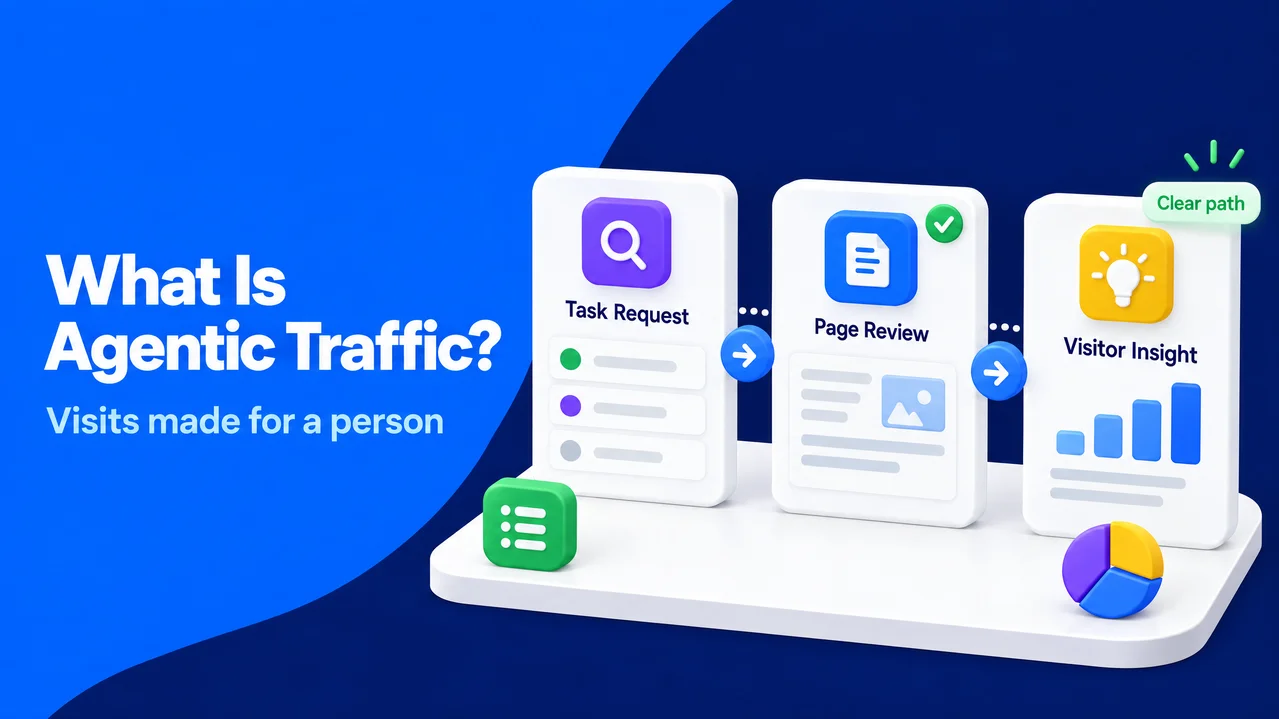
The simple answer to what is agentic AI traffic is: visits made by an AI agent or AI browser acting for a person. An AI agent can make decisions, pursue goals, use tools, and perform multi-step actions, rather than only return one answer. This description of AI agents is useful for marketers because the important feature is action. The system can open pages, compare information, fill part of a workflow, or return a summary to its user.
Agentic traffic is different from a human referral. A person who follows a link from an AI answer generally loads the site in their own browser. In an agentic session, a user asks software to investigate or carry out a task, and the software visits a site on that user's behalf.
Two consumer browser examples make this less theoretical. ChatGPT Atlas launched on October 21, 2025, with an agentic mode that can take online actions for a user. Perplexity launched Comet in July 2025, describing it as an AI browser. These products do not mean every visit from their ecosystems is agentic. They do show why AI browser traffic needs its own review path.
A practical move is to define agentic traffic by behavior and purpose, not by one product name. You can count a server-side fetch for a user task, a browser-rendered research task, and a completed form review as separate cases. That distinction works because the analytics question is whether software retrieved a page for a person, rendered it for a task, or delivered a human reader who can make an informed choice.
SparkTraffic and a real-person traffic baseline
Separating agent sessions from people is easier when you also know what genuine, campaign-driven human activity looks like. SparkTraffic is an advertising platform that delivers geo-targeted website visits from real people through a vetted publisher network, which makes its guide to AI traffic relevant for teams that need a clear baseline while they evaluate new AI-related visits. Its role here is practical: quality traffic tests can help teams validate event collection, landing pages, and reporting without claiming that paid visits change search rankings.
SparkTraffic also publishes five checks for confirming that visitors are real people: the spread of session length, screen resolutions, time of day, location, and interactions. Those checks are helpful because any one signal can be misleading. A short session may be a busy person, a small screen may be valid mobile traffic, and a familiar location alone does not establish who viewed a page. A pattern across several signals is more informative than an isolated flag.
For analytics quality assurance, you can compare a known, consent-aware human campaign with sessions that you suspect are agentic. A useful approach is to use noindex test pages for A/B experiments where appropriate, label traffic with UTMs, and compare event order rather than headline totals. This supports a human-first standard: real people should receive relevant pages and clear choices, while measurement remains transparent about what the system observed.
Why agentic traffic creates a measurement problem
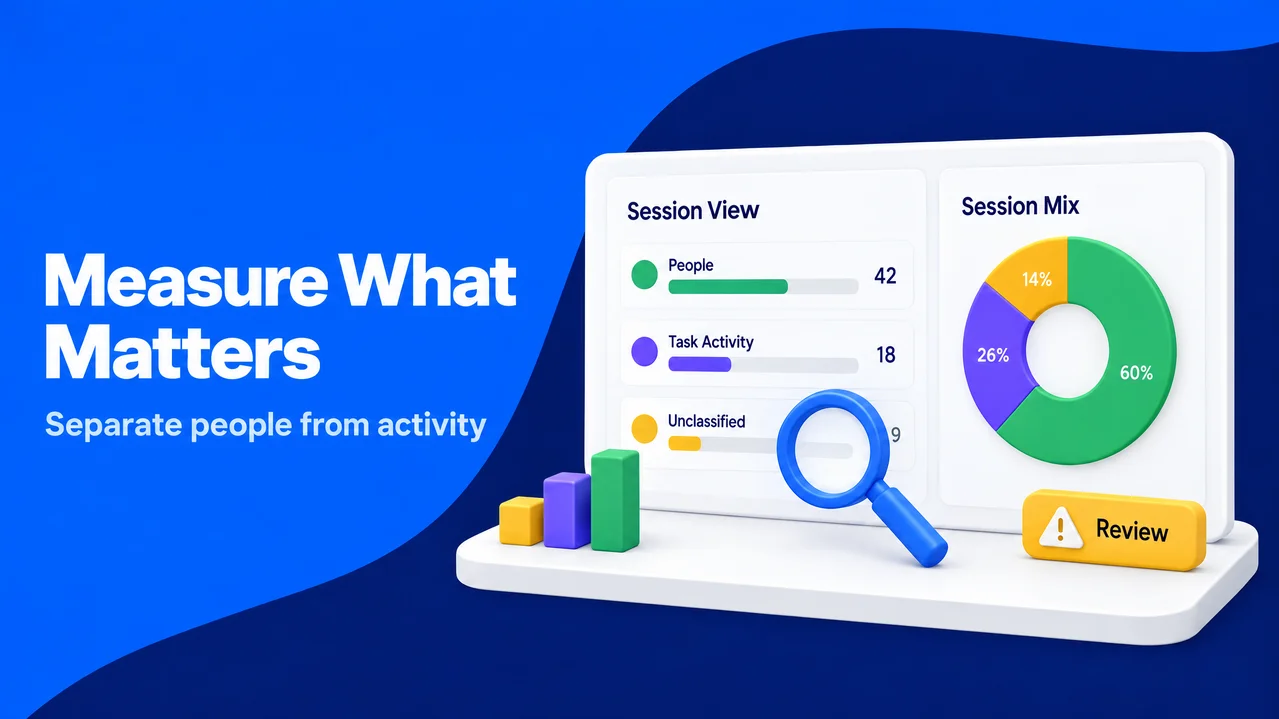
A traditional web metric assumes a straightforward relationship: a person opens a page, the browser sends requests, and analytics records a session. AI agent traffic can break that relationship. The agent may retrieve raw HTML, run JavaScript in a browser environment, extract structured content, or summarize a page without passing a visible tab to its user. One underlying request can therefore represent no human reading time, assisted human research, or an agent carrying out an instruction.
The Reuters Institute framed the question well: if an AI browser summarizes content on a user's behalf, does that count as a human visit? Its 2026 trends report also notes that ChatGPT referrals were growing quickly while Google still sent far more referrals. The question is not philosophical. It affects audience reporting, advertising decisions, content priorities, and conversion analysis.
The next step is to separate two outcomes in your reporting:
- Human-referred sessions, where a person reaches your site after an AI tool cites or recommends it.
- Agent-assisted sessions, where software renders or reads pages for a named user task and may create analytics events.
These categories separate audience attention from useful operational signals. A human who clicks for detail may be highly engaged; a pricing fetch may indicate interest but does not equal a human visit.
How agent sessions can look in analytics
Agentic sessions will not always be easy to distinguish from human-referred sessions. Some agents run JavaScript and use a full browser stack, so page views, scroll events, and even client-side tags can resemble a human session. A team that labels every fast visit as agent-assisted will misclassify real people.
It pays to look for combinations rather than a single rule. A session may have an unusually short duration but request many pages at consistent intervals. It may take a very fast form path, opening a pricing page and a policy page before reaching a form in seconds. It may report unusual screen dimensions, a data center IP address, a sparse browser fingerprint, or a browser version that does not fit the claimed device. These are clues, not verdicts.
Server-side evidence often supplies context that client analytics cannot. Web logs can preserve the request time, IP or network classification, user-agent string, requested URL, status code, referrer, and header pattern. You can join that data to a first-party request or session identifier where your privacy rules allow it. A useful practice is to keep the raw log window limited and document access controls, especially if your site operates under GDPR or another privacy regime.
A practical review is to group sessions by source, user agent, IP network, screen size, and event sequence, then inspect outliers. For example, you can compare the median time between page load and form field interaction for a normal campaign against a suspected group. The method works because a human path has natural variation, while agent-assisted task flows may repeat the same order and timing. It also protects against overreaction: an outlier becomes a research lead, not an immediate exclusion.
How to identify agentic traffic with layered evidence
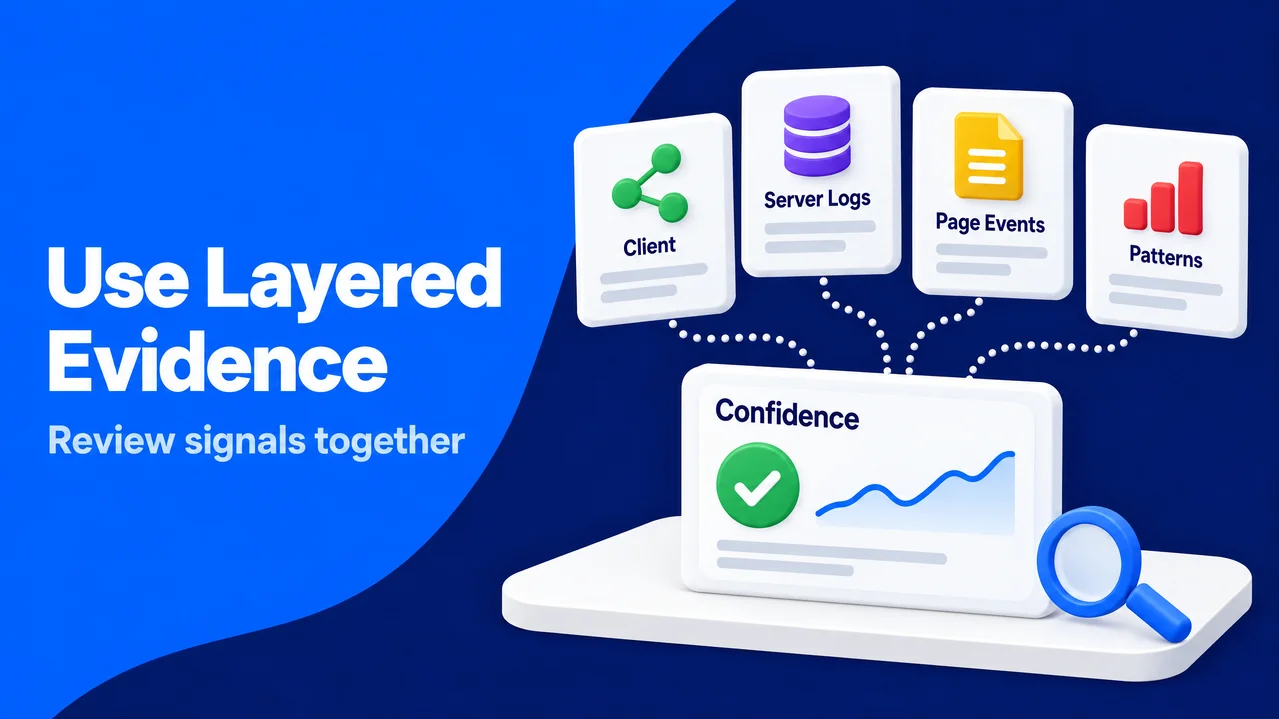
Reliable identification uses layers of evidence that answer different questions. The user agent states what the client claims to be. Server logs show the request pattern. Browser events show how the page executed. Behavior signals indicate whether the sequence resembles human use. None of these elements proves the full story alone, and user-agent strings can be copied.
A good starting point is known and declared agent clients acting for people. You can maintain a monitored list of documented agent identifiers, then label matching requests as declared agent-assisted activity in a log-derived dimension. A monthly review of the list helps because client identifiers change. The value is consistency: your team can explain why a session was tagged and can correct an incorrect match without rewriting historical conclusions.
Next, you can compare behavior at the cohort level. Repeated navigation paths, evenly spaced requests, instant completion of multi-field forms, and many sessions from hosting networks can support an agent hypothesis. This evidence alone is not a sound basis for denying access. Accessibility tools, privacy services, shared corporate networks, and highly efficient users can look unusual. Rate limits, form protections, and manual review should focus on harm or clear abuse, not an assumption that speed equals bad intent.
Signed agent identity is an emerging additional signal. The IETF's active Internet-Draft describes HTTP clients cryptographically signing requests so servers can verify identity, including a Signature-Agent header. It is work in progress, not a final standard, so it pays to record valid signatures as a high-confidence label without treating unsigned traffic as suspicious. Adoption will be uneven, and a signature identifies a client, not necessarily the level of human attention behind it.
For a deeper measurement workflow, you can pair this approach with a guide on how to track AI traffic. It helps to keep the resulting classifications visible to analysts. A hidden filter can make a dashboard look clean while removing signals that product, content, and security teams need to examine.
Build pages that work for AI browsers and people
Agent-friendly design begins with the same qualities that help people. An agent can interpret a page more reliably when headings describe the content, main copy uses semantic HTML, and structured data matches what a visitor can see. This reduces ambiguity in a research or comparison task, while people benefit from clearer page structure and assistive technology has better context.
Forms deserve special care because agents may reach them during a task. Clear labels, visible required fields, useful error messages, and a confirmation page create a usable experience for people and a more interpretable path for AI browsers acting on their behalf. Accessible forms also reduce false alarms in analytics, because a valid completion sequence has explicit states rather than vague clicks.
Pricing, availability, returns, privacy terms, and contact options should be easy to locate and internally consistent. An agent that reads these pages can summarize your offer more accurately, and a human can verify the details without friction. The practical priority is content quality and transparency, not attempts to manipulate an agent's answer. Hidden text, misleading schema, forced clicks, and thin pages are counterproductive because they harm trust and make data less reliable.
Set a measurement policy before the volume grows
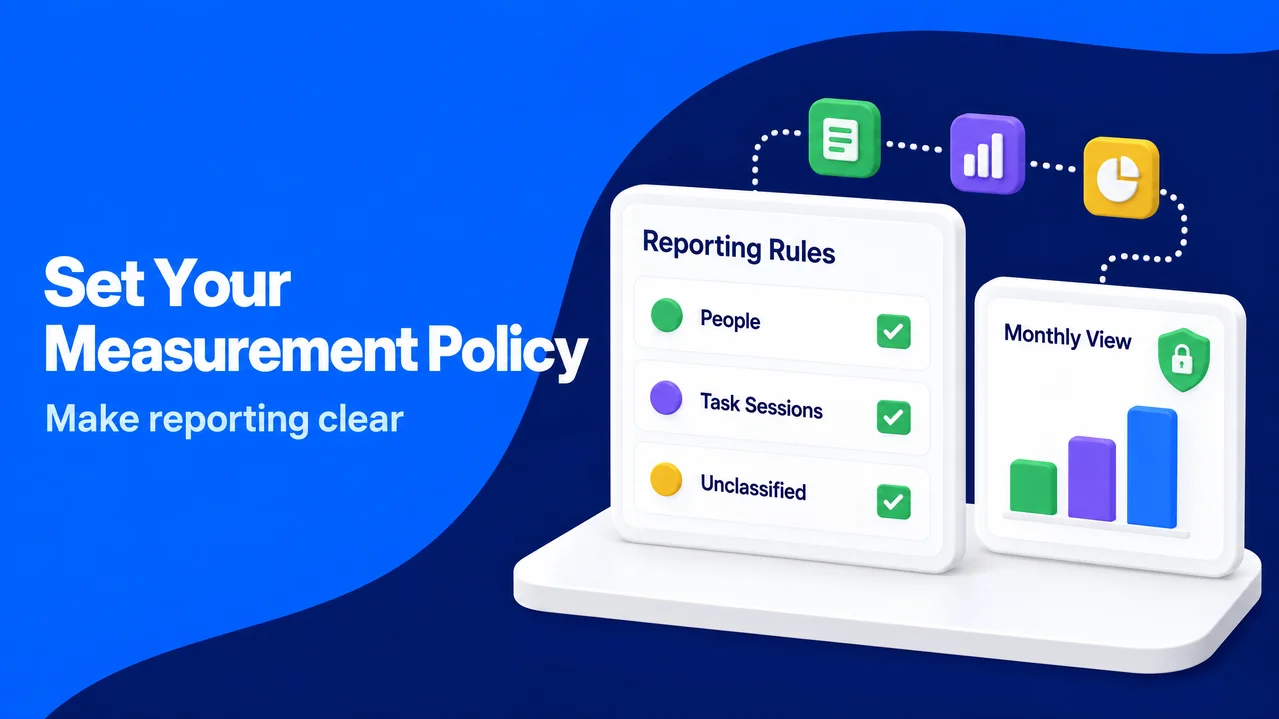
The central policy choice is simple but important: your team can decide whether agent sessions count as users. Agent-assisted page renders should be tagged and reported separately from people until your organization agrees on a definition of qualified attention. Human-referred visits from an AI source can count as users if they meet the same consent and engagement rules as other visitors.
A practical move is to write the policy in plain language and apply it to exports, dashboards, and performance reviews. It can state which signals trigger an agent label, who can change the rules, how long raw signals are retained, and whether uncertain sessions remain in a separate category. This works because metric changes are then traceable. You can explain a shift in reported users without hiding the underlying activity.
A useful reporting view has three lines: verified or likely human sessions, tagged agentic sessions, and unclassified sessions. You can add conversions and form starts to each line, but describe them carefully. A form submit by an agent may show that a workflow is technically reachable; it does not necessarily equal a qualified lead. For high-stakes sectors such as finance, health, or legal services, consent, disclosure, and review standards deserve extra attention.
A practical agentic AI traffic review
Agentic AI traffic is a useful new signal when you preserve the difference between software activity and human attention. It should prompt better observability, clearer pages, and accurate audience reporting. Your audience remains people, even when a browser agent helps them do the research.
A sensible monthly review can include these steps:
A sensible monthly review can include these steps:
- Comparison of AI-referred, agent-tagged, and known human campaign cohorts by event sequence and conversion quality.
- Inspection of a sample of unusual logs before changing an exclusion rule.
- Verification that semantic HTML, structured data, accessible forms, pricing, and policies still agree with the visible page.
- Recording of any signed-agent signals as a separate confidence field while the standard develops.
- Review of your user-count policy with analytics, product, privacy, and security owners.
This approach gives you a defensible answer as tools change. You can welcome relevant agent access, protect forms and infrastructure from abuse, and report honestly on which visits reflect a person actively engaging with your site.